
The era of Generative Artificial Intelligence (Gen AI) has arrived.
In 2023, Generative AI made its debut, capturing attention across industries. By 2024, organizations began actively harnessing its capabilities, translating the same into tangible business value. Today, businesses worldwide are keen to jump onto the AI bandwagon to improve efficiency, innovate, and stay competitive. The use cases of this transformative technology seem to be extensive and endless, and in just a short span of two years, AI has become a strategic imperative for businesses across verticals such as healthcare, finance, retail, manufacturing, and telecom.
We’re now way past the initial hype. Boardrooms and IT departments alike are now endorsing the immense potential AI holds and within a short span it has become a key strategic focus for many businesses. A recent survey underscores this optimism: over 67% of leaders are prioritizing Generative AI, with a third of them naming it their top priority due to its transformative potential. According to recent reports including Goldman Sachs Research, global AI investments could significantly reach $200 USD billion by 2025 and $32.8 USD billion in Asia-Pacific, highlighting the rapidly growing commitment to AI technologies worldwide.
While rolling out AI capabilities is a top priority today and will most likely continue to be so over the next few years, businesses must bear in mind one key challenge in its adoption: legacy applications. Agreed that legacy applications are the bedrock of many businesses, but equally true is the fact that they are aging fast and struggling to keep pace with modern technological advancements. This creates a significant roadblock for businesses planning to adopt AI, as most of their required data resides in such legacy applications. In fact, about 10% of business applications are at “end of life” (~150 applications per business, on average), according to an ISG report.
As the gap between AI adoption and legacy shortcomings widens, the need for Application Development and Modernization (ADM) strengthens. ADM enables organizations to expedite the adoption of AI, enhance operational efficiency, and establish a scalable foundation for future development by modernizing applications and optimizing IT infrastructure. And we have data to substantiate this: despite the ongoing cost optimization efforts, investments in ADM are on the rise. ADM is no longer a cost center but a strategic asset for the age of AI.
Modernizing applications and infrastructure is seen as essential for staying competitive in the digital age. This strategic view helps organizations leverage technology effectively and drive growth.
Why most businesses continue to support legacy applications?
The State of Application Modernization Report 2024 states that 62.5% of CTOs had spoken about their biggest challenge being, “the accumulated technical debt and dependencies within legacy applications.”
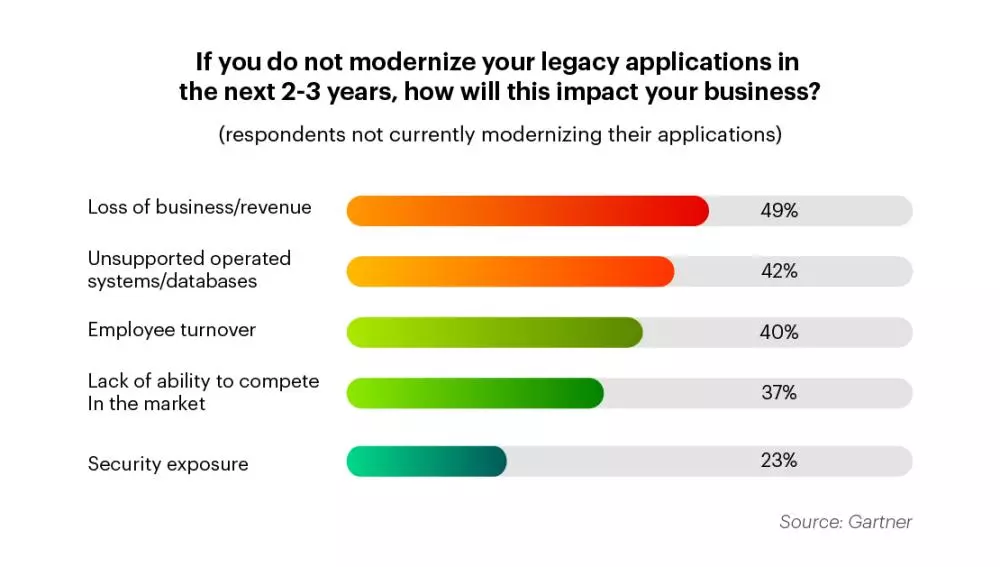
Despite the obvious benefits of modernization including adoption of AI, many businesses continue to support legacy applications in their operations for multiple reasons:
Critical role in operation
Legacy applications often perform essential functions such as supporting core business processes, financial transactions, customer data management, and other critical activities. Replacing these systems can be risky and complex considering that business operations cannot be disrupted during transition.
Intricated architecture and integration
Compatibility with modern platforms and technologies could be potentially challenging, time-consuming and error-prone for legacy systems which are built on outdated technology. Legacy applications often have intricated architecture and interdependencies. Untangling these legacy systems and integrating with modern systems can be a daunting task and cause business to delay or avoid modernization.
Data and compliance concerns
Critical business data in legacy applications is essential for operations, decision-making, and analysis. Migrating this data is complex and risky, potentially causing security & compliance concerns, data loss or corruption.
High cost of modernization
Migrating to new applications often gets costly and can be substantial, not only due to direct expenses like new infrastructure, systems and software but also indirect expenses like data migration, system integration, and employee training.
Employee and stakeholder resistance to new technologies
People who are accustomed to working on legacy applications are the main barriers and may resist new technology due to comfort, fear of change, or concerns about the learning curve.
Skill Gap
Many organizations lack the IT staff, expertise, and time to migrate to new applications. Managing legacy applications with limited resources is often more practical, despite the drawbacks. Also finding engineers with expertise in both legacy and modern technologies could be a challenging task.
Fear of disruption
Legacy applications are embedded in a business’s operations, including those of partners and customers who rely on them. Changing these systems could disrupt relationships and operations, so businesses continue to support them to ensure continuity and reliability.
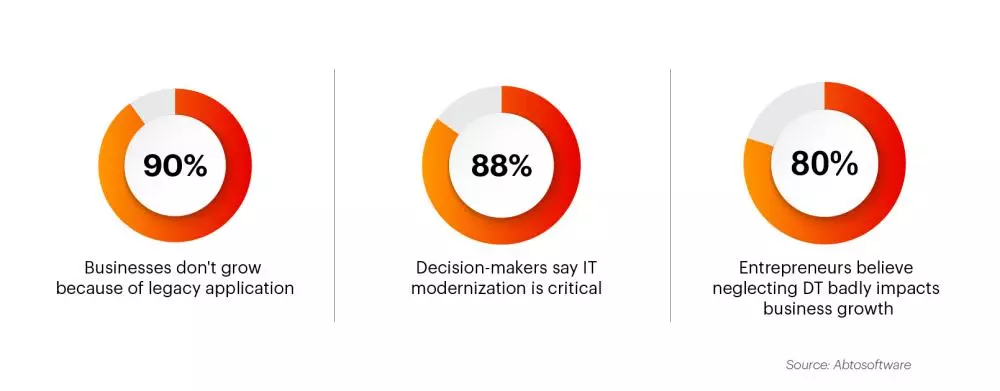
5 reasons why legacy applications hinder AI adoption
While legacy applications have been the backbone of operations, they pose significant challenges to AI ambitions. Such applications and systems are riddled with critical limitations that impact data accessibility and drain organizational resources. Here are five shortcomings of legacy applications that hinder AI adoption:
1. Data silos: Legacy applications often store crucial business data, but accessing and utilizing it becomes difficult due to outdated formats and limited data extraction capabilities. This hampers the use of large, high-quality datasets essential for AI applications.
2. Incompatibility with AI systems: Many legacy systems are incompatible with modern AI technologies, hindering effective implementation and scaling. This incompatibility can hinder seamless adoption of AI and limit its potential benefits.
3. Lack of integration capabilities: Many legacy systems lack modern APIs or integration capabilities needed to connect to AI platforms and other contemporary technologies.
4. Increased maintenance cost: Maintaining outdated applications often proves costly and resource-intensive, diverting funds from investing in new technologies like AI and straining budgets.
5. Limited scalability and performance: As legacy application is built on outdated hardware and software architectures that it struggles with computational demands of Modern AI applications like scalability and performance, failing to handle the large volumes of data and high processing requirements needed for AI, leading to inefficiencies and bottlenecks.
6. Security and compliance Issues: Security is a grave concern, as legacy applications are more vulnerable to threats and lack the advanced features needed to protect sensitive data and comply with modern regulations.
Modernizing legacy applications has its own challenges
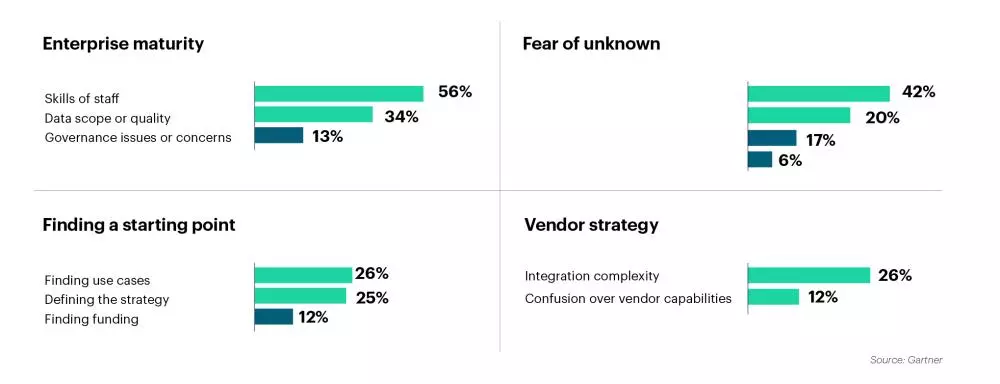
Forward-looking businesses that plan to modernize their legacy systems still face many challenges along the way. While both boardroom members and IT leaders share the common goal of enhancing the customer experience and harnessing AI, their unique challenges can complicate modernization efforts and undermine AI’s effectiveness.
| Boardroom Members | IT Leaders |
|---|---|
| Accessing and utilizing data effectively:Boardroom members need timely, accurate data for decision-making, but legacy applications complicate data access and usage, limiting strategic insights. | Integrating value streams:IT leaders often struggle to align different IT projects and systems seamlessly to support overall business objectives efficiently. |
| Integrating value streams:Boardroom members struggle to ensure business processes and operations align with organizational goals efficiently. | Managing technical debt:Technical debt involves maintaining and updating older systems and code. IT leaders must address this to avoid hindering innovation and efficiency. |
| Managing organizational change:Implementing new technologies requires significant organizational changes, and boardroom members must manage resistance and ensure a smooth transition. | Handling high software license costs:Legacy systems often have costly licensing fees. IT leaders must manage these while balancing investment in new technologies. |
| Phasing out outdated applications:Decommissioning legacy applications is complex, requiring boardroom members to manage the transition carefully to avoid disrupting operations and ensure full integration of new systems. | Addressing skills and talent gaps:IT leaders struggle to find and retain skilled professionals to manage legacy systems and new technologies, slowing modernization efforts. |
Overcoming these challenges requires a strategic approach and expertise. Partnering with an expert service provider can provide valuable insights and solutions tailored to specific business goals, needs, vulnerabilities, industries, and budgets. In fact, 96% of large enterprises are using external providers for some form of application service, according to a recent ISG ADM study. These external providers provide the resources needed for these legacy transformation programs, as well as their ability to combine cost optimization with modernization.
InfoVision has been a strategic partner to various businesses in developing and modernizing their applications for years. Our enterprise ADM services prepare businesses for seamless evolution. With our expertise in cloud, serverless operational models, agile and SAFe implementations, and emerging technology practices, we help businesses transition from complex legacy structures to dynamic and resilient application portfolios. Our comprehensive suite of services, including API modernization, microservices architecture, cloud-native and serverless operations, custom application development, and updating existing applications, empower businesses to excel in their digital transformation.
The critical role of application optimization in ADM
Modernizing and optimizing applications will become increasingly important as technology stacks grow more complex and demanding. With the integration of advanced technologies like AI and cloud computing, existing applications will need to be fine tuned to meet new requirements efficiently. By focusing on ADM, businesses can stay competitive, enhance user experiences, and maximize their technological investments.
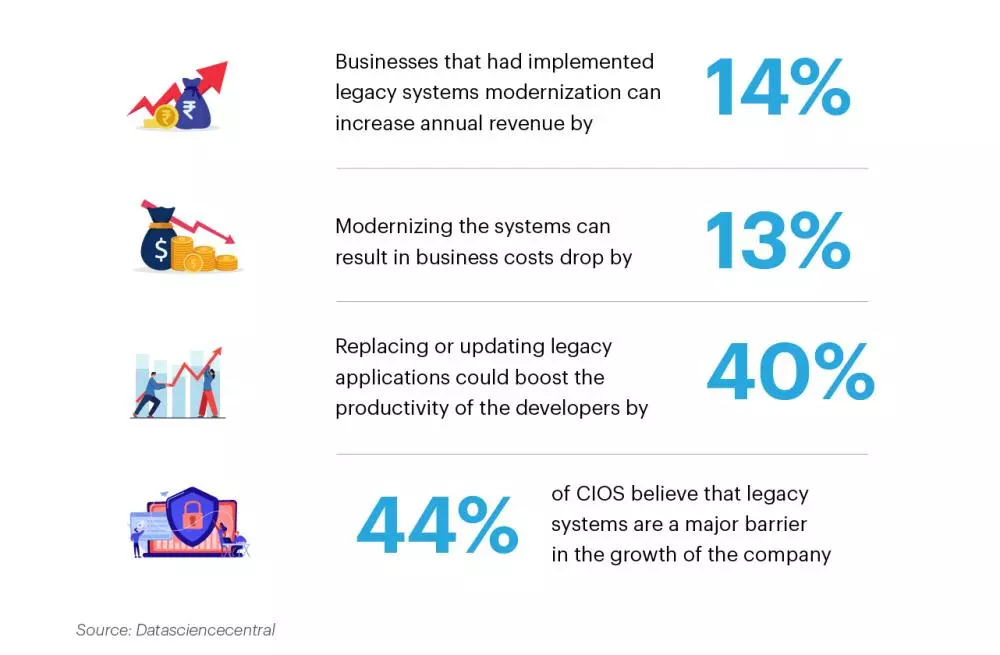
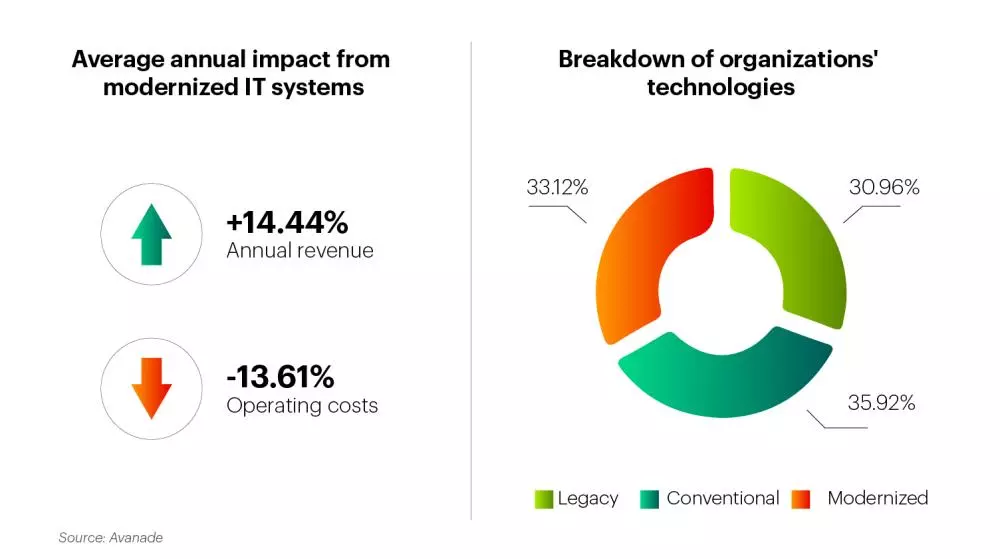
Research by top IT industry experts suggests that replacing legacy systems can potentially reduce operational costs by 13 percent annually and boost revenue by over 14 percent.
InfoVision can help you forge a future of digital modernization and expand your limits with enterprise ADM services. Connect with us today to learn more!