
How GenAI Is reshaping retail – And why we are on the cusp of a remarkable transformation

A customer browses your online store late at night, checking out the maroon and dark green jacket, adding it to the cart but leaving without buying. By morning, your AI-powered system has analyzed their behavior, identified them as a high-intent shopper, and triggered a personalized offer the moment they step into your store. No manual intervention, no guesswork – just seamless AI-driven engagement that converts interest into sales.

This isn’t a futuristic fantasy. It’s happening right now as retailers embrace Generative AI (GenAI) to optimize every aspect of the shopping experience – from hyper-personalized marketing and dynamic pricing to automated supply chains and cashier-less stores.

In our recent webinar on How GenAI is transforming retail innovation, industry leaders explored how GenAI is already making waves in retail, the challenges of AI adoption, and where the future is headed. Hosted by Nitin Naveen (VP – Innovation Strategy, AICorespot) and moderated by Jaydev Doshi (Director, Retail, InfoVision), the webinar panel featured:

From C-suite perspectives on AI implementation to how retailers are using AI to reduce costs, increase sales, and improve customer retention, the discussion made one thing clear: AI isn’t coming. It’s already here.

Let’s break down what they had to say – without the technical jargon, but with genuine insights and some additional real-world examples to boost understanding.

Retail’s two big goals: Cut costs & boost sales

Retails two big goals Cut costs & boost sales

If there’s one thing that never changes in retail, it’s the relentless push to lower costs while driving more revenue.

Aravind Kashyap explained how retailers work with razor-thin margins. Anything that helps them reduce costs or increase sales is a game-changer.
Retailers are leveraging AI to optimize supply chains, reduce waste, and predict demand more accurately – helping them keep shelves stocked without overloading warehouses. AI is also helping them streamline operations, reduce IT overhead, and automate routine processes, which adds up to significant cost savings over time.

On the sales side, AI is making customer engagement more intelligent and efficient. AI-powered personalization ensures that customers receive precisely what they are looking for, without having to search endlessly.

A good example of this is Walmart’s use of AI-driven inventory forecasting. Walmart’s AI analyzes historical sales data, weather patterns, and regional trends to ensure that the right products are in stock at the right time. During peak shopping seasons, AI helps prevent stockouts and overstock issues, ensuring customers always find what they need while reducing operational waste.

AI is also transforming retail marketing. GenAI can now create highly targeted campaigns by analyzing past purchases, browsing behaviors, and even sentiment from social media interactions. Instead of blasting generic promotions, AI helps retailers send the right offer to the right customer, at the right time.

The shift from personalization to hyper-personalization

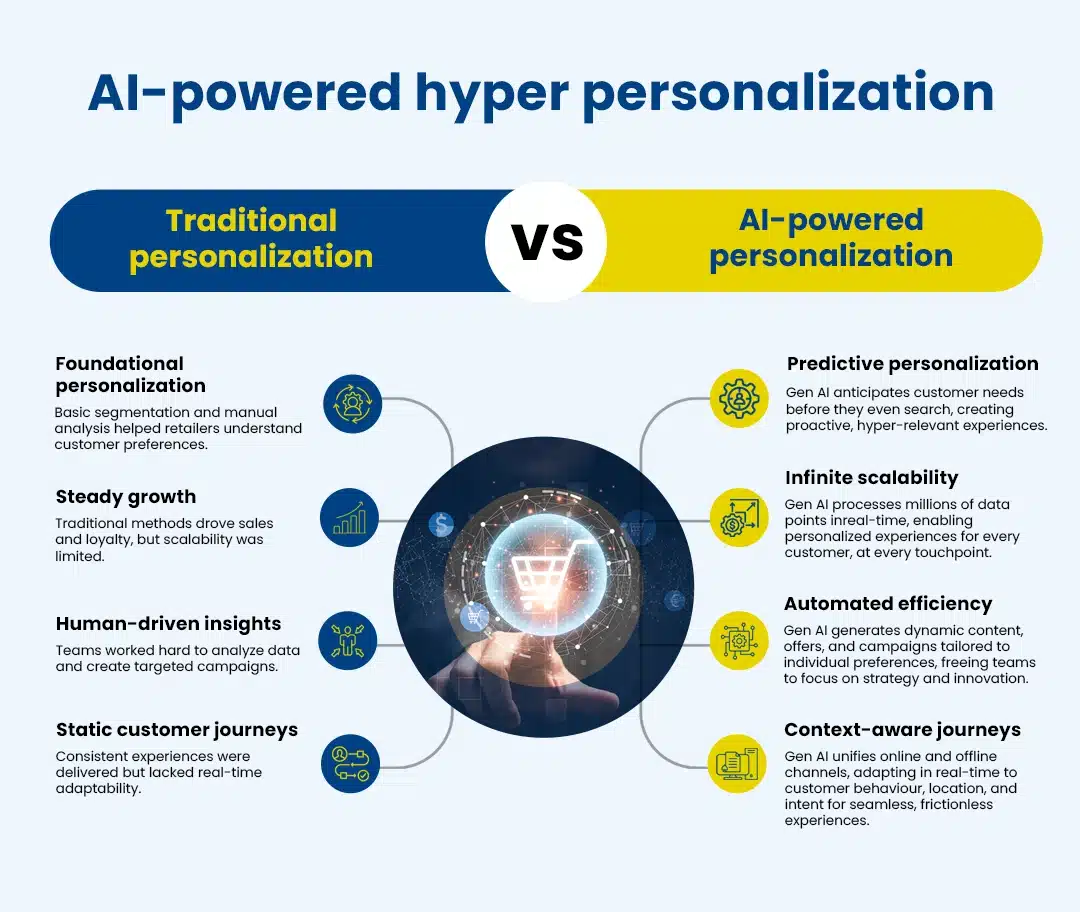
For years, retailers have worked on personalizing experiences – things like “People who bought this also bought…” or sending birthday offers. But GenAI is taking this further, creating experiences that feel uniquely crafted for each customer.

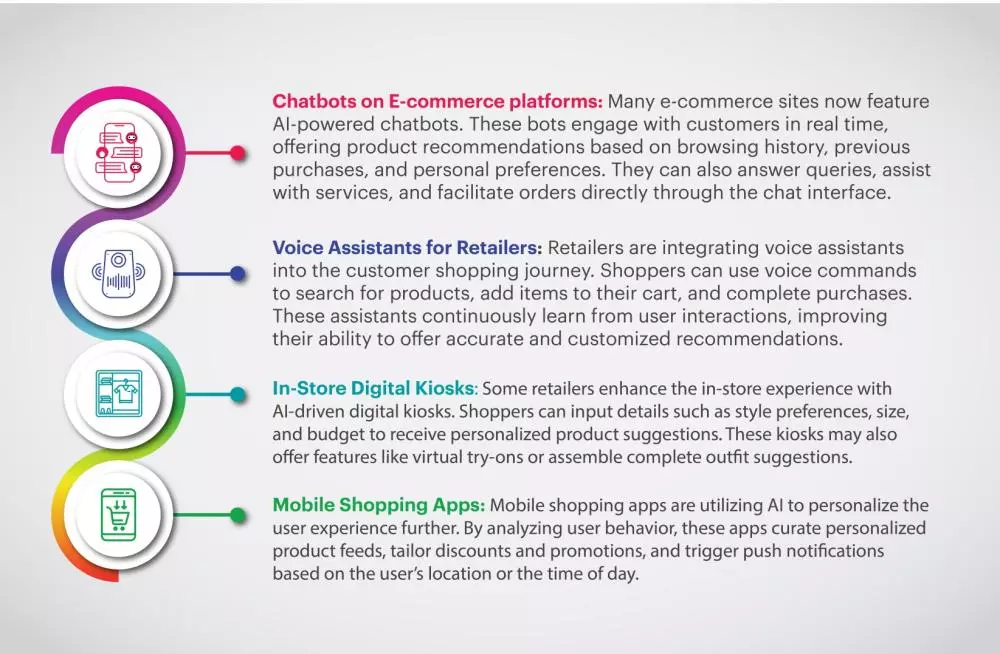
Take chatbots, for example. A few years ago, they were just task-oriented virtual assistants, handling basic queries like “What’s my order status?” or “Where’s the nearest store?” Now, they understand context, sentiment, and intent. Instead of offering 20 similar products, they interpret what the customer really wants and deliver the most relevant choice.

Retailers are also using AI to analyze customer sentiment and behavior in real time. If someone searches for a white shirt with a blue stripe, AI can recognize not just the color preference but the style, fit, and even brand tendencies. This level of precision makes shopping frictionless and more engaging.

Aravind spoke about Domino’s being a great example of this shift. They let customers order pizza using just an emoji, because their AI already knows their usual order. No need for extra steps or manual selections. That’s hyper-personalization in action.

The beauty retailer, Sephora, utilizes AI-powered chatbots to deliver personalized product recommendations and makeup tips. By analyzing customer preferences, past purchases, and even skin tone data from Sephora’s Color IQ technology, these chatbots offer tailored advice that mimics the expertise of in-store beauty consultants. This level of hyper-personalization can help increase customer engagement and boost conversion rates.

Hyper-personalization also helps solve a critical challenge in retail – customer churn. As Hemanth Kumar pointed out, AI is now being used to predict when a customer is about to leave and take proactive steps to retain them. AI-powered churn prediction models analyze browsing habits, purchase frequency, and engagement levels to flag at-risk customers. Retailers can then offer personalized offers, exclusive early access, or targeted re-engagement campaigns before customers abandon the brand.

AI’s growing role in reducing product returns

AI’s growing role in reducing product returns

Returns are one of the biggest cost drivers in retail, and AI is now tackling this issue from both proactive and reactive angles.

On the proactive side, AI is improving product recommendations and sizing tools, reducing the chances of a customer buying the wrong item in the first place. Virtual try-ons and AI-generated fit assistants help customers make more informed choices, leading to fewer returns.

On the reactive side, AI is analyzing return patterns to identify which products are frequently sent back and why. Retailers can then decide whether to improve product descriptions, fix manufacturing defects, or even discontinue problematic items altogether.

Zalando, a European online fashion retailer, implemented an AI-powered size advice feature that combines machine learning and computer vision technologies. This system analyzes various data sets, including brand-provided item information, to inform customers if an item runs small or large, recommending size adjustments accordingly. As a result, Zalando has achieved a 10% reduction in size-related returns compared to items without size advice.

Another case in point is Amazon using AI to identify damaged items before they are shipped to customers, to reduce inevitable returns down the line.

Bridging the online-offline gap

Bridging the online-offline gap

One of retail’s big pain points has been the disconnect between online and in-store experiences. Customers want a seamless transition between both, retailers struggle to make that happen. AI is starting to bridge that gap.

Imagine browsing for shoes on a retailer’s website in the morning, then walking into the store in the afternoon. AI can recognize your online activity and offer personalized recommendations based on what you already viewed.

Some retailers are even using AI-powered cart handovers, where your mobile shopping cart syncs with in-store inventory in real time. If a product is unavailable in-store, AI can instantly suggest an alternative or offer a home delivery option, without any extra steps.

Luxury brand Burberry’s phygital store experiences through smart mirrors and digital screens allow seamless online-to-offline integration.

This kind of AI-driven unified commerce is quickly becoming the new standard.

AI Is no longer just a tool, it’s a business partner

AI Is no longer just a tool, it’s a business partner

Retailers are now embracing Agentic AI, which moves beyond just assisting with recommendations or transactions. AI is now taking action.

For example, many companies have already deployed AI-powered dynamic pricing models that adjust product prices in real-time based on demand, competitor pricing, and customer behavior. Instead of waiting for a team to manually review pricing trends, AI makes those decisions instantly.

Retailers are also using AI to automate back-end operations, such as supply chain management. AI is now predicting which products will run out of stock before it happens, rerouting shipments in real time, and ensuring inventory levels are optimized, without human intervention.

Ocado, a UK-based online grocery retailer, operates AI-powered fulfillment centers where intelligent robots autonomously manage inventory, retrieve products, and pack orders.

Cashier-less checkouts, another AI-driven innovation, have started appearing in major retail stores. AI doesn’t just scan products; it also monitors shopping behavior, detects fraud, and personalizes offers in real time.

Even finance departments are feeling AI’s impact. Companies are now deploying AI-driven credit collection agents, which manage invoices, payment reminders, and credit limits without human involvement.

As Aravind noted, AI is not just a tool, it’s a teammate making decisions alongside you.

Challenges and considerations

Challenges and considerations

While the promise of generative AI is immense, the journey isn’t without its obstacles.

Cutting through the AI hype

Every executive today is under pressure to jump into AI.

Sruti Patnaik shared a common dilemma: many retailers want to launch AI projects simply because everyone else is doing it. But not every problem requires GenAI.

Before investing in AI, retailers need to ask:

  • Is our data clean, organized, and structured – Is it ready to use?
    AI is only as good as the data it’s trained on. Messy data leads to unreliable results.
  • Is this solving a real business challenge?
    Just because AI can do something doesn’t mean it should.
  • What’s the actual ROI?
    AI projects can be expensive, and not all of them deliver the expected results.

The key takeaway? AI isn’t a magic fix for every problem. It’s a powerful tool, but only when used thoughtfully, and with the right data. Retailers that clean up, centralize, and structure their data will have a huge competitive advantage as AI continues to evolve.

Amazon has mastered this by using AI to clean and structure vast amounts of customer data. Its recommendation engine is powered by AI models that continuously refine product suggestions based on real-time shopping behavior.

Security & ethical concerns – The elephant in the room

Many companies, including big retailers like Target, have implemented AI-driven fraud detection systems that analyze real-time transaction data to identify unusual patterns. The AI models are trained to recognize potential fraud based on behavior anomalies, such as sudden large purchases or frequent returns.

However, as AI becomes more powerful, security risks grow even bigger. It’s a double-edged sword. Deepfake scams, misinformation, and data privacy concerns are already raising red flags across industries. AI-powered systems need vast amounts of customer data, and that opens up serious questions about how much data is too much.

Sruti emphasized that businesses are not spending enough time thinking about security. While companies rush to adopt AI, cybersecurity risks are often treated as an afterthought. And that’s a problem.

The speed at which AI is evolving means that ethical and security discussions need to catch up – very fast. Addressing this challenge necessitates continuous vigilance, innovative strategies, and a commitment to cybersecurity excellence.

What’s next for AI in retail?

What’s next for AI in retail

The future of AI in retail isn’t about whether companies will adopt AI, it’s about how they choose to use it.

Aravind believes that AI will soon be embedded into every business function, from HR and supply chain to marketing and finance. The challenge won’t be finding AI solutions, it will be figuring out how to use them effectively.

Sruti advised that businesses start small, focus on internal use cases first, and prioritize ROI.

Hemanth echoed this sentiment, emphasizing that the next three months matter more than the next three years. AI is evolving so rapidly that businesses must remain adaptable.

The AI revolution is here. Are you ready?

Retail is at an inflection point. The brands that succeed will be the ones that think strategically about AI, rather than just jumping on the bandwagon.

  • Hyper-personalization is no longer optional, it’s expected.
  • Agentic AI is turning AI from a passive tool into an active business partner.
  • Security and ethical concerns need to be tackled head-on.

The question isn’t whether AI will transform retail, it’s how well businesses can leverage it to their advantage. Because AI isn’t coming! It’s already here.

For more insights on the future of in-store shopping in the GenAI era, download our whitepaper.

Want to build your AI strategy for retail? Let’s talk. Connect with our experts at digital@infovision.com.

The future of digital health: Innovations reshaping healthcare

Picture this: a world where a smartwatch can alert a doctor about a potential health issue before someone even feels sick. That’s not sci-fi. It’s the power of digital health, and it’s already reshaping how we experience healthcare. Our recent webinar, hosted by Sandeep Punjani, Vice President – Healthcare, Life Sciences and Manufacturing at InfoVision on “The Future of Digital Health: Innovations in Healthcare Technology,” brought together some of the brightest minds in healthcare and technology to talk about where the healthcare industry is headed and what it means for healthcare providers and their surrounding landscape. Here’s a breakdown of what they had to say.

Empowering patients with AI and engagement tools

Empowering patients with AI and engagement tools

Engaging patients in their care journey is the cornerstone of modern healthcare. Technology is giving patients tools to take control of their health, providing access to information, and facilitating better communication with providers.

Shauna Zamarripa, Director of Business Analytics at Community First Health Plans, shared how her team used AI and predictive analytics for maternity health monitoring. This project improved outreach and care for high-risk pregnancies by partnering with local organizations, ensuring a holistic support system. She also highlighted how AI-driven insights are now being applied to behavioral health.

“Being able to do predictive analytics has been absolutely game changing and we’re now moving that into the behavioral health space,” Shauna highlighted.

But the applications of AI don’t stop there. Madhur Pande, Senior Vice President of Digital Product at Optum Health and former Executive Director of Digital Products at Kaiser Permanente, described how wearables are making proactive health management possible. She emphasized the importance of remote patient monitoring (RPM). Devices that track chronic conditions are transforming care by enabling continuous observation and early clinical intervention. Madhur described how wearable technologies help manage conditions like diabetes and heart failure, offering significant benefits for both patients and providers.

“Wearables keep people healthy and reduce the cost of care,” she explained.

Patient portals are another vital tool. They allow patients to access medical records, view test results, and receive reminders, fostering greater autonomy in managing their health. Pande noted that high adoption rates at Kaiser Permanente – exceeding 80%, demonstrate the potential for technology to enhance patient-provider relationships.

Telehealth: Increasing access and reducing barriers

“Availability, accessibility, affordability – all these things have really been supercharged with telehealth,” he shared.

Telehealth is also expanding beyond virtual consultations. Diagnostic services, such as radiology readings, can now be handled remotely, often reducing turnaround times from days to hours. To Ram’s points, Madhur cited how behavioral health services have particularly embraced telehealth, with virtual visits rising from 40% of appointments in 2021 to 67% in 2023.

Shauna pointed out how it is essential for providers to be cognizant of patient preferences and leave space to innovate and create new mechanisms instead of just continuing doing things the way they have always been done.

“The ultimate goal is giving the patient the ability to feel like they are in charge of their healthcare journey,” she remarks.

AI-powered clinical workflows: Efficiency without overload

Telehealth_ Increasing access and reducing barriers

AI offers immense potential to streamline clinical workflows, reduce administrative burdens, and combat provider burnout. However, thoughtful implementation is critical to prevent new inefficiencies. Clinicians are already stretched thin, and poorly deployed AI can add complexity instead of reducing it. Both Shauna and Madhur emphasized that AI must complement, not complicate, existing processes.

“You have to be cognizant of anything that is incorporating AI to not replace humans but support them.” Shauna believes.

One promising application is AI-driven triaging, where tools can sort patient messages and prioritize urgent cases. Madhur highlighted the importance of pilot testing and involving clinicians when rolling out new systems to ensure adoption and trust.

“When we are thinking about bringing AI to an environment like health care, it needs to be very thoughtful and purposeful,” she noted.

The concept of “human-in-the-loop” AI emerged as a best practice, ensuring clinicians retain control over AI-generated recommendations. Trust, transparency, and collaborative governance are essential to successfully integrate AI into healthcare systems.

Data privacy, bias, and ethical AI

Data privacy, bias, and ethical AI

With AI’s growing role comes increased responsibility to safeguard data privacy and mitigate bias. Shauna highlighted the importance of consistent data collection practices to ensure accuracy and integrity. She described how improper handling of sensitive information – such as emailing unprotected patient data, poses significant privacy risks.

“You need to make sure that the AI technology that you’re deploying or using within your organization is compliant with the relevant regulatory bodies,” Shauna highlighted.

Consent management is another critical area. Ram pointed out that machine learning algorithms do not inherently respect consent boundaries. Embedding consent rules into AI workflows is vital to prevent unauthorized data usage.

He remarked “We have to find a way to take the consent management restrictions and build them into the ML workflow.”

Bias in AI models remains a pressing issue. Without diverse and representative datasets, AI systems risk perpetuating healthcare disparities. Ethical review boards and rigorous data governance frameworks are necessary to address this challenge.

Shauna pointed out that data quality directly impacts the success of AI.

“It is really important to make sure that we unknowingly are not feeding our biases to the systems,” Madhur highlighted.

AI in drug discovery and personalized medicine

AI in drug discovery and personalized medicine

Drug discovery is a costly, time-consuming process, but AI is accelerating key stages. From predicting protein structures to identifying therapeutic targets, AI-driven simulations reduce reliance on lab testing.

Ram described how AI helps pharmaceutical companies speed up clinical trials by automating participant selection and analyzing trial data in real time. While no drugs have been fully developed using AI yet, platforms like DeepMind’s AlphaFold and IBM Watson are already making significant strides.

Personalized medicine, guided by genomic data, represents another frontier. AI enables rapid analysis of genetic mutations and their implications for individualized treatment plans.

“If you look back ten years, most of the genomic information was static, but the human genome is not static, it’s evolving. So, the AI tools have to be able to absorb real time data and be able to continually update your genome map,” Ram observed.

Cybersecurity for a digital future

Cybersecurity for a digital future

The rapid adoption of digital health technologies raises cybersecurity concerns. Healthcare data is a prime target for cyberattacks, and traditional security measures are insufficient against AI-enabled threats.

Ram stressed the need for dynamic, real-time cybersecurity solutions since static defences can’t handle threats evolving with AI.  He emphasized on adaptive architectures and comprehensive employee training.

“The current suite of cyber security platforms across the Globe were never designed with the proliferation of AI in mind”, he said.

Policy frameworks must also evolve. Regulations governing AI, telehealth, and genomic data require continuous refinement to balance innovation and patient safety.

Webinar

In summary, the webinar underscored several transformative trends shaping the future of healthcare:

AI-driven tools: From wearables to predictive analytics, AI is empowering patients and improving outcomes.

  • AI-driven tools: From wearables to predictive analytics, AI is empowering patients and improving outcomes.
  • Telehealth expansion: Virtual care is making healthcare more accessible, especially for underserved populations.
  • Ethical AI: Clean data, privacy safeguards, and diverse datasets are crucial to making AI reliable and equitable.
  • Pharmaceutical innovation: AI is reducing the time and cost of drug development while paving the way for personalized medicine.
  • Future technologies: Quantum computing and advanced cybersecurity solutions are poised to tackle healthcare’s critical challenges.

The road ahead

The future of digital health is filled with promise. Innovations in AI, telehealth, and personalized medicine are enhancing care delivery and improving outcomes. However, realizing this vision requires a holistic approach – combining technology with thoughtful policy, ethical governance, and human collaboration.

As healthcare embraces these changes, the goals remain clear: empowering patients, reducing disparities, and creating a more connected, efficient healthcare system. By pushing boundaries and staying vigilant about ethical considerations, we can shape a future where technology serves as a true catalyst for health and well-being. To know more about the technologies shaping healthcare, reach out to us at digital@infovision.com.

MSSP: The final piece of the Security puzzle for CISOs

CISOs (Chief Information Security Officers) are constantly putting out fires as they face increasing complexities daily with additional threats like AI-based attacks, ransomware, and supply chain vulnerabilities dotting the ever-evolving threat landscape. Even if new security tools are acquired, a lack of skilled staff to manage them exacerbates the problem. As if this is not enough, they face growing regulatory pressures, limited budgets, and resource constraints, often leaving companies vulnerable.

According to a Security Leaders Report, on average, enterprises use 76 security tools, many of which require manual intervention, leading to inefficiencies and errors. The shortage of cybersecurity professionals is severe, with over 500,000 positions unfilled in the U.S. alone, creating additional stress on already overstretched teams. Fatigue from manual tasks and alert overload contribute to human errors, driving high turnover rates in the field—33% of security professionals change careers due to burnout, it is said.

This pressure extends to CISOs themselves, with 32% considering leaving due to regulatory demands and 70% contemplating a change due to overall stress. Board conflicts, like the one that led Alex Stamos to leave Facebook, further strain the role, making the average CISO tenure just two years, compared to five for other C-suites.

This blog focuses on how CISOs, who are tasked to fight evil with their hands tied behind their back, can bolster their arsenal with the right Managed Security Services Provider (MSSP) partner. As they grapple with the challenges of limited resources and budgets causing burnout and attrition, can MSSPs be the silver lining? What immediate and strategic advantages do MSSPs bring? How can companies benefit from this partnership and how can CISOs ensure that their KPIs are met? Read on to uncover our perspective.

Going the MSSP way is a wise move by CISOs

Going the MSSP way is a wise move by CISOs

An MSSP offers security tools and services such as security management, monitoring, and response services. It acts like an extended arm, especially for businesses with small in-house security teams and limited expertise. An MSSP can therefore be the exact solution to the CISO’s predicament. Let’s find out ‘why’ and ‘how’.

Reduced costs

Having a full-scale in-house security team is expensive, especially when the security budget is tight. Most CISOs do not have a separate budget, as their budgets are carved out from the IT. On average, only 9% of this IT budget goes to security. In such a challenging scenario, partnering with an MSSP makes ample business sense.

For instance, any organization that’s considering running an in-house Security Operations Center (SOC), would have to spend more than USD 2.8 million a year.10 Running an advanced SOC can be as expensive as USD 5 million. In contrast, using SOC services from an MSSP costs around USD 1.4 million – around 50% cheaper than an in-house SOC. These numbers may further go down depending on what type of services are chosen. CISOs understand that in-house security teams mean full-time resources and tools – this needs up-front capital investment.

Skill availability

Apart from costs, the availability of the right experts in the market is a concern. As millions of security jobs are still open, recruiting the right talent continues to be a hurdle. It takes more than 7 months to recruit and train a security analyst. Attrition in the security department makes this even worse – it can be assumed that about 3 analysts will leave or be fired from the team.12

The lack of resources creates fatigue for the small in-house team, which is unable to cope with the tasks. According to Gartner, by 2025 more than 50% of security incidents will be attributed to a lack of security professionals or human errors.13

CISOs do not have to deal with either skill gaps or the availability of talent with an MSSP.  MSSPs employ experienced cybersecurity experts with specialized knowledge in various domains, such as threat detection, incident response, and compliance. MSSPs provide access to skilled professionals and advanced security tools like SIEMs, threat intelligence platforms, and automated detection systems.

Tools, technology & capabilities

Security Tools technology capabilities

As the threat landscape keeps changing with new threats looming around, newer tools are launched in the market. We already discussed that on average an enterprise maintains more than 76 security tools. Managing and adding so many tools can be unrealistic for many companies.

Additionally, organizations that have piled up security tools to avoid buyers’ regret end up not maintaining or patching previous software. This increases the attack surface and vulnerabilities. It can also create non-compliance issues due to software non-maintenance.

When outsourced to an MSSP, all these challenges are easily handled. Additionally, MSSPs provide 24/7 monitoring, threat detection, and immediate incident response capabilities to reduce the risk of undetected breaches. This constant vigilance reduces the average breach detection time.

Threat detection and incident response are critical parameters. For instance, if a company with limited in-house capabilities takes longer to detect and respond to a breach, then it’s likely to have a longer period of downtime. The longer the downtime, the more revenue losses. For most enterprises, the cost of hourly downtime is about USD 300,000, and these costs have been rising.14 This signifies the importance of faster detection and incident response which an MSSP can offer. Every hour means lower costs incurring out of downtime.

Even further, implementing advanced technologies like AI & ML in-house can be expensive as well as complicated, but these technologies are needed for advanced threat detection and remediation. Partnering with a service provider with the latest capabilities such as AI, ML, & Automation is much simpler.

Regulatory compliance

Regulatory compliance

Companies need to be compliant with many data security and privacy regulations, usually more than one. For example, a multinational financial company might have to deal with GDPR, PCI DSS, CCPA AML, and more.

The cost of non-compliance with each one of these regulations can be pretty steep. For instance, GDPR fines can go up to Euro 20 million or 4% of annual turnover (global), whereas PCI DSS ranges between USD 5000 to 100,000 per month until compliance is met.

In 2023, Meta was fined a staggering amount of USD 1.2 billion (under GDPR) relating to the unlawful transfer of customer data to the USA.15 Non-compliance costs bother CISOs much because of too many hassles, and they usually need external help staying compliant with multiple, ever-changing regulations is complex and resource intensive.

MSSPs provide expert teams with in-depth knowledge of regulatory frameworks. They also leverage advanced tools like automated compliance monitoring and real-time reporting. They ensure continuous compliance by managing audits, maintaining required controls, and swiftly addressing gaps, allowing businesses to avoid costly fines, reputational damage, and operational disruptions while staying focused on growth.

Scalability

With staff and skill shortages, it’s difficult for CISOs to take on additional projects. For instance, if a Zero Trust security architecture is to be implemented on top of existing solutions – more resources are needed. Resources are also needed to manage the operations after the implementation. Such business requirements cannot be met overnight – hence MSSP is a good alternative.

MSSPs offer scalable solutions that grow with the business. Whether a company needs to expand coverage, integrate new systems, or manage peak security demands, MSSPs adapt more easily than in-house teams. The additional advantage is not just scaling up but also scaling down – the number of resources can be reduced if there’s no requirement in the future.
Picking up the right partner

There is no doubt that picking an MSSP makes a compelling case. However, there are the following key considerations that businesses must oversee before zeroing in on anyone. Here is a checklist that we have designed to help you identify the right partner.

  • Do services and solutions offered by the MSSP integrate with current technology investments?
  • What are detection and response capabilities? What are the metrics used to measure the success? What are the SLAs?
  • What different regulatory compliances does the MSSP support?
  • What is the scope of the service offerings? Are the SLAs defined?
  • What is the level of reporting and visibility? Will there be real-time dashboards available? Will security operations be transparent enough? What will the frequency of different reports be?

The above questions help businesses align with the right MSSP that aligns with their security needs, technology requirements, and strategic goals.

How InfoVision can help

As one of the most trusted MSSP providers, we can help to improve your security posture and resilience. Right from endpoint protection solutions to the implementation of modern Zero Trust security solutions, we’ve got you covered.

Our customers trust us for our robust capabilities such as threat detection, incident response, intrusion detection, managed firewall, virtual private network (VPN), and various security assessments. For businesses that want to evaluate their current security posture, we offer different security assessments.

We enable businesses to access the latest technologies and security platforms like AI, ML, Automation, and more for enhanced detection capabilities. We also offer compliance assistance empowering CISOs and other C-suite leaders to focus on their core business objectives.

With security professionals having sound industry experience, businesses can easily onboard resources to scale up operations. Above all, our core strength is in security policy configurations, access management, 24/7 threat detection, and swift response to cyber risks. InfoVision also has experience in managing security operations of large organizations – and if you need advice on where to begin, talk to us today.

Need help in managing security or improving current security posture? Get in touch with us today for a discovery call.

You may also read:  MDR made simple to explore the emerging role of managed detection and response (MDR) in cybersecurity.

Adopting Gen AI? Start with Modernization

The era of Generative Artificial Intelligence (Gen AI) has arrived.

In 2023, Generative AI made its debut, capturing attention across industries. By 2024, organizations began actively harnessing its capabilities, translating the same into tangible business value. Today, businesses worldwide are keen to jump onto the AI bandwagon to improve efficiency, innovate, and stay competitive. The use cases of this transformative technology seem to be extensive and endless, and in just a short span of two years, AI has become a strategic imperative for businesses across verticals such as healthcare, finance, retail, manufacturing, and telecom.

We’re now way past the initial hype.  Boardrooms and IT departments alike are now endorsing the immense potential AI holds and within a short span it has become a key strategic focus for many businesses. A recent survey underscores this optimism: over 67% of leaders are prioritizing Generative AI, with a third of them naming it their top priority due to its transformative potential. According to recent reports including Goldman Sachs Research, global AI investments could significantly reach $200 USD billion by 2025 and $32.8 USD billion in Asia-Pacific, highlighting the rapidly growing commitment to AI technologies worldwide.

While rolling out AI capabilities is a top priority today and will most likely continue to be so over the next few years, businesses must bear in mind one key challenge in its adoption: legacy applications. Agreed that legacy applications are the bedrock of many businesses, but equally true is the fact that they are aging fast and struggling to keep pace with modern technological advancements. This creates a significant roadblock for businesses planning to adopt AI, as most of their required data resides in such legacy applications. In fact, about 10% of business applications are at “end of life” (~150 applications per business, on average), according to an ISG report.

As the gap between AI adoption and legacy shortcomings widens, the need for Application Development and Modernization (ADM) strengthens. ADM enables organizations to expedite the adoption of AI, enhance operational efficiency, and establish a scalable foundation for future development by modernizing applications and optimizing IT infrastructure. And we have data to substantiate this: despite the ongoing cost optimization efforts, investments in ADM are on the rise. ADM is no longer a cost center but a strategic asset for the age of AI.

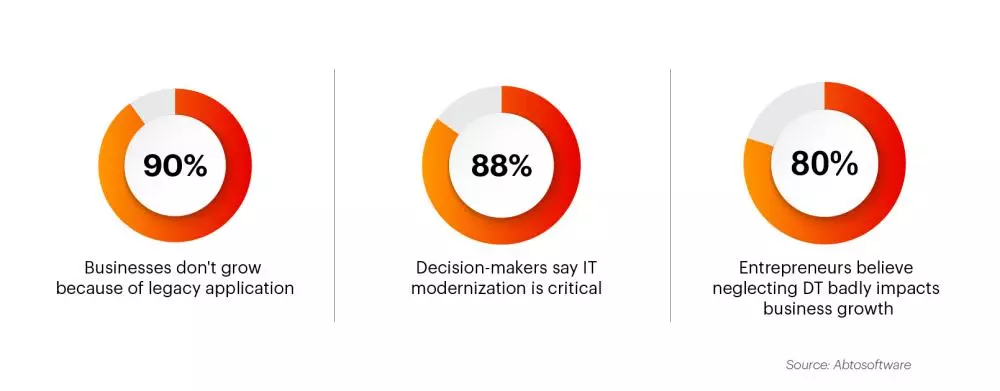
Modernizing applications and infrastructure is seen as essential for staying competitive in the digital age. This strategic view helps organizations leverage technology effectively and drive growth.

Why most businesses continue to support legacy applications?

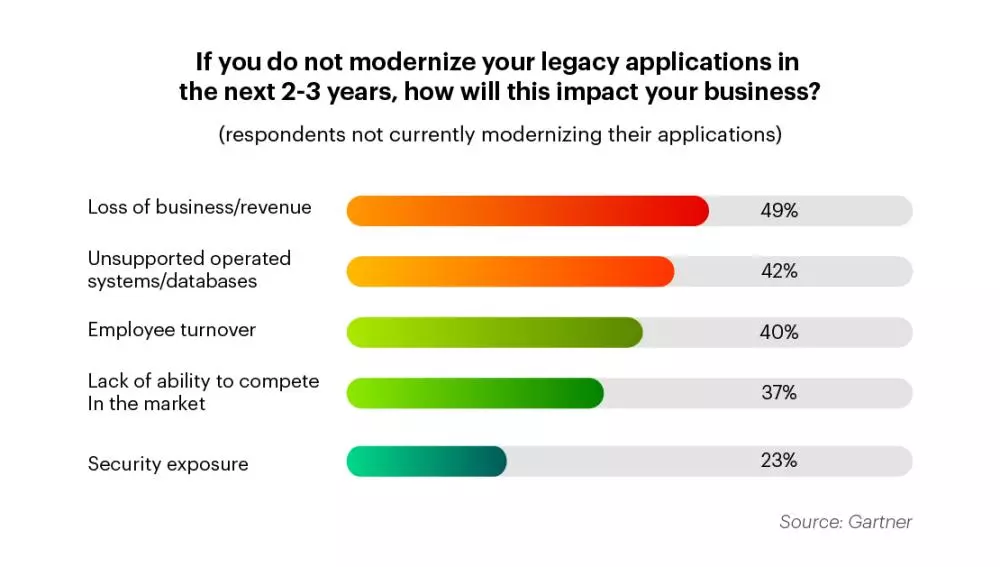
The State of Application Modernization Report 2024 states that 62.5% of CTOs had spoken about their biggest challenge being, “the accumulated technical debt and dependencies within legacy applications.”

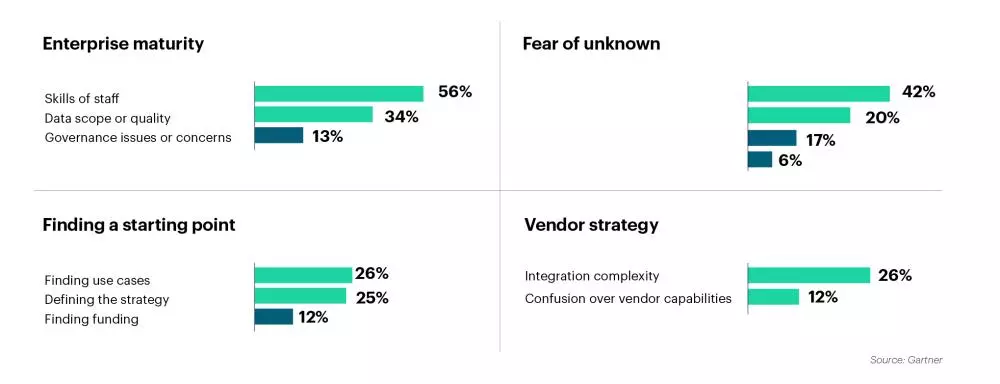
Despite the obvious benefits of modernization including adoption of AI, many businesses continue to support legacy applications in their operations for multiple reasons:

Critical role in operation

Legacy applications often perform essential functions such as supporting core business processes, financial transactions, customer data management, and other critical activities. Replacing these systems can be risky and complex considering that business operations cannot be disrupted during transition.

Intricated architecture and integration

Compatibility with modern platforms and technologies could be potentially challenging, time-consuming and error-prone for legacy systems which are built on outdated technology. Legacy applications often have intricated architecture and interdependencies. Untangling these legacy systems and integrating with modern systems can be a daunting task and cause business to delay or avoid modernization.

Data and compliance concerns

Critical business data in legacy applications is essential for operations, decision-making, and analysis. Migrating this data is complex and risky, potentially causing security & compliance concerns, data loss or corruption.

High cost of modernization

Migrating to new applications often gets costly and can be substantial, not only due to direct expenses like new infrastructure, systems and software but also indirect expenses like data migration, system integration, and employee training.

Employee and stakeholder resistance to new technologies

People who are accustomed to working on legacy applications are the main barriers and may resist new technology due to comfort, fear of change, or concerns about the learning curve.

Skill Gap

Many organizations lack the IT staff, expertise, and time to migrate to new applications. Managing legacy applications with limited resources is often more practical, despite the drawbacks. Also finding engineers with expertise in both legacy and modern technologies could be a challenging task.

Fear of disruption

Legacy applications are embedded in a business’s operations, including those of partners and customers who rely on them. Changing these systems could disrupt relationships and operations, so businesses continue to support them to ensure continuity and reliability.

5 reasons why legacy applications hinder AI adoption

While legacy applications have been the backbone of operations, they pose significant challenges to AI ambitions. Such applications and systems are riddled with critical limitations that impact data accessibility and drain organizational resources. Here are five shortcomings of legacy applications that hinder AI adoption:

1. Data silos: Legacy applications often store crucial business data, but accessing and utilizing it becomes difficult due to outdated formats and limited data extraction capabilities. This hampers the use of large, high-quality datasets essential for AI applications.

2. Incompatibility with AI systems: Many legacy systems are incompatible with modern AI technologies, hindering effective implementation and scaling. This incompatibility can hinder seamless adoption of AI and limit its potential benefits.

3. Lack of integration capabilities: Many legacy systems lack modern APIs or integration capabilities needed to connect to AI platforms and other contemporary technologies.

4. Increased maintenance cost: Maintaining outdated applications often proves costly and resource-intensive, diverting funds from investing in new technologies like AI and straining budgets.

5. Limited scalability and performance: As legacy application is built on outdated hardware and software architectures that it struggles with computational demands of Modern AI applications like scalability and performance, failing to handle the large volumes of data and high processing requirements needed for AI, leading to inefficiencies and bottlenecks.

6. Security and compliance Issues: Security is a grave concern, as legacy applications are more vulnerable to threats and lack the advanced features needed to protect sensitive data and comply with modern regulations.

Modernizing legacy applications has its own challenges

Forward-looking businesses that plan to modernize their legacy systems still face many challenges along the way. While both boardroom members and IT leaders share the common goal of enhancing the customer experience and harnessing AI, their unique challenges can complicate modernization efforts and undermine AI’s effectiveness.

Boardroom Members IT Leaders
Accessing and utilizing data effectively:Boardroom members need timely, accurate data for decision-making, but legacy applications complicate data access and usage, limiting strategic insights. Integrating value streams:IT leaders often struggle to align different IT projects and systems seamlessly to support overall business objectives efficiently.
Integrating value streams:Boardroom members struggle to ensure business processes and operations align with organizational goals efficiently. Managing technical debt:Technical debt involves maintaining and updating older systems and code. IT leaders must address this to avoid hindering innovation and efficiency.
Managing organizational change:Implementing new technologies requires significant organizational changes, and boardroom members must manage resistance and ensure a smooth transition. Handling high software license costs:Legacy systems often have costly licensing fees. IT leaders must manage these while balancing investment in new technologies.
Phasing out outdated applications:Decommissioning legacy applications is complex, requiring boardroom members to manage the transition carefully to avoid disrupting operations and ensure full integration of new systems. Addressing skills and talent gaps:IT leaders struggle to find and retain skilled professionals to manage legacy systems and new technologies, slowing modernization efforts.

Overcoming these challenges requires a strategic approach and expertise. Partnering with an expert service provider can provide valuable insights and solutions tailored to specific business goals, needs, vulnerabilities, industries, and budgets. In fact, 96% of large enterprises are using external providers for some form of application service, according to a recent ISG ADM study. These external providers provide the resources needed for these legacy transformation programs, as well as their ability to combine cost optimization with modernization.

InfoVision has been a strategic partner to various businesses in developing and modernizing their applications for years. Our enterprise ADM services prepare businesses for seamless evolution. With our expertise in cloud, serverless operational models, agile and SAFe implementations, and emerging technology practices, we help businesses transition from complex legacy structures to dynamic and resilient application portfolios. Our comprehensive suite of services, including API modernization, microservices architecture, cloud-native and serverless operations, custom application development, and updating existing applications, empower businesses to excel in their digital transformation.

The critical role of application optimization in ADM

Modernizing and optimizing applications will become increasingly important as technology stacks grow more complex and demanding. With the integration of advanced technologies like AI and cloud computing, existing applications will need to be fine tuned to meet new requirements efficiently. By focusing on ADM, businesses can stay competitive, enhance user experiences, and maximize their technological investments.

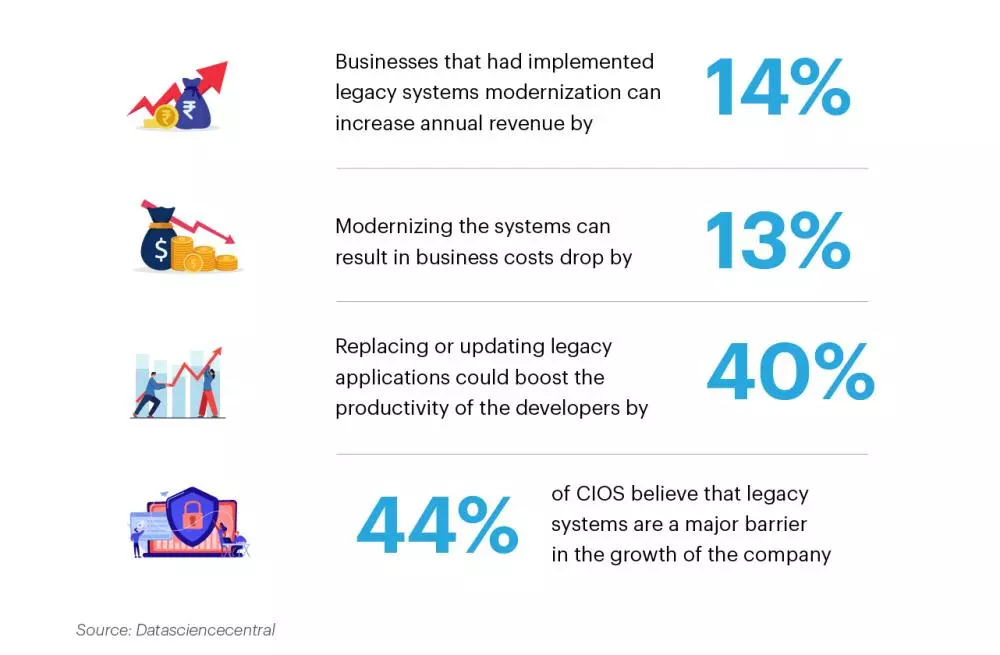
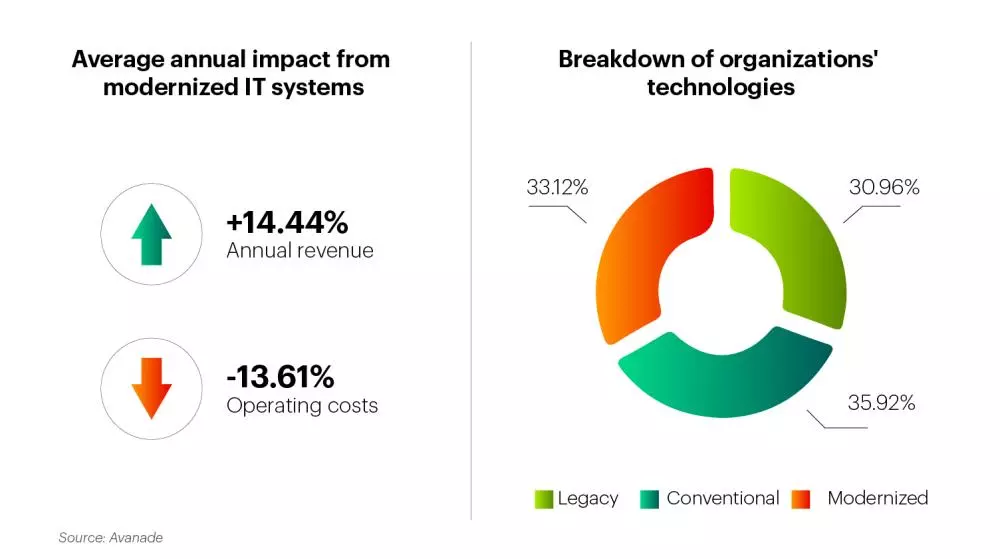
Research by top IT industry experts suggests that replacing legacy systems can potentially reduce operational costs by 13 percent annually and boost revenue by over 14 percent.

InfoVision can help you forge a future of digital modernization and expand your limits with enterprise ADM services. Connect with us today to learn more!

Advancing telemedicine: Addressing gaps, creating possibilities

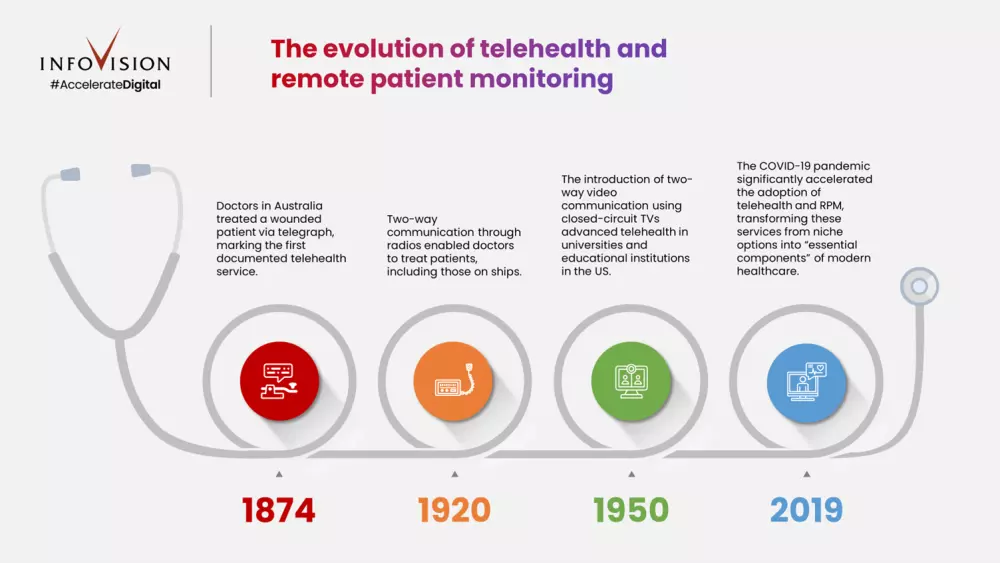
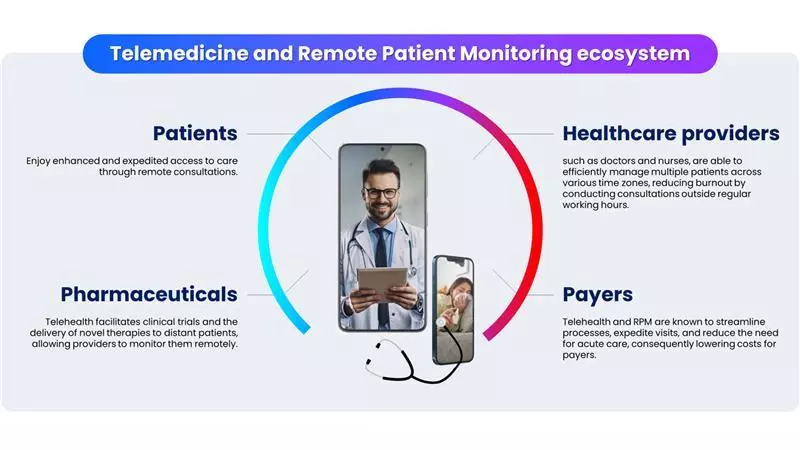
The first two decades of the twenty-first century saw increasing adoption of Telemedicine and Remote Patient Monitoring. The pandemic irrevocably changed one aspect of healthcare delivery – it allowed Telemedicine to move from consumer paid one-off services to mainstream healthcare delivery integrated with Provider and Payer Systems. While after the pandemic, patient interest in telemedicine has tapered or reduced, providers now see telemedicine as a key option to avoid burn-out of clinicians rushing physically from one location to another. Telemedicine can often provide faster and better experiences to rural patients, reduce doctor and nurse burn-out, can bring novel therapies and clinical trials to say, cancer patients, among many other benefits.

Telehealth and RPM have enabled the industry to close the gap between patients, caregivers, and providers pivoting around advanced technologies. From virtual consultations to monitoring patients remotely, these innovations offer unprecedented access to quality care. While Telehealth and RPM are not entirely new concepts, many healthcare stakeholders have realized their potential in the recent years, enthused with the prospect of making healthcare accessible to everyone.

Moving to the mainstream

Most Telehealth services were “consumer-paid” in the pre-pandemic era; but the need to minimize in-person visits drove rapid integration of virtual consultations and RPM into payer and provider systems. This shift potentially solidified telehealth and RPM as mainstream healthcare solutions and are no doubt here to stay. In fact, a recent survey clearly indicates that the “online doctor consultations segment” of the digital health market is projected to add 13.7 million users between 2024 and 2028, approximating an 11.74% increase. Such radical shifts are happening across the globe. Many countries are jumping onto the Telehealth bandwagon and enacting supportive legislation in recent years.

For instance,

These laws and requirements supplement the existing regulations and authorizations needed to provide general health services.

The new healthcare model is here to stay

Telehealth and RPM bring a wealth of benefits to care delivery, benefiting everyone in the healthcare ecosystem.

Continuous monitoring of patients’ health conditions with the help of technologies such as data analytics, leading to timely interventions and improved management of chronic illnesses are one of the biggest attractions of this modern approach. The additional advantage of scalability ensures that healthcare services remain adaptable to the needs of a growing population, maintaining accessibility and effectiveness even during periods of heightened demand or resource constraints. In fact, according to a Rock Health report, 80% of people have used a telemedicine service at least once.

Furthermore, telehealth enhances the efficiency of healthcare delivery and democratizes access to medical expertise, particularly in underserved areas. Individuals with unique medical needs, such as those with disabilities, physical limitations, or age-related issues, greatly benefit from telehealth. It provides them with access to specialized care without the need for travel, ensuring they receive timely and convenient healthcare from the comfort of their homes. This is especially impactful for people residing in remote regions, such as rural Washington, where traveling long distances for basic healthcare services is often burdensome and time-consuming.

Why are people adopting Telehealth and RPM?

People are adopting Telehealth and RPM for several compelling reasons. These tech-driven solutions have proven highly effective in various therapies and indications. By closely monitoring a patient’s condition, these technologies ensure smooth transitions between different pharmaceutical services, preventing confusion and discontinuation. Moreover, telehealth facilitates collaboration with clinics, providing patients with a comprehensive view of their healthcare journey. This ensures continuity and a better understanding of their treatment progress, which is crucial for effective healthcare delivery.

Remote health monitoring of patients in their home is another big reason. After hospital discharge, patients often lose healthcare oversight, leading to avoidable readmissions and distress. Telehealth offers continuous supervision, preventing relapses into acute conditions and reducing hospitalizations, thereby reducing both financial strain and emotional stress for patients and caregivers. For example,  Lee Health, Florida, RPM has successfully reduced 30-day readmission rates by 50%, highlighting the tangible benefits of integrating telehealth into post-discharge care pathways.

The last few years have marked a profound transformation in healthcare delivery, with a surge in telehealth adoption. Compared to the pre-pandemic era, where telehealth visits accounted for merely 1%, current statistics show a remarkable increase, with approximately 14–17% of visits now conducted through telehealth channels. Furthermore, telehealth has played a pivotal role in bridging the gap between physicians and family members, who are crucial in supporting patient recovery. In response to this shift, healthcare facilities have significantly expanded their telehealth capabilities, such as telehealth training for professionals, mobile health applications, and more, reflecting a positive evolution in healthcare delivery.

The central role of data and technology

Data and technology form the backbone of Telehealth and RPM, driving innovation in modern healthcare delivery. Advanced monitoring devices and sensors enable the remote collection of patient data, facilitating continuous tracking of health status. Real-time communication platforms allow for seamless virtual consultations, supported by electronic health records that ensure easy access to patient information. Dedicated telehealth platforms provide the infrastructure for virtual care services, enabling appointment scheduling and e-prescriptions. One cannot overemphasize the role of analytics in elevating the overall telehealth experience for patients as well as providers. Digital health solutions monitor side effects, manage current medications and therapies, and track Patient-Reported Outcomes (PROs). Patients at home tend to be more comfortable, which can lead to more accurate reporting of symptoms and side effects. PROs are particularly valuable as they provide direct insights into the patient’s condition and experience. By collecting and analyzing this data, healthcare providers can gain a more accurate understanding of the patient’s health status and tailor treatments accordingly. This continuous feedback loop ensures that interventions are timely and effective, ultimately leading to better health outcomes.

Addressing challenges for improved effectiveness

While Telehealth has made good strides in healthcare delivery, there are a good number of challenges that still remain to be navigated. Providers, for instance, will have to negotiate complex issues to ensure effective and efficient remote care. From integrating disparate data systems to maintaining patient privacy, and from educating users to dealing with regulatory complexities, each challenge requires careful consideration and robust solutions. Here are some of the key obstacles healthcare providers face in the realm of telehealth:

  • Integrating data from various platforms and standalone applications is complex.  This requires sophisticated interoperability solutions to ensure seamless communication and a comprehensive view of patient health.
  • Educating both patients and healthcare providers on how to use telehealth technologies effectively is also a crucial and challenging task.
  • Data privacy remains a significant concern, necessitating robust security measures to protect sensitive patient information, thus ensuring trust.
  • Navigating the complex landscape of compliance and regulations, which vary by region, adds another layer of difficulty.
  • Reliable technological infrastructure is essential for telehealth success but costly to maintain, particularly in areas with poor internet connectivity.
  • Variability in reimbursement policies affects the adoption and sustainability of telehealth practices.  Ensuring patient engagement and providing ongoing technical support are critical for the smooth operation of telehealth services.

Providers must use solutions that can help navigate such tides. In a recent webinar, I exchanged my views with industry experts on the essential features required in today’s Telehealth solutions to ensure a superior patient experience. Watch the webinar on-demand to learn more.

Partnering with domain and technology experts is the key to building such robust solutions and minimizing roadblocks. At InfoVision, we are excited to partner with diverse healthcare businesses in building innovative, technology-driven solutions and contributing to the future of modern healthcare.

With over 25 years of delivery through 11 centers, InfoVision offers electronic data capture, lab informatics, and remote monitoring. Our digital and innovation services support customer, patient, and enterprise technology stacks, and are driven by 130+ technologists and cross-functional teams. We specialize in robust technology solutions for addressing key challenges in telehealth. We help providers reduce clinical trial time and costs with data warehousing, data analytics, collaboration, automation, and Artificial Intelligence (AI). Our end-to-end solutions adhere to HIPAA, GXP, CSV, 21 CFR Part 11, and other regulatory guidelines.

The future of digital healthcare

Telehealth and RPM are poised to become increasingly integral parts of the healthcare landscape, transforming the industry as we know it. With the rapid pace of advancement, these technologies are expected to seamlessly integrate into clinical workflows, promising a smoother experience for patients and providers alike. It’s crucial for healthcare stakeholders to seize this opportunity and harness the power of data to develop robust telehealth solutions. By doing so, we can make healthcare more affordable, accessible, and compliant than ever before.

InfoVision uses diverse technologies to transform healthcare delivery and improve patient outcomes. Connect with us today to learn more about how we can help you in building robust healthcare delivery systems.

GitHub Copilot: Reimagining your coding with AI

Quick Scoop! Dive into the world of GitHub Copilot, your AI coding buddy. It’s like having a smart friend – the one that not only knows how to code but also speeds up things. The advantages are plentiful. This friend integrates smoothly into popular IDEs, offering real-time coding assistance that adapts to various languages and frameworks. By no means is it here to replace the programmers. This is just the beginning of the future of coding/learning and being more productive. Join me to explore this interesting, evolving and transforming technology advancement!

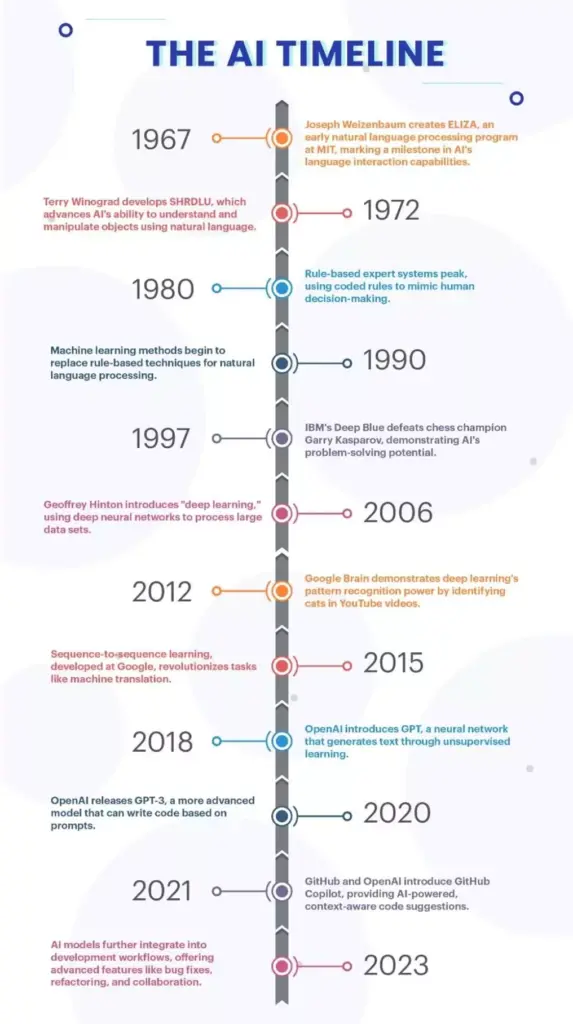
Just a few years ago, what seemed like science fiction is inching close to reality. AI assistants, once thought to belong to a world of make-believe, have today become an integral part of our technological landscape. In 1967, MIT computer scientist Joseph Weizenbaum’s natural language processing program ELIZA captured the imagination of everyone who interacted with it. This pioneering software was not just a tech demo, it opened doors to a revolution of sorts that was going to change the business landscape forever.
 

Given the above context, it is indeed an exhilarating time for technologists, as we stand on the brink of a new era in AI-driven innovation.

The last few years have displayed an interesting trajectory of growth as far as the AI assistants are concerned. These assistants have become integral to daily digital interactions, enhancing productivity, and offering convenience by automating routine tasks and providing instant access to information. They’ve once again become popular as genuinely valuable tools for specific use cases.

GitHub Copilot stands out as a prime example of this evolution, specifically tailored to revolutionize programming. At InfoVision, we’re harnessing the power of Generative AI like GitHub Copilot, not only to enhance our customer solutions but also to empower our developers with the skills needed for tomorrow’s software development challenges.

What is GitHub Copilot?

In simple terms, GitHub Copilot is a sophisticated AI pair programmer powered by a machine learning model called Codex. Codex has been trained on a massive dataset of publicly available code and natural language text. This training enables Copilot to analyze your current code, the context of the file and project, and your comments to generate tailored code suggestions. It is a coding companion that has studied the best practices and patterns from millions of lines of code and can offer contextually relevant help as you work.

While definitive real-world data is lacking on how effective having a coding assistant is for developers, initial reports are promising. In a controlled experiment using GitHub Copilot, researchers found that the treatment group with access to the pair programmer completed the specified task 55.8% faster than the control group.

That is a great first step as programmers are creatures of habit with very specific tool preferences and routines. The ideal pair programmer needs to integrate with these and work where you work.

So, what IDEs does Copilot work with?

One of the most appealing aspects of GitHub Copilot is its seamless integration with popular development environments. It’s currently available as an extension for popular IDEs (Integrated Development Environments) like:

  • Visual Studio Code
  • Visual Studio
  • JetBrains suite of IDEs
  • Neovim

This means developers can enjoy the benefits of Copilot’s AI-powered assistance directly within their preferred coding environment. There are no clunky workarounds or switching between tools—just a knowledgeable helper who is happy to chip in when needed.

For example, imagine you’re working on a Python project and are trying to implement a sorting function. Instead of tediously writing the entire function from scratch or searching online for the right implementation, you could start by typing a comment like:

# Sort the list of numbers in ascending order

Understanding the intent and context, Copilot can suggest a complete implementation of a suitable sorting algorithm (like merge sort or quick sort). This not only saves time but can also expose programmers to different approaches they might not have considered otherwise.

Besides this, Copilot’s extensive pattern recognition also helps it step in and help with refactoring code, such as suggesting intelligent functions that can replace complex code blocks. Its training on popular testing frameworks like Jest or Pytest can also help Copilot assist developers in setting up basic test structures and writing meaningful assertions.

How can developers rely on this copilot?

GitHub Copilot can analyze context and offer suggestions on a range of programming languages. This makes it a powerful tool in the hands of developers.

At InfoVision, our development teams are using the following features to fast-track their productivity:

  • Code suggestions: Our developers use GitHub Copilot as a development partner, using lines or blocks of AI generated code to increase their speed and efficiency.
  • Context awareness: By analyzing surrounding codes, GitHub Copilot is assisting our developers with tailored recommendations.
  • Language and framework support: With deep understanding of a range of popular languages like Python, JavaScript, TypeScript, C# among others, as well as a range of coding frameworks, GitHub Copilot is empowering our developers with framework- and language-specific suggestions.

The productivity benefits of GitHub Copilot

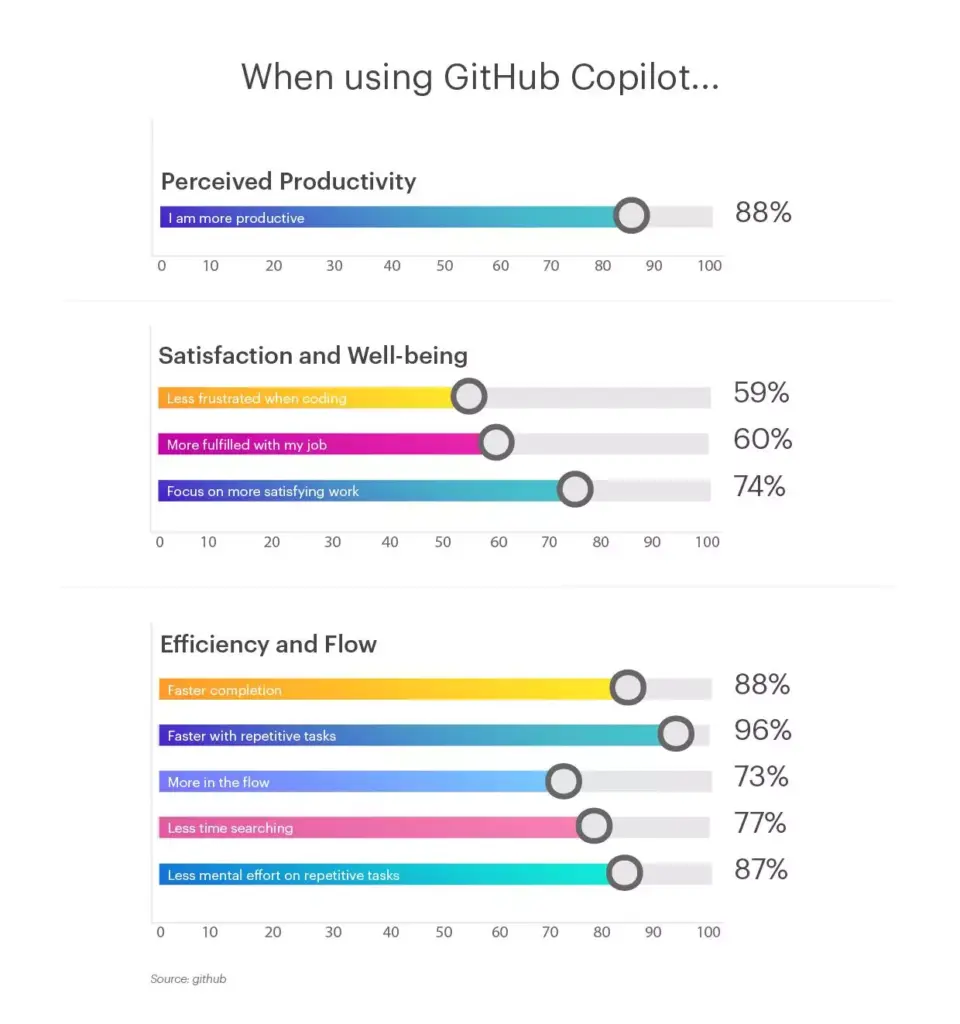
GitHub Copilot’s real powers come into play with regard to developer productivity. It automates the most mundane and repetitive elements of coding, like boilerplate structures and basic functions. This frees up developers’ time to focus on innovation, strategic problem solving, devising unique approaches, algorithms, and features.

Github’s own data, based on the SPACE developer productivity framework, showcases Copilot’s impact

Real-world applications and success stories

Moving beyond theory, let’s understand where GitHub Copilot has made a tangible difference in the lives of developers and organizations. Copilot helps large teams collaborate better by creating a baseline for coding standards and making it easy to build learning repositories with complete documentation for new hires to catch up on. It is also extremely useful for rapid prototyping and quick suggestions, as documented by the team at BDRSuite, who used it to speed up the development of PowerShell scripts to manage Microsoft Azure services. 

Use cases: Where Copilot shines

  • Repetitive tasks
  • Exploring unfamiliar territory
  • Debugging

The limitations of AI assistants

At InfoVision, we work closely with our developers to maintain a balanced approach by ensuring that they not only understand the new possibilities with AI but also the challenges with using AI tools like GitHub Copilot.

Copilot is a powerful tool but there are times it misses the mark by giving contextually inappropriate suggestions or produces errors. Critical evaluation of Copilot’s suggestions remains a crucial part of every developer’s responsibility.

We are also careful about ruling out over-reliance on tools like GitHub, so that the developers’ inherent human skills like problem solving remain unhindered.

Our years of industry experience guide our developers on the safe and ethical use of AI tools like GitHub Copilot. Instead of isolating them from innovative and game changing technologies, we encourage our developers to use these technologies in safe environments and with clear guidelines. This ensures that we are preparing them for the future of AI-assisted development environments.

Generative AI coding partners: What to expect in the coming years

We’re just scratching the surface of what’s possible with the integration of AI in coding environments. At the pace at which Generative AI is evolving, I can predict that the following developments are just around the corner:

  • Contextual understanding: Future AI coding assistants are expected to develop deeper contextual and semantic understanding. This will enable them to offer more accurate and useful code suggestions that consider not just the syntax but the intent behind the code, potentially reducing bugs and improving software quality. Quality considerations like time complexity and space complexity will be evaluated on the fly, and the options provided will be the most optimal.
  • Integration with DevOps and cloud services: AI coding tools might integrate more deeply with DevOps practices and cloud services, automating more aspects of software deployment and infrastructure management. This could streamline the workflow from code generation to deployment, enhancing efficiency and reducing the time to market.
  • Improved security features: Security is a paramount concern in software development. Future AI tools will likely incorporate advanced security features to analyze code for vulnerabilities in real-time, suggest security best practices, and automatically refactor code to adhere to security guidelines, helping prevent security breaches.
  • Real-time collaboration and pair programming: AI-powered tools could evolve to facilitate real-time collaboration among distributed teams, acting not just as coding assistants but as facilitators for human-to-human interaction. These tools might mimic pair programming scenarios, where AI serves as one pair, offering suggestions, reviewing code, and even explaining its own recommendations to enhance team productivity and learning.

The future of development: Humans and AI, side by side

GitHub Copilot represents a new era in developer productivity and innovation. At InfoVision, we encourage our teams to experiment with Copilot with clear checks and balances. Ultimately, the blend of human intelligence and AI-powered productivity will be the future of code development. The bottomline for employers is to encourage an environment of responsible AI adoption in coding workflows.

Forward-thinking organizations like InfoVision are actively developing guidelines, checks and balances, and training programs that equip development teams to leverage AI tools like Copilot, while simultaneously ensuring ethical considerations.

If you’d like to learn more about what it can do or discuss the best strategies for how it can be rolled out to developers at your organization, please write to me at digital@infovision.com

Gen AI in retail: Powering loyalty and customer experiences

Today, if there is one topic that unites businesses and technologists in a shared dialogue, marked by equal parts interest and enthusiasm– it is General AI.  From startups to mid-sized organizations to large enterprises, there’s a universal eagerness to engage with this groundbreaking technology.  Although many industries are still exploring Gen AI through nascent or small-scale experiments, retail has made significant strides. This sector has embraced General AI with open arms, leveraging it to pioneer a shift towards more personalized customer experiences.

Gen AI has indeed emerged as a transformative force, creating a reality where its presence is not just valued but deemed essential. The consequence of the steady inroads it is making is witnessed in the seamless implementation of a hybrid model in retail that blends online and in-store experiences. This evolution springs from a dramatic change in consumer habits triggered by the pandemic.

In this blog I intend to give you a quick tour of this fascinating and interesting space that is emerging.  Join me in exploring how technology is not just influencing this realm but is also driving differentiation by creating advantages and opportunities.

Gen AI in retail personalization: A plethora of possibilities

In the aftermath of COVID-19, consumer behaviors and patterns have undergone significant transformations, particularly regarding brand loyalty and the demand for bespoke experiences. This shift necessitated a pivotal change in how technology is utilized, compelling businesses to adopt a more agile approach to personalization and adaptation. With the advent of groundbreaking technologies such as Gen AI, we are now equipped to implement changes and personalize experiences at an unprecedented speed, revolutionizing the way we engage with consumers and meet their evolving needs.

Personalization is not a new concept in retail but is certainly one of the most interesting outcomes that a lot of retailers are excited about. The depth and breadth of personalization possible with Gen AI are unprecedented. In the past, personalization could have involved sending an email to a consumer and addressing them by name. Personalized product suggestions, customized shopping experiences, and dynamic content production that speaks to individual preferences and behaviors are all now made possible by Gen AI.

According to imrg report 74.7 % of consumers are more likely to make repeat purchases from more personalized brands.

Gen AI significantly enhances mobile adoption rates and customer engagement by fostering personalized interactions, thereby cultivating customer loyalty. Its capability to tailor the human experience on a nuanced level is profound, offering timely and relevant information without overwhelming the user. Gen AI enables a dynamic and customized mobile experience, adapting elements like layout and color to individual preferences. This bespoke approach, focusing on meeting specific customer needs, elevates the mobile experience, establishing a unique, one-to-one connection that distinguishes it in the digital landscape.

Gen AI leverages the algorithms and the power of machine learning from customer data, including past purchase behavior, browsing history, and preference, to provide the most personalized of interactions. In addition to improving the shopping experience, this degree of personalization strengthens the bond between the customer and the brand, boosting conversion rates and loyalty.

Generative AI is transforming the shopping experience in several innovative ways:

Transforming marketing and advertising

With a focus on delivering the right message to the right person at the right time, marketing and advertising in the digital age have grown more and more data driven. This accuracy could reach unprecedented levels thanks to Gen AI.

The level of personalization Gen AI brings allows you to create marketing content that will resonate with individual preferences and behaviors. The dynamic ad creation of Gen AI will allow the changes and personalization in real time according to the users’ interactions and data of the displayed advertisements. This makes certain that the marketing message is relevant and hence will trigger increasing engagement rates and finally conversion rates.

Enhancing retail operations with Gen AI

Beyond applications that interact with customers, Gen AI is transforming back-end processes and improving the responsiveness and efficiency of retail workflows.

For instance, inventory management, which is usually a complex and resource-consuming process behind the scenes can be optimized greatly with the help of Gen AI. The algorithms can read data by going through the sales numbers, predict demand patterns, and recommend optimal levels of stock to be maintained so that there is no overstock or ‘stockout’ situation. Imagine how this would contribute positively to operational efficiency and all this while ensuring that customers find what they look for, thus enhancing customer satisfaction.

The second major area that Gen AI is bound to impact in a big way is supply chain optimization. Gen AI can bring in the ability to collect and process data up and down the pipeline to develop models that predict disruption in the process, identify the most efficient paths, and even reach out to other suppliers as part of creating an efficient and well-responding supply chain.

While the retail sector is showing great promise with respect to the adoption of Gen AI, it definitely is not a smooth sail – especially in the context of challenges vis-a-vis data privacy and security.   These two concerns certainly cannot be overlooked in today’s backdrop.

AI literacy and the development of the required infrastructure are crucial right now as technology is becoming more and more integrated into daily business operations. Retail business owners need to adopt a strategic approach in implementation that has strong data management, investments in training for employees, and ensuring the use of AI-safe solutions.

Ethical considerations and responsible Gen AI in retail

The ethical implications of this technology must be addressed as the use of Gen AI in retail grows. Retailers face a number of ethical challenges, including the possibility of bias in AI algorithms, data privacy issues, and employment effects.

Retailers need to make sure that Gen AI systems are inclusive, transparent, and fair in order to prevent biases that might cause particular customer groups to be treated unfairly. Furthermore, data security and privacy are non-negotiable today.  The government stipulated regulatory frameworks such as European Union’s General Data Protection Regulation (GDPR), call for strict measures to protect consumer information.

Responsible AI also takes into account the social aspect, particularly in the employment sector, where reskilling and upskilling of the workforce will undoubtedly be necessary due to AI’s increasing automation of tasks.

According to the World Economic Forum, by 2025, half of the workforce will require retraining in order to incorporate new technologies. With a workforce that is becoming more and more AI-compliant, the investment in people enables a smooth transition for more strategic and less repetitive tasks.

The Future of retail with Gen AI

The potential applications of Gen AI in retail seem endless. The future of retail is expected to be more inventive, efficient, and focused on the needs of the consumer, with everything from highly personalized shopping experiences to fully automated supply chains. Imagine Gen AI-powered virtual changing rooms that allow consumers to virtually try on clothing in the comfort of their own homes! This could lower return rates and increase customer satisfaction.



Further, there is immense potential in Gen AI to integrate with technologies such as 5G, the Internet of Things (IoT), and blockchain.

The retail industry is set to undergo a significant transformation with the possibilities of Generative AI. This transformational technology is the key to unlocking new levels of efficiency and personalization, from changing marketing strategies to streamlining operations and improving customer experiences.

The future of retail will undoubtedly be shaped by those who, as we approach this new era, not only embrace Gen AI but also do so in a responsible and ethical manner, placing the customer at the centre of their digital transformation strategies. One thing is for sure: the retail landscape will never be the same despite the exciting and intimidating road ahead.

Download the whitepaper: Generative AI: On the cusp of a groundbreaking paradigm shift?

Collaborate with InfoVision for smart AI Solutions

At InfoVision, we are at the forefront of transforming our retail partners by helping them incorporate generative AI into their business landscape. With our wide range of services – including Data Analytics, Data Science, Data Engineering, AI/ML, and more – we can leverage the potential of Gen AI to create customized solutions that address both comprehensive or specific business needs.

InfoVision has been a part of many transformation Journeys in Retail solving some of the critical customer/business problems like Personalization of rewards & loyalty, Omnichannel experiences, Store experience transformation, Point of sale implementation, virtual tryon’s, and AR experiences.

Dive deeper into the subject and gain diverse insights by watching our webinar, where I engage in a comprehensive discussion on the General AI Revolution in Retail with industry leaders. This session promises to enrich your understanding with varied perspectives and expert analysis.

Connect with us at digital@infovision.com

Combating retail shrinkage: How technology can help

In the rapidly evolving retail landscape, technology stands at the forefront of innovation, driving transformative solutions that redefine the shopping experience. As a result, the global retail industry is embracing rapid digital transformation in response to constantly evolving consumer demands, improving customer interfaces, and fostering innovation.

Yet, it is equally important to pay attention to a significant challenge that the retail industry is struggling to mitigate:  the issue of shrinkage. The pandemic marked the beginning of retail shrinkage, and the industry has seen a downward graph since then. The average shrink rate grew to 1.6% in 2022, up from 1.4% in 2021, according to NRF’s 2023 National Retail Security Survey.

Technology offers interesting solutions to work around the pressing issue of shrinkage that is plaguing the retail industry.  Let us delve into the challenge in detail and examine how modern technologies are equipped to address this effectively.

What causes retail shrinkage?

While there are multiple types of shrinkage in retail, the top reasons include operational losses, theft, shoplifting, return frauds, and employee theft, with Organized Retail Crime (ORC) topping the list. ORCs are a type of theft organized by a large-scale group backed by a criminal enterprise and accounted for a shocking 78.1% shrinkage in 2022, according to NRF’s survey. ORCs are also one of the major causes of violence in the retail industry, proving to be a risk for employees and customers alike.

It is not only the small or mid-sized outlets, but, retail shrinkage has impacted many retail giants as well. For example, Target, one of the biggest retailers in the US, has recently announced closure of nine stores, citing shrinkage as the primary reason. Many other retailers, including Dollar Tree, Home Depot, and others, have raised their concerns, citing retail shrinkage as a top concern.

How retailers can address shrinkage with technology

Digital transformation is at the forefront of retail innovation. With cutting edge technologies such as Artificial Intelligence (AI), automation, cloud computing, and data analytics, retailers can create a more agile, efficient, and resilient supply chain that will support the demands of today’s consumers. Let’s take a closer look at how retailers can leverage these technologies:

Retail supply chain visibility is crucial for retailers to make informed, data-driven decisions. By utilizing sensors, Internet of Things (IoT) devices, and data analytics solutions, retailers can seamlessly achieve visibility. Such data-driven insights enable retailers to track inventory levels, shipments, and production processes, which ultimately helps in improving resource allocation and mitigating risks. Additionally, digital collaboration platforms help connect with suppliers, distributors, and other partners in real-time making communication, data sharing, and collaboration effortless. By embracing IoT solutions, retailers can minimize retail shrinkage while gaining more visibility, becoming more data-driven, and increasing agility. Some of the best examples include retail giants like Nike and Zara, which have implemented RFID (Radio Frequency Identification) technology to maintain their inventory accuracy. RFID tags enable real-time tracking and minimize overstock and stockout situations, which are one of the reasons for shrinkage, thereby reducing retail shrinkage.

Computer vision is playing a key role in addressing shrinkage with respect to fraud or threats. This technology uses AI to recognize the posture of a buyer, correlate it with the transaction, and identify instances of “sweathearting” – instances where the customer fails to scan products or manipulates the price, thus raising real time alerts. Computer vision applications in retail use ML-based algorithms to discover consumer behavior, identify patterns, and make informed decisions on these inputs. One of the most prominent use-cases of computer vision is to detect unusual crowd movements, security breaches, and unauthorized access to enhance store safety and protect both employees and customers. Best Buy, a multinational consumer electronics retailer, uses computer vision to detect fraudulent returns. The system can identify patterns and anomalies, such as returning a large number of high-value items without a receipt or returning items different from what was purchased. The AI-powered computer vision technology marks these returns and prevents them from being processed.

Leveraging technologies to address retail shrinkage requires expertise

Leveraging technology solutions to address retail shrinkage is easier said than done. One of the most prominent hurdles to this approach is revenue leakage in retail. Revenue leakage is the potential loss of revenue due to inefficiencies, errors, and fraudulent activities within operations. Furthermore, the costs associated with implementing new technologies often become a hurdle. The initial investments in software and digital infrastructure, along with maintenance and upgrades, can potentially become a burden for smaller retailers on budget.

When it comes to implementing new technologies, integration with the existing systems becomes a critical consideration. Ensuring the compatibility of old and new technologies requires time and expertise, which can further complicate the process.

The retail industry is also one of the top industries that collects vast amounts of data, thereby making data privacy and security a critical challenge. Retailers must go above and beyond to safeguard sensitive customer data and ensure compliance to maintain trust and integrity, as it can otherwise negatively impact the customer experience.

Lastly, any digital initiative requires extensive training programs and cultural shifts for successful outcomes. Managing such transitions with the support and engagement of employees can prove to be challenging.  Addressing such challenges requires a strategic approach, including meticulous planning, domain expertise, and tailored solutions that meet the business’ needs. Partnering with experts is crucial for retailers looking to leverage technology solutions to minimize retail shrinkage.

InfoVision is at the forefront of empowering retailers to navigate and overcome real-world challenges through innovative technology solutions. Our expertise spans across cutting-edge technologies such as computer vision, machine learning, and RFID, enabling us to offer a transformative approach to mitigating retail shrinkage. By integrating advanced computer vision, we elevate surveillance capabilities, while machine learning facilitates predictive analytics to foresee and mitigate potential threats. Furthermore, our use of RFID technology ensures precise inventory management, collectively forming a comprehensive strategy to fortify retailers against shrinkage. Through our retail and innovation services, we empower retailers to improve their innovation potential, flexibility, and scalability to leverage emerging technologies and sustain business growth. Our team of experts has helped many large retailers pave their way for closer brand-consumer relationships, strengthen trust, and minimize revenue leakage, thereby controlling retail shrinkage.

Embracing technology for retail revolution

Modern retailers are increasingly leveraging technology to solve their business challenges and gain a competitive advantage. In the era of instant shopping, eCommerce, and more, retailers must integrate technology solutions into their processes to gain more visibility and data-driven insights to make informed decisions and combat retail shrinkage. From inventory management to demand forecasting – the sky is the limit for technology.

To learn more about how you can leverage the power of technologies to reduce retail shrinkage, connect with us digital@infovision.com today and learn how we can help you stand differentiated and grow revenue.

Navigating the cyberthreat landscape: A blueprint for transformation

In recent years, the landscape of cyber threats has dramatically transformed. As smart devices proliferate, the internet’s expansion mimics a wildfire, perpetually serving as a fertile ground for emerging threats.  Ransomware is indeed a major concern for organizations, especially smaller and less-protected ones, accounting for 72.7% of the cyberattacks in 2023. Trends indicate cyberattacks focusing on data theft and ‘extortion-only’ campaigns. For instance, the MOVEit or GoAnywhere attacks from 2023 refrained from using encryption-based ransomware, instead demanding extortion payments to prevent the disclosure of stolen data. According to Emisoft’s research, US-based organizations made up 83.9% of known MOVEit corporate victims, with Germany, Canada, and the United Kingdom following. Another notable instance of a ransomware attack was the breach that Hatch Bank experienced as a result of the GoAnywhere vulnerability. This served as a stark reminder of the real-world repercussions, affecting customer data and raising widespread concern.

Such examples highlight an evolving trend in cyberattacks, emphasizing the need for increased vigilance and robust cybersecurity transformation across all domains. ISG (Information Services Group) cybersecurity insights acknowledge that a significant portion of the SMB market is closely connected to large corporations, directly or indirectly, as part of a broader supply chain. Consequently, it is essential for SMBs to invest resources in implementing appropriate security measures to mitigate vulnerabilities, address control gaps, and establish robust policies.

Despite the trends, there is a noticeable difference in the approach and organizations’ investment levels within the market, reflecting the varying degrees of digital transformation between large and small organizations. Consequently, the method of identifying cybersecurity challenges and the subsequent efforts to establish a secure environment largely align with the digital maturity of the enterprise, regardless of its size.

Top challenges in addressing the complexities of cybersecurity

Businesses face critical challenges in recognizing threats originating from unprotected devices and endpoints, vulnerabilities in applications and software, cloud misconfigurations, legacy infrastructure, and internal risks. The costs of data breaches are rising steadily due to missed opportunities, regulatory fines, and investigations. For instance, healthcare breaches averaged nearly $11 million in early 2023, up 8% from the previous year. Cybercriminals target weak links in supply chains, expecting software supply chain cybersecurity attacks to compromise identities and data.

Organizations need to move beyond perimeter security to ensure partners meet security standards. Open-source software and cloud adoption introduce new risks, with threat actors exploiting vulnerabilities. Furthermore, digital transformation investments increase vulnerabilities, with over $10.54 million IoT security risks reported in December 2022 alone. Complying with government regulations and sanctions is a challenge by itself, which requires maintaining compliance with often complex and evolving standards, potentially resulting in increased operational costs and limitations on business operations to avoid penalties. For example, the US Securities and Exchange Commission (SEC) introduced a cybersecurity strategy in 2023, which underscores the recognition among C-level executives of the importance of security risks and the need for enhanced transparency in addressing breaches and threats. 

The growth of technology also presents challenges for cybersecurity professionals and contributes to high employee attrition. Investments in digital technologies like IoT, AI, and ML have introduced increased, often unnoticed vulnerabilities in recent years. IoT adoption has expanded endpoints, leading to visibility challenges and susceptibility to attacks due to non-standard protocols and limited security integration. Furthermore, IoT invites concerns such as open source software, unpatched vulnerabilities, APIs, and weak password protection. This proliferation not only facilitates large-scale DDoS (Distributed Denial of Service) attacks but also heightens risks to critical infrastructure, with potentially severe financial and socio-economic consequences. Other trends, such as investments in remote work infrastructure, expand the enterprise perimeter and limit visibility across devices and applications, adding complexity to security efforts.

Many organizations also face challenges in aligning their CISO’s (Chief Information Security Officers) strategic security planning with overall organizational goals. ISG has identified specific hurdles, such as budget constraints, exacerbated by recession fears, that limit defenses against increasing cyber threats. Many CISOs struggle to allocate sufficient funds for effective security solutions and cybersecurity talent gap solutions. Lastly, operational challenges like work overload from alerts and technologies, complicated management by legacy systems, cloud misconfigurations, or the overarching need to adapt to emerging threats often overwhelm security teams.

How can organizations limit the attack surface?

Organizations that have robust cybersecurity measures prioritize business resilience in cybersecurity to withstand threats while maintaining trust, accountability, and customer experience. They invest in identifying and addressing vulnerabilities tailored to industry-specific risks. Key strategies include adopting the Zero Trust Security framework, SASE (Secure Access Service Edge), conducting rigorous risk assessments, and engaging in continuous monitoring, penetration testing, and red team simulations.

Suggested Read: The zero trust model: “trust no one” approach to cybersecurity

The “never trust, always verify” principle within the framework addresses various aspects such as perimeter-less enterprises, mutual authentication, explicit scrutiny, continuous monitoring, and network micro-segmentation. Implementing this framework necessitates a deep understanding of current security solutions and phased investments to consistently deploy relevant security measures tailored to the organization’s needs. Stricter vendor assessments and proactive prevention efforts complement robust response and recovery plans. Enterprises aim to conduct ongoing risk assessments and periodic audits across various domains, encompassing changes in business strategy, supply chain, M&A, and financial exposure. Additionally, resources are allocated to regularly conduct vulnerability scans and penetration tests to uncover insecure access points that may elude security analysts’ detection. CISOs collaborate with providers equipped with red teams to simulate advanced cyberattacks, gaining insights into vulnerabilities, weak access points, and potential pathways for adversaries to exploit sensitive data or disrupt networks. By addressing compliance, user experience, employee well-being, and customer assurance, innovative, user-oriented training supports employee awareness training in fostering a cybersecurity-centric culture.

Suggested Read: Red teaming: The future of cybersecurity preparedness

CISOs must prioritize solutions aligning cybersecurity transformation efforts with enterprise objectives, educating on cybersecurity risk management for resilience. Investments must be made to target specific industry threats, simplifying tools, and leveraging integrated suites for tailored risk management. Adopting automation and AI can greatly enhance threat detection, while managed services can address talent shortages. Prioritizing integration with existing tools or suites featuring extended detection and response capabilities will ensure smooth operations.

Partnering with domain experts like InfoVision enables businesses to seamlessly build robust cybersecurity strategies tailored to their business needs. InfoVision’s Enterprise Cybersecurity and Risk Services (ECRS) is a specialized cybersecurity practice that enables our customers to address their cybersecurity issues and enhance their cybersecurity transformation posture. The ECRS encompasses various capabilities, including GRC (Governance, Risk, and Compliance), SVS (Security Vulnerability Scanning), ISS (Integrated Security System), and IAM (Identity and Access Management) with Cross-Skilled Resources.

Cybersecurity transformations require rigorous efforts

As the cybersecurity transformation progresses, it’s imperative for businesses to remain adaptive and proactive in safeguarding digital assets and maintaining a resilient security posture. By staying ahead of emerging threats and continuously refining their security strategies, they can effectively mitigate risks and protect against potential breaches. With the ever-changing nature of cyber threats, a proactive stance is essential to ensuring the long-term security and stability of enterprise systems and data.

Looking to bolster your cybersecurity infrastructure? Make the most of our cybersecurity solutions and embrace digital security change with confidence.

The next chapter of digital era: Extended Reality for impactful business solutions

The digital age is all about experience. And with technologies like Extended Reality (XR), creating “immersive” experiences is slowly becoming the norm. While a completely digital world like Metaverse is still a few years away, XR has found many use cases across various domains over the past few years – from virtual collaboration to customer engagement and even product launches. For instance, the rise of passthrough Augmented Reality (AR) integrated with Virtual Reality (VR), as seen in products like Meta Quest 3Meta Quest Pro, and Apple’s Vision Pro, showcased the significant evolution of the technology. Such applications hint towards a consistent progression towards widespread adoption in the future. In fact, during Q1 2023, the Meta headset emerged as one of the best-selling global XR headset brands, with projections indicating its significant market dominance. The Meta series, collectively, surpassed a remarkable milestone by shipping over 20 million units as of Q1 2023.

But what does this mean for businesses? How can they capitalize on this trend and gain a competitive edge in the coming year? In this blog, we dive deep into the convergence of extended reality and business solutions, the top use cases of XR in 2023, the most anticipated extended reality trends of 2024, and the key challenges that come with the adoption of the technology.

How extended reality is converging into business solutions

It’s no news that XR is slowly converging into various facets of business, offering innovative solutions that not only improve operational efficiency but also elevate the overall user experience for employees, customers, and stakeholders alike. Here are four characteristics that make this convergence notably evident:

  • Training and Development: Corporate training that employs augmented reality product visualization creates truly immersive learning experiences that yield significant results for on-the-job guidance and virtual environments for hands-on experience.
  • Remote Collaboration: Extended reality empowers employees to collaborate with other team members in a remote setting by immersing themselves in a virtual environment. One example is the software company “The Wild.” It established a VR-based digital workspace for building industry teams to explore and interact with 3D designs, replacing traditional two-dimensional slides. This shared VR space enables seamless collaboration, allowing employees, clients, and distributed teams to work together as if in the same room.
  • Design and Prototyping: The utilization of extended reality significantly accelerates the product design process, particularly when it comes to developing new products. Developers are increasingly leveraging VR to create a 3D preview of product designs, thereby enhancing their understanding of the product’s appearance and functionality before moving on to the production stage. Leading car manufacturers like BMW and Land Rover are some of the best examples of companies that embrace extended reality in their design and development phases.
  • Data visualization: Many businesses are using extended reality for financial services to visualize complex data sets in three-dimensional space. With XR, data analysts interact with data in a more intuitive and immersive manner, leading to better insights and decision-making.

The top 3 domains where extended reality made significant progress in 2023

Whether employing virtual, augmented, or mixed reality elements, extended reality holds considerable potential for elevating capabilities within these sectors and beyond.

Healthcare:

XR is advancing significantly in the healthcare sector by providing immersive experiences to both patients and physicians. For instance, Stanford Medicine uses extended reality software to integrate images from MRIs, CT scans, and angiograms, forming a three-dimensional model that allows physicians and patients to visualize and engage with the medical data. Beyond patient care, XR healthcare innovations were also pivotal in surgical training and medical education, thereby enhancing the learning experience for doctors and students.

Manufacturing:

VR solutions offer manufacturers a safer and more cost-effective means of exploring early concepts of design by eliminating the need for full-scale prototypes. XR in manufacturing processes plays a multifaceted role, enhancing training, design procedures, maintenance efficiency, collaboration, quality control, assembly line optimization, remote assistance, and safety training. One such example is Airbus, which leverages simulated digital environments for the design and testing of new aircraft features and models.

Retail:

An exemplary illustration of XR retail innovation is the furniture retailer IKEA, which has successfully incorporated XR technology to elevate its customers’ shopping experience. Customers can traverse over fifty furnished or unfurnished spaces via a virtual showroom, thereby acquiring an in-depth understanding of the furniture offerings. Another example is Amazon’s “View in your room” feature, which allows users to preview products in their home before purchasing, providing a convenient way to assess how products fit and look in their space.

Integrating XR offers consumers the convenience of virtually exploring an ideal house, test-driving a vehicle, or trying on clothing—all from the comfort of home. Vertebrae, for instance, allows clients to offer a virtual try-on experience using their 3D and AR technology, enabling consumers to preview products before making transactions. Another notable player in this space is VNTANA. Serving as the exclusive software platform powered by Intelligent Optimization™, VNTANA facilitates seamless viewing, management, and distribution of your extensive 3D asset library and transforms customer’s footwear sales effortlessly through the power of 3D eCommerce. 

The year 2024 will prove to be pivotal for extended reality solutions, ushering in a new era of immersive and transformative experiences. Let’s take a look at the top extended reality trends that are likely to shape the technological landscape in 2024 and beyond:

Trend# 1: Immersive Retail

The global retail industry has undergone substantial changes in recent years, primarily due to e-commerce, which gained momentum during the COVID-19 pandemic. But despite the unparalleled convenience of online shopping, it lacks the sensory stimulation that physical stores provide. While many retail chains have begun integrating XR solutions into their stores, the year 2024 is expected to witness further penetration of this technology in global markets. “Immersive retail,” employing technologies like AR and VR, will serve as a bridge, crafting more engaging and personalized shopping experiences. This approach will normalize a “try before you buy” trend and improve in-store interactions. In fact, research indicates that 80% of consumers find the overall experience of immersive shopping appealing.

Immersive retail technology maximizes the potential of big data and AI for hyperpersonalization, tailoring displays to individual preferences. It also efficiently manages real-time inventory, provides 3D product views online, and employs social VR for shared shopping experiences, seamlessly blending the advantages of digital and physical retail.

Speaking of examples, Sephora, a leading beauty retail chain, stands out as a pioneer in AR-based virtual try-ons. Through AR, Sephora’s mobile app enables customers to virtually try different shades of makeup, offering a preview without even visiting a store. This has resulted in higher interaction rates and increased time spent on their app. Moreover, the implementation of AR try-ons has reportedly contributed to higher conversion rates for their online store, demonstrating the positive impact of immersive retail on customer engagement and sales.

Farfetch, renowned for luxury boutiques, has introduced a “Store of the Future” in its London retail space. This augmented retail solution seamlessly blends online and offline experiences, featuring connected clothing racks, touch-enhanced mirrors, and sign-in stations utilizing online data. Customers access their purchase history and wish list, providing valuable insights for sales. A smart mirror allows size requests, exploring alternatives, and payments in the dressing room. This innovation earned Farfetch the title of “The Retailer of the Future,” harmonizing boutique charm with online convenience.

Gucci and Snapchat collaboratively inaugurated a global AR shoe try-on campaign. By leveraging Snapchat’s AR platform and SnapML feature, the campaign achieved notable success. The realistic try-on experience for four unique pairs of sneakers not only captured the attention of Snapchatters but also effectively kept them engaged.

Trend#2: Immersive technology in Real-estate

Extended Reality (XR) is on the verge of revolutionizing the real estate industry, as evident from the predicted surge of the real estate VR market to $2.6 billion by 2025. This transformative innovation facilitates virtual property tours, remote collaboration, and interactive showrooms, allowing buyers to customize and visualize spaces. XR also supports design visualization, remote property management, and augmented property information. It improves market analysis, provides valuable training tools, and facilitates remote property sales, promising to streamline processes and redefine marketing strategies.

A notable example is Inspace, an integrated property presentation platform that centralizes data, enables interactive presentations, and offers analytics. Another example is Matterport, which provides real estate professionals with 3D and VR property visits. Matterport utilizes “True 3D” technology to provide potential clients with the ability to experience immersive walkthroughs, floor plans, and accurate interior measurements.

Trend# 3: 5G Connectivity

According to a report by XR Today, 5G will have a big impact on the development of extended reality because it gives users uninterrupted access to wireless content, which enhances the immersive experience overall. To use extended reality apps smoothly, large amounts of data must be sent very quickly. 5G connectivity provides speeds that are twenty times faster than those of current mobile networks, thereby establishing the foundation for the implementation of cloud-based and wireless VR and AR.

Beyond this, 5G is poised to broaden access to extended reality technologies by eliminating the necessity for expensive computers and facilitating businesses to incorporate XR capabilities without hefty infrastructure investments.

Furthermore, the anticipated arrival of “5G-Advanced” in the coming year promises additional wireless technology innovations, encompassing speed improvement, expanded coverage, heightened mobility, and increased power efficiency. Experts in wireless technology think that 5G-Advanced will grow to support integrated sensing and communication, the Internet of Things (IoT), tactile and multi-modality communication services, mobile metaverse services, and networks of service robots that are smart in their surroundings.

Addressing the challenges along the way

While extended reality technology continues to expand at an exponential rate, there are still several challenges that businesses must address prior to its adoption. One significant challenge is the considerable financial investment, especially when utilizing cutting-edge and sophisticated tools. An additional barrier is connectivity-related complications that disrupt the immersive experience. Seamless immersive experiences with minimal latency and lag demand dependable access to the available connections.

Collaborating with industry experts, like InfoVision, will enable businesses to address such challenges head-on and make the most of the technology. InfoVision, with a dedicated team of experts, offers comprehensive XR solutions by leveraging our proprietary frameworks in AI/ML and computer vision across various domains. Working closely with business leaders in top-tier TMT and industrial firms, we harness the significant advantages of 5G technology to explore new use cases and assist organizations in making a compelling business case for these applications. InfoVision innovates processes and delivers cost-effective solutions to empower businesses to emerge as leaders in the market.

As extended reality solutions become mainstream and affordable, they will mark the beginning of a new era for businesses. The possibilities and use cases of business solutions based on XR are limitless. While many industries have been early adopters of the technology, the coming years are expected to follow closely, making XR a strategic necessity in the future.

Thinking of adopting XR solutions? See how InfoVision helps businesses stay ahead of the technological curve with tailored solutions. Connect with us today to learn more!