How Agentic AI Is Transforming Modern Banking

Banks are under pressure to move faster while staying secure and compliant. Traditional AI has helped, but the next leap requires systems that can adapt on their own. Agentic AI brings that capability. It analyzes behavior in real time, makes decisions without waiting for human intervention, and continuously learns from new patterns. For financial institutions, this means stronger protection, faster lending, and more proactive risk management.

Agentic AI is now shaping the way financial institutions and fintechs operate.  Deloitte forecasts that by 2027, half of Gen AI adopters will shift to Agentic AI, which signals a decisive move toward systems that can sense, decide, and act with limited human intervention.

Banks are exploring this shift not simply to automate tasks, but to strengthen decision-making, minimize fraud, accelerate credit access, and improve resilience in a landscape where risks evolve by the hour. Seen through a strategic lens, agentic AI is becoming the foundation of intelligent banking ecosystems.

Agentic AI in Banking

Rethinking Banking Resilience

Let’s face it. Fraud has become one of the biggest threats to financial stability. Credential stuffing, synthetic identities, deepfake impersonations, and crime as a service have made legacy fraud controls inadequate. Traditional engines rely heavily on rule-based checks and siloed scoring models. They often delay detection, escalate false positives, and frustrate both teams and customers.

Industry numbers convey the urgency.  Banking fraud losses are projected to exceed $45 billion in 2024–2025, fueled by increasingly sophisticated attacks. The Alloy 2025 State of Fraud Report found that 60% of financial institutions and fintechs reported an increase in fraud attacks year on year. A report by SEON Ltd. places worldwide fraud costs at around US $5.13 trillion annually, showing a steep rise of around 56 % over the past decade.  This reality demands a different approach, one that moves from reactive protection to proactive intelligence.

Agentic AI introduces that shift by combining autonomous analysis, context awareness, and continuous learning.

With fraud mitigation becoming more complex, banks are recognizing that they cannot protect customers with yesterday’s tools. This is where the agentic model creates meaningful impact.

Agentic AI Reinvents Fraud Detection

Agentic AI applies advanced pattern recognition, behavior modelling, and real-time analytics to detect anomalies in seconds. At a strategic level, this matters for three reasons.

First, it closes the reaction gap.

Fraudsters adapt faster than traditional risk models. Agentic systems learn from live behavior, not just historical data. This allows them to act before a suspicious pattern becomes an actual loss.

Second, it reduces operational friction.

Banks often suffer from high false positives, which strain investigation teams and disrupt customers. With contextual intelligence, agentic models filter out noise and highlight the most critical threats.

Third, it enhances customer trust.

A bank that protects its customers in real time secures long-term loyalty. Faster detection reduces incident severity and the average cost per breach.

Many banks that implemented agentic fraud engines have reported close to 28 percent fewer successful scams and identity fraud attempts. This demonstrates a measurable business case, not just a technical upgrade.

Fraud detection may be the most visible use case, but the same intelligence applies across the credit lifecycle. The next leap is in how banks approve and process loans.

Fast-Tracking Loan Approvals

Loan approvals have traditionally been paperwork-heavy and time-consuming. Manual document checks scattered income proofs, inconsistent scoring, and dependency on credit officers often result in delayed decisions. For borrowers seeking immediate liquidity, especially small businesses and underserved segments, this delay becomes a barrier.

Automated document intelligence.

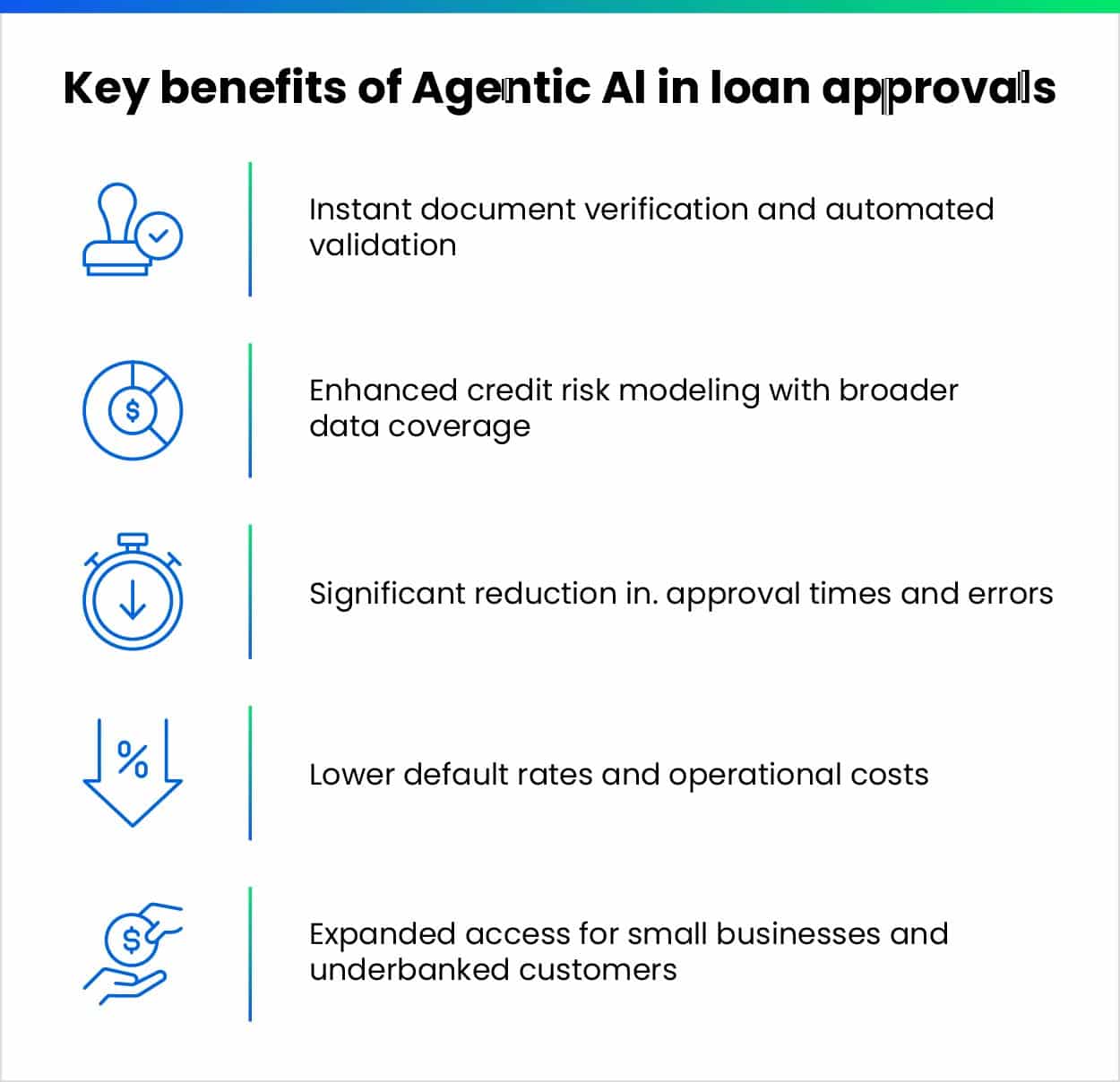
AI agents extract and verify data from bank statements, payslips, GST records, and business documents with higher accuracy than manual review.

Instant risk scoring.

Agentic systems evaluate repayment capacity using behavioural signals and contextual insights rather than relying on limited bureau data.

Higher inclusion.

Because agentic AI interprets non-traditional data more effectively, it expands credit access for customers who were earlier deemed “thin-file”.

The outcomes speak for themselves. Some lenders have brought down loan processing from two days to less than an hour. Others have improved decision accuracy and extended credit to nearly  22% more underserved borrowers.
Key benefits of Agentic Al in loan approvals

While speed matters, sustainable lending also requires continuous risk visibility. This brings us to the third strategic advantage of agentic AI.

Real-Time Risk Management

Banks operate in an increasingly unpredictable financial climate, and this calls for continuous risk assessment to stay afloat. Market shifts, cyber threats, liquidity risks, and compliance events can emerge faster than manual reviews can respond. Traditional risk models were never designed for real-time recalibration.

Agentic AI supports a more predictive risk posture.

Continuous monitoring.

AI systems track millions of data points across transactions, customer behavior, credit exposure, and operational triggers. This reduces the reliance on periodic reviews.

Dynamic risk scoring.

Models adjust exposure based on new inputs rather than waiting for quarterly cycles. Banks respond to anomalies within seconds.

Operational efficiency.

Studies show that AI-enabled risk dashboards reduce manual effort by nearly half and accelerate suspicious activity reviews by up to eighty percent.

From a strategic standpoint, this shifts risk management from a reporting function to a real-time control tower. It improves audit readiness, strengthens compliance, and equips banks to make faster, informed decisions.

As powerful as these outcomes are, agentic AI also requires thoughtful adoption. Banks must navigate not only opportunity but also the responsibility that accompanies intelligent automation.

Navigating Challenges and Creating Long-Term Value 

Agentic AI is on track to become the core of modern financial infrastructure. More than ninety percent of banks already use some form of AI-driven monitoring. Fraud losses have reduced, credit decisions have become faster, and risk response times have improved significantly.

Global forecasts indicate strong adoption. Deloitte estimates that half of AI-driven enterprises will deploy agentic models within two years. IDC projects more than 120 billion dollars in AI investment by financial institutions by 2030. As these models mature, they are expected to reduce operational costs, enhance regulatory reporting, and enable personalised financial products that can be launched in weeks instead of months.

Looking ahead, the institutions that succeed will be those that combine intelligence with accountability. Governance, algorithmic transparency, model monitoring, and ethical AI will become central to trust. This is not just a compliance requirement. It is a competitive differentiator.


Reimagining Agility in the Age of AI and Automation: My Perspective

Agility at the Speed of Trust: Reflections on Intelligent Transformation

AI and automation are no longer just about speed or efficiency.   They are about earning the trust to move faster, smarter, and more responsibly. In a recent panel I had the opportunity to moderate a discussion on “Intelligent Transformation: How AI and Automation Are Powering the Next Wave of Business Agility,”where we explored how leaders can balance innovation with governance, scale with ethics, and ambition with accountability, because the real measure of agility today is not how quickly you move, but how sustainably you grow.

What Intelligent Transformation Really Means

It was a privilege to moderate this conversation hosted by AiCoreSpot, with two exceptional panelists – Ajay Pundhir, Director of AI at Presight and Founder of AI Exponent, and Mohammad Iqtadar, Chief Compliance Officer at Ajman Bank.

What made this discussion stand out was how it went beyond the “what” of AI tools and automation platforms, and focused on the “how” – how businesses can stay truly agile by combining technology, governance, and human judgment to build trust, resilience, and continuous innovation.

Agility Isn’t Just About Speed Anymore

For years, agility was defined by how fast an organization could move, effectively how quickly it could pivot, launch, or scale. But as one of the panelists rightly said, “real agility means moving at the speed of trust.”

Ajay introduced a powerful idea, the Minimum Viable Governance (MVG) framework,  as a way to balance innovation with accountability. He drew an important distinction between technical debt and ethical debt: you can fix bad code later, but you can’t repair broken trust.

That thought stayed with me. Governance isn’t a speed breaker; it’s the foundation for sustainable growth. When organizations embed governance early – defining principles, data boundaries, and ethical guardrails – they don’t slow down innovation; they enable it.

Afterall, the ROI of responsible AI isn’t measured in quick wins, but in credibility, resilience, and long-term business value.

How Intelligent Automation Is Changing Risk and Compliance

Mohammad brought a compelling view from the banking world on how AI and automation are transforming the very core of risk management.

He explained how intelligent automation is strengthening the “three lines of defence”: risk management, compliance, and internal audit. With AI-driven anomaly detection, predictive analytics, and continuous monitoring, banks are identifying risks faster and ensuring proactive compliance.

But what stood out was his emphasis on ‘human oversight’. Machines can flag anomalies; but it takes human judgment to interpret, investigate, and decide.

He described it as a hybrid model: automation managing scale, humans managing exceptions. That balance between adaptability and accountability defines true agility in an AI-driven world.

When Everyone Has AI – Where Does Differentiation Come From?

A question I often hear from leaders: If everyone has access to the same AI models, where’s the competitive edge?

Ajay’s answer was simple yet profound: context and trust.

AI models may be global, but business problems are always local and specific. The real differentiation lies in how companies adapt AI to their context, their data, customers, and ethics.

In a world where technology is commoditized, trust becomes the ultimate differentiator.
It’s not about what tools you use; it’s about how responsibly you use them.

The UAE’s Approach: Policy as an Enabler of Agility

We also explored how the UAE has become a model for intelligent transformation through its National AI Strategy 2031and UAE AI Charter.

Ajay highlighted how these frameworks promote responsible innovation through clear, actionable principles — a rare balance of governance and agility. It’s a reminder that regulation doesn’t have to restrict innovation; it can accelerate it when done right.

For organizations operating in the GCC, this policy clarity is enabling faster go-to-market strategies, global competitiveness, and most importantly, trust at scale.

Responsible AI Is Now a Talent Strategy

One statistic from our discussion still stands out: 78% of AI engineers prefer working for ethically responsible companies”.

That says everything about the new generation of talent. They’re not just looking for compensation; they’re looking for purpose.

Organizations that make their ethics visible, embed responsible AI into their design practices, and create open conversations around fairness and transparency are the ones attracting and retaining top talent.

Ethics is no longer just a compliance checkbox – it’s a brand differentiator and a talent magnet.

How to Break the “Pilot Trap”

Almost every enterprise today has an AI pilot somewhere. But only a few move beyond the experimentation phase.

Ajay captured it perfectly: “Technology is 20% of the equation; governance is 30%; mindset is 50%.”

Success starts with the right mindset: defining purpose, aligning stakeholders, and designing for scale from day one.

Mohammad added a practical banker’s lens: “If you don’t plan for integration and ROI from the start, your project will stall.”
Transformation isn’t about flashy pilots; it’s about connecting people, processes, and technology – all under a trusted, governed framework.

Choosing the Right AI Tool for Your Business

An audience question summed up what many leaders wonder: How do you choose the right AI tool when everyone, from GPT to Gemini, offer similar capabilities?

Mohammad’s advice was clear: “Start with your business need, not the product’s demo.”

The right AI tool isn’t the one with the most features; it’s the one that fits your context, integrates with your data ecosystem, and can be governed sustainably. Alignment always beats attraction.

The Future of Intelligent Transformation: Moving at the Speed of Trust

As the session wrapped up, I asked both panelists to describe intelligent transformation in a single word.

Ajay called it “Trust Velocity” – the speed at which organizations can innovate responsibly.
Mohammad chose “Digitization” – reflecting how deeply AI and automation are embedded into business.
For me, it’s “Convergence” – where people, process, and purpose meet.

AI and automation aren’t just changing how we work; they’re reshaping how we think, decide, and lead.

The next wave of business agility won’t be about moving faster.
It will be about moving smarter, and always, at the speed of trust.

▶️ Watch the full discussion here: Intelligent Transformation: How AI and Automation Are Powering the Next Wave of Business Agility

The future of digital health: Innovations reshaping healthcare

Picture this: a world where a smartwatch can alert a doctor about a potential health issue before someone even feels sick. That’s not sci-fi. It’s the power of digital health, and it’s already reshaping how we experience healthcare. Our recent webinar, hosted by Sandeep Punjani, Vice President – Healthcare, Life Sciences and Manufacturing at InfoVision on “The Future of Digital Health: Innovations in Healthcare Technology,” brought together some of the brightest minds in healthcare and technology to talk about where the healthcare industry is headed and what it means for healthcare providers and their surrounding landscape. Here’s a breakdown of what they had to say.

Empowering patients with AI and engagement tools

Empowering patients with AI and engagement tools

Engaging patients in their care journey is the cornerstone of modern healthcare. Technology is giving patients tools to take control of their health, providing access to information, and facilitating better communication with providers.

Shauna Zamarripa, Director of Business Analytics at Community First Health Plans, shared how her team used AI and predictive analytics for maternity health monitoring. This project improved outreach and care for high-risk pregnancies by partnering with local organizations, ensuring a holistic support system. She also highlighted how AI-driven insights are now being applied to behavioral health.

“Being able to do predictive analytics has been absolutely game changing and we’re now moving that into the behavioral health space,” Shauna highlighted.

But the applications of AI don’t stop there. Madhur Pande, Senior Vice President of Digital Product at Optum Health and former Executive Director of Digital Products at Kaiser Permanente, described how wearables are making proactive health management possible. She emphasized the importance of remote patient monitoring (RPM). Devices that track chronic conditions are transforming care by enabling continuous observation and early clinical intervention. Madhur described how wearable technologies help manage conditions like diabetes and heart failure, offering significant benefits for both patients and providers.

“Wearables keep people healthy and reduce the cost of care,” she explained.

Patient portals are another vital tool. They allow patients to access medical records, view test results, and receive reminders, fostering greater autonomy in managing their health. Pande noted that high adoption rates at Kaiser Permanente – exceeding 80%, demonstrate the potential for technology to enhance patient-provider relationships.

Telehealth: Increasing access and reducing barriers

“Availability, accessibility, affordability – all these things have really been supercharged with telehealth,” he shared.

Telehealth is also expanding beyond virtual consultations. Diagnostic services, such as radiology readings, can now be handled remotely, often reducing turnaround times from days to hours. To Ram’s points, Madhur cited how behavioral health services have particularly embraced telehealth, with virtual visits rising from 40% of appointments in 2021 to 67% in 2023.

Shauna pointed out how it is essential for providers to be cognizant of patient preferences and leave space to innovate and create new mechanisms instead of just continuing doing things the way they have always been done.

“The ultimate goal is giving the patient the ability to feel like they are in charge of their healthcare journey,” she remarks.

AI-powered clinical workflows: Efficiency without overload

Telehealth_ Increasing access and reducing barriers

AI offers immense potential to streamline clinical workflows, reduce administrative burdens, and combat provider burnout. However, thoughtful implementation is critical to prevent new inefficiencies. Clinicians are already stretched thin, and poorly deployed AI can add complexity instead of reducing it. Both Shauna and Madhur emphasized that AI must complement, not complicate, existing processes.

“You have to be cognizant of anything that is incorporating AI to not replace humans but support them.” Shauna believes.

One promising application is AI-driven triaging, where tools can sort patient messages and prioritize urgent cases. Madhur highlighted the importance of pilot testing and involving clinicians when rolling out new systems to ensure adoption and trust.

“When we are thinking about bringing AI to an environment like health care, it needs to be very thoughtful and purposeful,” she noted.

The concept of “human-in-the-loop” AI emerged as a best practice, ensuring clinicians retain control over AI-generated recommendations. Trust, transparency, and collaborative governance are essential to successfully integrate AI into healthcare systems.

Data privacy, bias, and ethical AI

Data privacy, bias, and ethical AI

With AI’s growing role comes increased responsibility to safeguard data privacy and mitigate bias. Shauna highlighted the importance of consistent data collection practices to ensure accuracy and integrity. She described how improper handling of sensitive information – such as emailing unprotected patient data, poses significant privacy risks.

“You need to make sure that the AI technology that you’re deploying or using within your organization is compliant with the relevant regulatory bodies,” Shauna highlighted.

Consent management is another critical area. Ram pointed out that machine learning algorithms do not inherently respect consent boundaries. Embedding consent rules into AI workflows is vital to prevent unauthorized data usage.

He remarked “We have to find a way to take the consent management restrictions and build them into the ML workflow.”

Bias in AI models remains a pressing issue. Without diverse and representative datasets, AI systems risk perpetuating healthcare disparities. Ethical review boards and rigorous data governance frameworks are necessary to address this challenge.

Shauna pointed out that data quality directly impacts the success of AI.

“It is really important to make sure that we unknowingly are not feeding our biases to the systems,” Madhur highlighted.

AI in drug discovery and personalized medicine

AI in drug discovery and personalized medicine

Drug discovery is a costly, time-consuming process, but AI is accelerating key stages. From predicting protein structures to identifying therapeutic targets, AI-driven simulations reduce reliance on lab testing.

Ram described how AI helps pharmaceutical companies speed up clinical trials by automating participant selection and analyzing trial data in real time. While no drugs have been fully developed using AI yet, platforms like DeepMind’s AlphaFold and IBM Watson are already making significant strides.

Personalized medicine, guided by genomic data, represents another frontier. AI enables rapid analysis of genetic mutations and their implications for individualized treatment plans.

“If you look back ten years, most of the genomic information was static, but the human genome is not static, it’s evolving. So, the AI tools have to be able to absorb real time data and be able to continually update your genome map,” Ram observed.

Cybersecurity for a digital future

Cybersecurity for a digital future

The rapid adoption of digital health technologies raises cybersecurity concerns. Healthcare data is a prime target for cyberattacks, and traditional security measures are insufficient against AI-enabled threats.

Ram stressed the need for dynamic, real-time cybersecurity solutions since static defences can’t handle threats evolving with AI.  He emphasized on adaptive architectures and comprehensive employee training.

“The current suite of cyber security platforms across the Globe were never designed with the proliferation of AI in mind”, he said.

Policy frameworks must also evolve. Regulations governing AI, telehealth, and genomic data require continuous refinement to balance innovation and patient safety.

Webinar

In summary, the webinar underscored several transformative trends shaping the future of healthcare:

AI-driven tools: From wearables to predictive analytics, AI is empowering patients and improving outcomes.

  • AI-driven tools: From wearables to predictive analytics, AI is empowering patients and improving outcomes.
  • Telehealth expansion: Virtual care is making healthcare more accessible, especially for underserved populations.
  • Ethical AI: Clean data, privacy safeguards, and diverse datasets are crucial to making AI reliable and equitable.
  • Pharmaceutical innovation: AI is reducing the time and cost of drug development while paving the way for personalized medicine.
  • Future technologies: Quantum computing and advanced cybersecurity solutions are poised to tackle healthcare’s critical challenges.

The road ahead

The future of digital health is filled with promise. Innovations in AI, telehealth, and personalized medicine are enhancing care delivery and improving outcomes. However, realizing this vision requires a holistic approach – combining technology with thoughtful policy, ethical governance, and human collaboration.

As healthcare embraces these changes, the goals remain clear: empowering patients, reducing disparities, and creating a more connected, efficient healthcare system. By pushing boundaries and staying vigilant about ethical considerations, we can shape a future where technology serves as a true catalyst for health and well-being. To know more about the technologies shaping healthcare, reach out to us at digital@infovision.com.

Adopting Gen AI? Start with Modernization

The era of Generative Artificial Intelligence (Gen AI) has arrived.

In 2023, Generative AI made its debut, capturing attention across industries. By 2024, organizations began actively harnessing its capabilities, translating the same into tangible business value. Today, businesses worldwide are keen to jump onto the AI bandwagon to improve efficiency, innovate, and stay competitive. The use cases of this transformative technology seem to be extensive and endless, and in just a short span of two years, AI has become a strategic imperative for businesses across verticals such as healthcare, finance, retail, manufacturing, and telecom.

We’re now way past the initial hype.  Boardrooms and IT departments alike are now endorsing the immense potential AI holds and within a short span it has become a key strategic focus for many businesses. A recent survey underscores this optimism: over 67% of leaders are prioritizing Generative AI, with a third of them naming it their top priority due to its transformative potential. According to recent reports including Goldman Sachs Research, global AI investments could significantly reach $200 USD billion by 2025 and $32.8 USD billion in Asia-Pacific, highlighting the rapidly growing commitment to AI technologies worldwide.

While rolling out AI capabilities is a top priority today and will most likely continue to be so over the next few years, businesses must bear in mind one key challenge in its adoption: legacy applications. Agreed that legacy applications are the bedrock of many businesses, but equally true is the fact that they are aging fast and struggling to keep pace with modern technological advancements. This creates a significant roadblock for businesses planning to adopt AI, as most of their required data resides in such legacy applications. In fact, about 10% of business applications are at “end of life” (~150 applications per business, on average), according to an ISG report.

As the gap between AI adoption and legacy shortcomings widens, the need for Application Development and Modernization (ADM) strengthens. ADM enables organizations to expedite the adoption of AI, enhance operational efficiency, and establish a scalable foundation for future development by modernizing applications and optimizing IT infrastructure. And we have data to substantiate this: despite the ongoing cost optimization efforts, investments in ADM are on the rise. ADM is no longer a cost center but a strategic asset for the age of AI.

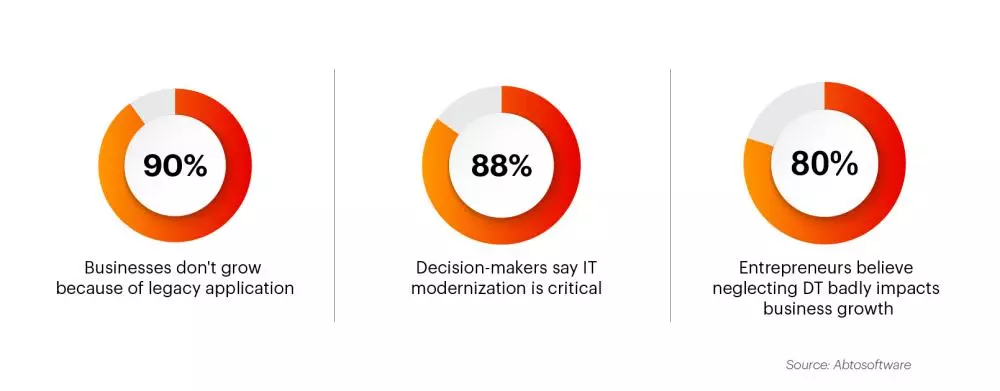
Modernizing applications and infrastructure is seen as essential for staying competitive in the digital age. This strategic view helps organizations leverage technology effectively and drive growth.

Why most businesses continue to support legacy applications?

The State of Application Modernization Report 2024 states that 62.5% of CTOs had spoken about their biggest challenge being, “the accumulated technical debt and dependencies within legacy applications.”

Despite the obvious benefits of modernization including adoption of AI, many businesses continue to support legacy applications in their operations for multiple reasons:

Critical role in operation

Legacy applications often perform essential functions such as supporting core business processes, financial transactions, customer data management, and other critical activities. Replacing these systems can be risky and complex considering that business operations cannot be disrupted during transition.

Intricated architecture and integration

Compatibility with modern platforms and technologies could be potentially challenging, time-consuming and error-prone for legacy systems which are built on outdated technology. Legacy applications often have intricated architecture and interdependencies. Untangling these legacy systems and integrating with modern systems can be a daunting task and cause business to delay or avoid modernization.

Data and compliance concerns

Critical business data in legacy applications is essential for operations, decision-making, and analysis. Migrating this data is complex and risky, potentially causing security & compliance concerns, data loss or corruption.

High cost of modernization

Migrating to new applications often gets costly and can be substantial, not only due to direct expenses like new infrastructure, systems and software but also indirect expenses like data migration, system integration, and employee training.

Employee and stakeholder resistance to new technologies

People who are accustomed to working on legacy applications are the main barriers and may resist new technology due to comfort, fear of change, or concerns about the learning curve.

Skill Gap

Many organizations lack the IT staff, expertise, and time to migrate to new applications. Managing legacy applications with limited resources is often more practical, despite the drawbacks. Also finding engineers with expertise in both legacy and modern technologies could be a challenging task.

Fear of disruption

Legacy applications are embedded in a business’s operations, including those of partners and customers who rely on them. Changing these systems could disrupt relationships and operations, so businesses continue to support them to ensure continuity and reliability.

5 reasons why legacy applications hinder AI adoption

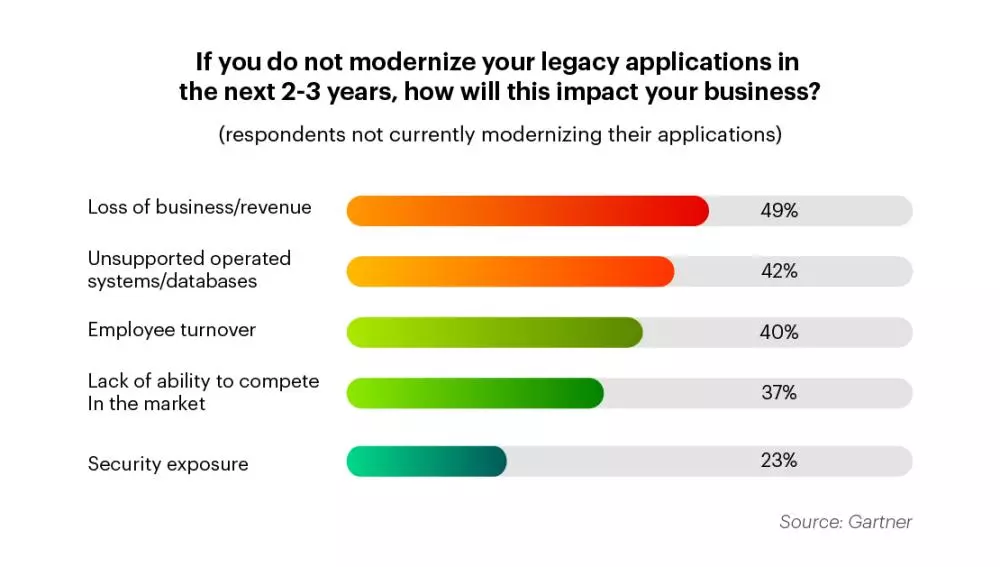
While legacy applications have been the backbone of operations, they pose significant challenges to AI ambitions. Such applications and systems are riddled with critical limitations that impact data accessibility and drain organizational resources. Here are five shortcomings of legacy applications that hinder AI adoption:

1. Data silos: Legacy applications often store crucial business data, but accessing and utilizing it becomes difficult due to outdated formats and limited data extraction capabilities. This hampers the use of large, high-quality datasets essential for AI applications.

2. Incompatibility with AI systems: Many legacy systems are incompatible with modern AI technologies, hindering effective implementation and scaling. This incompatibility can hinder seamless adoption of AI and limit its potential benefits.

3. Lack of integration capabilities: Many legacy systems lack modern APIs or integration capabilities needed to connect to AI platforms and other contemporary technologies.

4. Increased maintenance cost: Maintaining outdated applications often proves costly and resource-intensive, diverting funds from investing in new technologies like AI and straining budgets.

5. Limited scalability and performance: As legacy application is built on outdated hardware and software architectures that it struggles with computational demands of Modern AI applications like scalability and performance, failing to handle the large volumes of data and high processing requirements needed for AI, leading to inefficiencies and bottlenecks.

6. Security and compliance Issues: Security is a grave concern, as legacy applications are more vulnerable to threats and lack the advanced features needed to protect sensitive data and comply with modern regulations.

Modernizing legacy applications has its own challenges

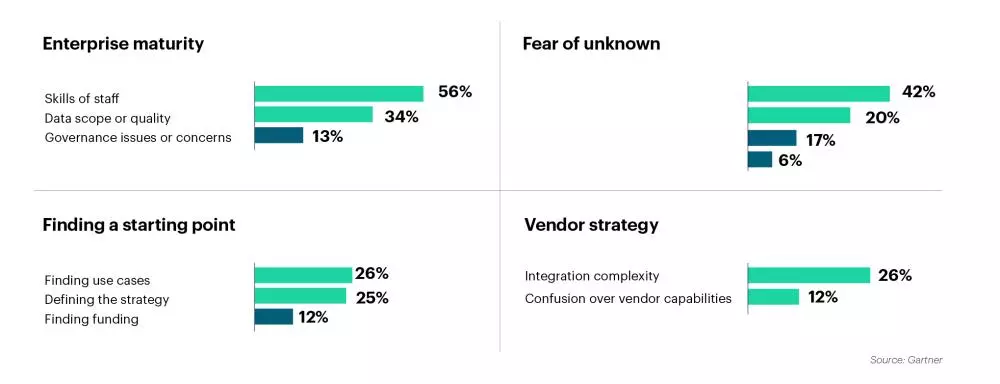
Forward-looking businesses that plan to modernize their legacy systems still face many challenges along the way. While both boardroom members and IT leaders share the common goal of enhancing the customer experience and harnessing AI, their unique challenges can complicate modernization efforts and undermine AI’s effectiveness.

Boardroom Members IT Leaders
Accessing and utilizing data effectively:Boardroom members need timely, accurate data for decision-making, but legacy applications complicate data access and usage, limiting strategic insights. Integrating value streams:IT leaders often struggle to align different IT projects and systems seamlessly to support overall business objectives efficiently.
Integrating value streams:Boardroom members struggle to ensure business processes and operations align with organizational goals efficiently. Managing technical debt:Technical debt involves maintaining and updating older systems and code. IT leaders must address this to avoid hindering innovation and efficiency.
Managing organizational change:Implementing new technologies requires significant organizational changes, and boardroom members must manage resistance and ensure a smooth transition. Handling high software license costs:Legacy systems often have costly licensing fees. IT leaders must manage these while balancing investment in new technologies.
Phasing out outdated applications:Decommissioning legacy applications is complex, requiring boardroom members to manage the transition carefully to avoid disrupting operations and ensure full integration of new systems. Addressing skills and talent gaps:IT leaders struggle to find and retain skilled professionals to manage legacy systems and new technologies, slowing modernization efforts.

Overcoming these challenges requires a strategic approach and expertise. Partnering with an expert service provider can provide valuable insights and solutions tailored to specific business goals, needs, vulnerabilities, industries, and budgets. In fact, 96% of large enterprises are using external providers for some form of application service, according to a recent ISG ADM study. These external providers provide the resources needed for these legacy transformation programs, as well as their ability to combine cost optimization with modernization.

InfoVision has been a strategic partner to various businesses in developing and modernizing their applications for years. Our enterprise ADM services prepare businesses for seamless evolution. With our expertise in cloud, serverless operational models, agile and SAFe implementations, and emerging technology practices, we help businesses transition from complex legacy structures to dynamic and resilient application portfolios. Our comprehensive suite of services, including API modernization, microservices architecture, cloud-native and serverless operations, custom application development, and updating existing applications, empower businesses to excel in their digital transformation.

The critical role of application optimization in ADM

Modernizing and optimizing applications will become increasingly important as technology stacks grow more complex and demanding. With the integration of advanced technologies like AI and cloud computing, existing applications will need to be fine tuned to meet new requirements efficiently. By focusing on ADM, businesses can stay competitive, enhance user experiences, and maximize their technological investments.

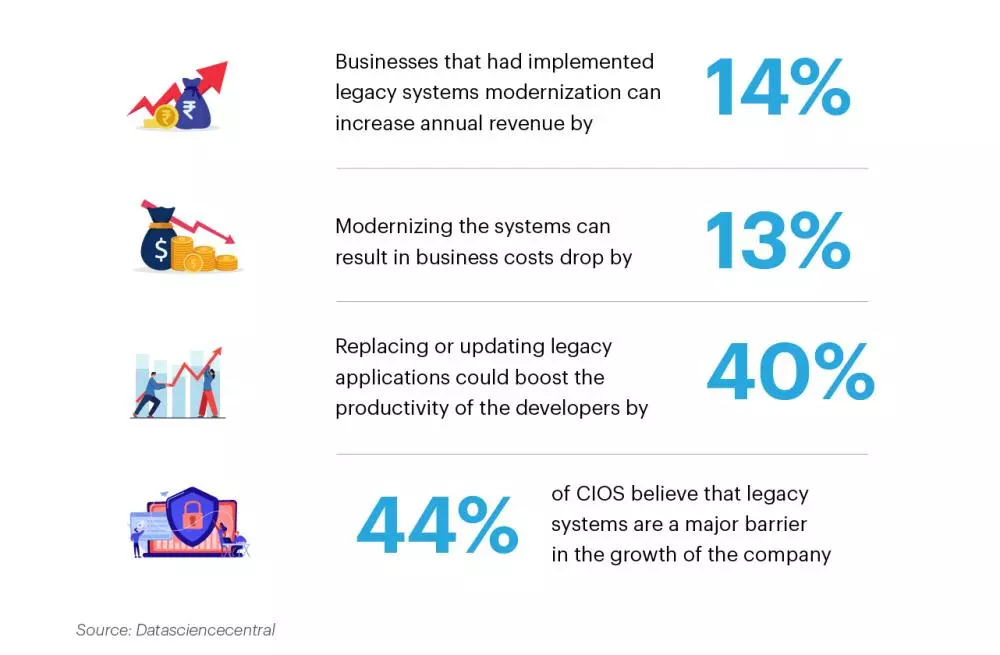
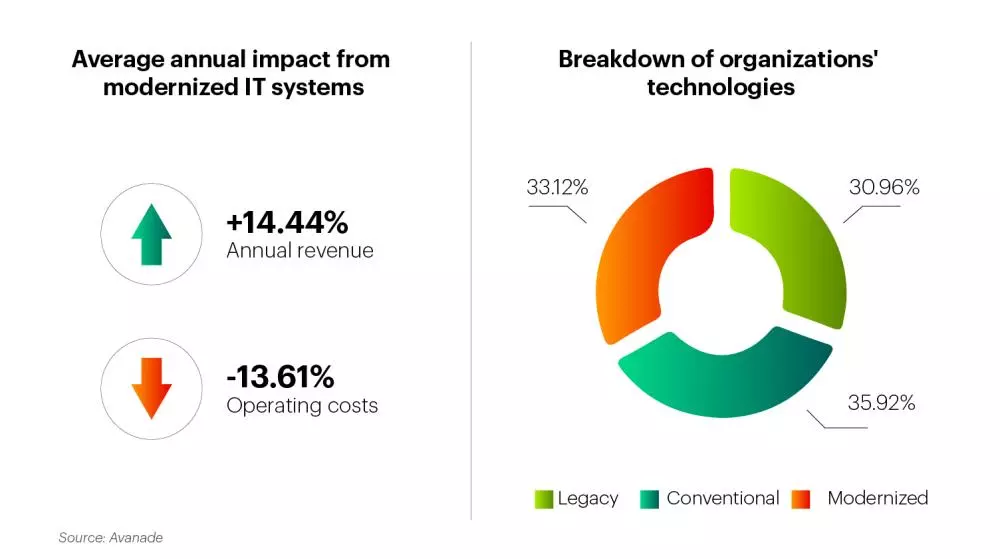
Research by top IT industry experts suggests that replacing legacy systems can potentially reduce operational costs by 13 percent annually and boost revenue by over 14 percent.

InfoVision can help you forge a future of digital modernization and expand your limits with enterprise ADM services. Connect with us today to learn more!