Smart manufacturing: Transformative tech trends shaping 2024

In today’s world, technology has woven itself into the fabric of every industry, including manufacturing. The journey towards complete digitization is not a distant future – it’s happening now, reshaping businesses both big and small. As enterprises embark on this transformative path, the focus shifts from merely investing in technology to optimizing and profiting from it.

The global manufacturing sector has witnessed a radical shift in recent years. The catalyst for this change was the challenges brought on by the pandemic, which forced the very backbone of global commerce to confront unprecedented disruptions in supply chains. Amidst these trials, technology emerged as more than a tool; it became a lifeline, offering resilience and adaptability in the face of adversity.

The dawn of a new age in digital manufacturing is upon us. Increasingly, manufacturers are embracing this shift, leveraging data-driven insights to propel themselves towards more sustainable and efficient manufacturing practices. For instance, a study by Workday reveals that automation can reduce planning and reporting cycles in manufacturing by a staggering 50%-70%.

“The future of manufacturing is digital. Those who embrace technology will succeed, while those who resist will be left behind.”

– Klaus Schwab, Founder of the World Economic Forum

To capitalize on the opportunities and embrace smart manufacturing, manufacturers need a well-defined IT strategy that enables them to be more resilient than ever. As far as the digital manufacturing industry is concerned, the year 2023 has been transformative, with widespread and accelerated adoption of technologies like AI, data analytics, cloud computing, edge computing, and more that allow automation “at the source,” thereby enhancing efficiency with less dependency on centralized servers.

The manufacturing industry stands on the brink of a transformative era defined by three pivotal pillars:

1. Connectivity: The backbone of modern manufacturing, connectivity ensures seamless integration and communication across various systems and processes.

2. Intelligent automation: This is the driving force behind smarter operations, leveraging AI and robotics to enhance efficiency and precision.

3. Scalable data management & analytics: The ability to manage vast amounts of data and extract actionable insights is critical for strategic decision-making and continuous improvement.

Within these domains lies a spectrum of technologies poised to redefine manufacturing. These range from IoT devices that offer real-time monitoring to advanced analytics that predict maintenance needs, and from AI-driven automation that optimizes production to scalable cloud infrastructures that support the ever-growing data demands.

For manufacturers to thrive amidst rapid industrial evolution, it’s crucial to not only watch these trends but to actively incorporate them. We invite you to join the conversation and discover the technologies set to shape the future of manufacturing excellence.

Trend #1: Smart factories will transform shop floors

A “smart” factory stands as a highly advanced and automated facility, revolutionizing conventional operations through key technologies like the Industrial Internet of Things (IIoT), Artificial Intelligence (AI), automation, and digital twins. Projections indicate that the global smart factory market is poised to reach approximately $321.98 billion by 2032, with a CAGR of 9.52% from 2023 to 2032.

Smart factories enhance efficiency and production processes by utilizing interconnected devices, real-time analytics, and smart sensors. Today, smart factories have found applications across diverse industries, including energy, power, automotive, oil and gas, electronics, and semiconductors. For instance, the Tesla Gigafactory in Germany integrates solar panels to promote sustainability and reduce operating costs. Similarly, BJC Healthcare in the US has adopted smart manufacturing that incorporates IoT into its processes. The company employs Radio Frequency Identification (RFID) technology to track medical supplies. The implementation of a smart factory has enabled them to reduce costs, increase operational efficiency, and overall improve the company’s functionality.

Rise of digital twin technology

The evolution of cutting-edge technologies also fuels the rise of digital twin technology in manufacturing, creating a digital replica of physical processes for informed decision-making. Ford’s implementation of AI-driven predictive maintenance through digital twin technology serves as a notable example. Ford develops distinct digital twins for each vehicle model, covering various production stages from concept to operation. These digital models extend to manufacturing procedures, production facilities, and the customer experience. Ford’s digital twin accurately identifies energy losses, highlights areas for energy conservation, and boosts overall production line performance. The growing popularity of digital twins is reflected in projections, which anticipate a market size of $73.5 billion by 2027.

AI/ML play a crucial role

The strategic use of AI empowers manufacturers to analyze extensive datasets systematically, identify patterns, and facilitate intelligent decision-making. In the supply chain domain, AI plays a crucial role in predictive analytics, optimizing inventory management, refining demand forecasting, and streamlining logistics. This is evident in companies like Amazon, which employs AI-powered algorithms to expedite deliveries, reducing the gap between their products and customers.

AI is influential not only in the supply chain but also in various other areas. This can be seen from the example of the Haier Group, a leading consumer electronics and home appliances manufacturer in China. The group has integrated AI into its manufacturing processes within a smart factory framework. This integration enhances various aspects such as quality detection, maintenance, machine collaboration, material transportation, energy management, and security. This example underscores the multifaceted applications of AI in modern manufacturing, showcasing its potential for operational enhancement and efficiency across diverse industries. The trajectory of AI indicates that Generative AI will play a central role in the years to come.

Notably, discussions about AI are incomplete without addressing machine learning, a crucial component in predictive analytics for quality control. Machine learning algorithms play a substantial role in proactive measures to enhance product quality and optimize manufacturing processes. A significant two-thirds of manufacturing companies attribute substantial revenue savings or generation to machine learning and advanced analytics.

A notable paradigm shift

Additionally, technologies such as Augmented Reality (AR) and Virtual Reality (VR) provide an immersive experience in manufacturing, allowing users to enhance their senses with real-time data from any location, ensuring constant and accurate awareness of the factory’s status anywhere, anytime. Furthermore, Web 3.0 enhances machine interactivity through advanced technologies such as AI, deep learning, machine learning, Big Data, and data analysis, enabling machines to comprehend information like humans using language comprehension technologies and the Semantic Web.

In the domain of manufacturing, a notable paradigm shift is underway with the introduction of Collaborative Robots (Cobots). These human-powered robots work alongside humans, contributing to efficiency by providing strength, power, precision, and data. Importantly, AI technology facilitates their ease of programming and quick learning, marking a significant advancement in the manufacturing landscape.

Trend #2: Blockchain technology will subside supply chain challenges

Blockchain technology is truly a transformative tool when it comes to enhancing transparency and security within the digital manufacturing supply chain. Through the creation of a tamper-proof record of transactions, leveraging blockchain in the supply chain enables manufacturers to meticulously trace products throughout their entire lifecycle, from raw materials to finished goods. This robust and unalterable ledger system ensures data integrity and authenticity.

Blockchain also offers manufacturers the opportunity to streamline operations, gain heightened visibility into supply chains, and track assets with unparalleled precision, as revealed by PwC. This is one of the reasons why Walmart, the retail giant that sells everything from furniture to the latest mobile phones, leverages blockchain technology to oversee their suppliers of leafy greens, aiming to guarantee product safety and expedite the process of providing evidence in case of a claim. The system collects data at each stage of the greens’ journey, starting with the planting of seeds. Even after the greens reach the shelves, the company can continually contribute data to the platform.

Currently, 24% of industrial manufacturing CEOs are either exploring or implementing this transformative technology. As cybersecurity and data privacy become more critical as a direct result of digital transformation, Blockchain applications are expected to become more prevalent in the manufacturing industry soon.

Other futuristic technologies that will have a major influence on the future of manufacturing over the span of the next 2–10 years include Intelligent Process Automation, Autonomous Mobile Robots, Cobots, AR/VR/MR/metaverse, Web 3.0 and Knowledge Engineering, Intelligent Edge, Neuromorphic computing, 4D Printing, Quantum Computing, 6G and c-band, Zero Trust security, self-diagnosis systems, resilient and self-healing systems, AND Fully Homomorphic Encryption.

Overcoming digital manufacturing challenges can be daunting

Embracing digital transformation has its own challenges for manufacturers. For instance, modernizing legacy systems demands significant investments, including hardware upgrades and standardization of data formats. Efficiently managing diverse data sources requires robust strategies and advanced analytics. Cybersecurity is an important concern as well, necessitating multi-layered defenses and compliance with privacy regulations. Lastly, addressing the skills gap and overcoming resistance to change in the workforce requires targeted training programs, clear communication, and stakeholder engagement for successful digital adoption.

To effectively tackle these challenges, it is imperative for manufacturers to partner with experts who have the combined knowledge and experience of the domain and technology. At InfoVision, we specialize in supporting the expansion of manufacturing to accelerate digital transformation. Over the years, we have helped numerous manufacturers address key challenges with digital transformation, offering solutions in product design, engineering, and cutting-edge technologies like AI, IoT, and mobile app development. Our expertise extends to crucial areas like Blockchain-based supply chains, Data Analytics, smart manufacturing, and more.

The opportunities are endless

As we gaze into the horizons of 2024, the manufacturing industry is poised for a remarkable transformation where a fusion of cutting-edge technologies meets the dynamic challenges of business. This blend is set to revolutionize efficiency and spur innovation like never before. We also expect that the supply chain complexities will be more than just a hurdle; they will act as critical drivers for change, shaping the future of manufacturing in profound ways.

For manufacturers, understanding these shifts is crucial. These are not mere tweaks to existing processes; they represent a paradigm shift, heralding a new epoch in manufacturing execution and strategy. This is more than adaptation; it’s a complete reimagining of the manufacturing ethos for 2024 and beyond.

Partner with InfoVision to stay ahead of the curve of transformative shifts in the digital manufacturing industry. Contact us today to learn more.

Cybersecurity trends 2024: Where’s the industry headed?

The year 2023 proved to be a defining year for cybersecurity with  headlines about persistent ransomware challenges, Distributed Denial of Service (DDoS) attacks, concerns over global supply chains, and a push for cybersecurity digital transformation. There were a number of attacks such as the one on Hot Topic – an American apparel retailer – who was a target of a series of credential-stuffing attacks.  In Italy, a number of banks were taken offline due to targeted DDoS attacksProspect Medical Holdings, a major hospital network in the United States, fell prey to a ransomware-driven cyber attack in 2023. The public sector companies too faced similar challenges. 

The year 2023 also witnessed greater adoption of Zero Trust architecture, primarily due to an evolving network landscape, increasing cyber threats, cloud adoption, and a shift towards data-centric and user-centric security models.  This  highlighted the importance of having a comprehensive cybersecurity strategy to not only safeguard data and infrastructure but also maintain stakeholder’s confidence. 

What then is the moral of the story here? As we step into 2024, it’s crucial for organizations to traverse from a reactive – to proactive – to a predictive stance in their cybersecurity efforts. 

This blog presents our perspective on the top cybersecurity trends expected in 2024, underscoring the challenges organizations may encounter while adapting to these developments. We also delve into innovative strategies that can position organizations not just to respond to, but to anticipate and outpace, the dynamic landscape of cyber threats in 2024 and beyond. Our focus is on empowering organizations to establish a robust, forward-thinking cybersecurity framework that safeguards their digital assets against emerging and future threats.

Suggested Read: The zero trust model: “Trust no one” approach to cybersecurity

Addressing the most serious cyber threats head-on

In 2023, cybersecurity experts defined “Advanced Persistent Threats” (APTs), as among the most dangerous cyber threats so far that target mobile phones, wearables, and smart devices, aiming to infiltrate business systems. Furthermore, by utilizing strategies like Living-Off-The-Land (LoTL) attacks, APTs pose significant risks due to their complexity, making their detection even more challenging, according to Kaspersky’s Global Research and Analysis Team (GReAT).

As we enter 2024, cyber experts are advising organizations to take precautions against APTs by regularly checking for unauthorized access using robust systems, employing threat intelligence feeds, behavior-based protection, and securing spaces for suspicious files to bolster security. To summarize, organizations must aim at having a dedicated cybersecurity strategy and continuous network monitoring tools to minimize the risks and prevent damages from APT attacks.

Suggested Read: The Relevance of Simulated Phishing Campaign in Today’s World

To create a robust cybersecurity strategy, organizations must become more proactive and predictive to ensure that they remain updated at all times. With 2024 on the horizon, here are the top cybersecurity trends to expect:

Trend #1: Digital risk management will play a crucial role in cybersecurity

Digital risk management has now become a key strategy for numerous organizations. Organizations use it to integrate cybersecurity effectively across their digital infrastructure.

Traditional methods of counting threat incidents are  becoming inadequate against sophisticated cyber-attacks over the years. Proactive organizations are investing more in cybersecurity and adopting advanced technologies. According to the CompTIA State of Cybersecurity 2024 report, about 30% of organizations take a more rigorous stance with enterprise-wide risk assessments, sans a formal risk management framework.

But unlike other business departments measuring success through returns on investment, evaluating the effectiveness of cybersecurity is a different ballgame. Since cybersecurity strategies don’t directly generate revenue, the increased spending on them didn’t necessarily yield greater financial returns. Metrics like the “percentage of fixed systems” or “trained experts” were used to gauge cybersecurity performance, exposing a gap in connecting cybersecurity with the overall health of the organization.

That’s where digital risk management comes into the picture. By identifying risks, maintaining IT vulnerability management, assessing likelihood, and formulating robust plans, cybersecurity experts are able to bridge the gap between spending and desired outcomes. Organizations can now acknowledge the impossibility of achieving perfect cybersecurity, opting for rigorous cyber risk management practices over unlimited spending to enhance safety measures.

Trend #2: Generative AI will become a powerful cybersecurity tool

Generative AI (Gen AI) and Large Language Models (LLMs) are quickly becoming key players in bolstering cybersecurity. Such AI tools have the capacity to impact both attackers and defenders, with attackers using them to create convincing phishing content, leveraging LLMs to eliminate errors and cultural discrepancies, and cyber defenders using them to strengthen their defenses. In fact, a whopping 51% of IT decision-makers believe there will be a successful cyberattack credited to Gen AI within the year!

But on a positive note, cyber defenders recognize Gen AI’s potential to enhance cybersecurity by improving the organization’s detection, response, and attribution capabilities. This helps in addressing global cybersecurity challenges like threat overload and talent shortages. Surprisingly, the influence of Gen AI and LLMs go beyond the tools for attackers; these technologies are expected to be offered as services in underground forums, providing resources for malicious activities. As they evolve, they will play a vital role in shaping the fabric of cybersecurity in the future.

In 2024, AI’s role in global cybersecurity threats and defense is expected to hold a pivotal position. Its strategic advantages will make it crucial for an effective cybersecurity strategy, contributing to risk identification, ease of analyzing data patterns, avoidance, or mitigation through real-time anomaly detection and automated incident response.

Trend #3: Cyber insurance and cybersecurity regulations will be standardized

Governments and private organizations are increasingly recognizing the severe implications of cyber threats for national security and economic well-being. The formulation of new cybersecurity regulations is significantly influenced by potential social and political consequences tied to widespread data breaches. For instance, organizations in the United Kingdom must comply with the Product Security and Telecommunications Act by April 2024, setting vital security criteria for networked products, including a ban on default passwords during shipment

As a result, cyber insurance is witnessing a shift towards standardization across providers, moving from individual broker requirements to a core control or framework-based model. Munich Re anticipates a substantial increase in the global cyber insurance market, projecting premiums to rise from $12 billion to $33 billion by 2027. 

Over the past three years, the maturation of cyber insurance has been evident, owing to evolving technologies, the rise of artificial intelligence tools, global conflicts, and 5G risks. Specific categories like “Acts of War” are now widespread in policies. However, diverse risk assessments by different carriers pose challenges of their own. In 2024, an expected shift towards a core control or framework-based approach will allow providers to standardize risk mitigation across all cyber threats, regardless of the insured entity’s size or nature.

Overcoming cybersecurity roadblocks

Formulating and implementing proactive cybersecurity measures in 2024 will demand organizations to address complex challenges from advanced technologies like Gen AI, demanding vigilant defenses, and mature digital risk management. Standardized cyber regulations, too, will pose compliance hurdles while aligning with consistent cyber insurance models for diversified risk organizations. Furthermore, digital transformation security may introduce intricate security issues, and the surge in remote workforces will only amplify cybersecurity risks. Lastly, navigating diverse geopolitical landscapes amid globalization may create opportunities and challenges alike. Addressing talent shortages, too, will become a key priority. 

To seamlessly navigate these challenges, organizations must become proactive and predictive rather than reactive. Partnering with domain experts will go a long way in creating a robust cyber defense. InfoVision’s dedicated cybersecurity practice, Enterprise Cybersecurity & Risk Services (ECRS), is designed to assist businesses in strengthening their cybersecurity posture. ECRS comprises four major towers – GRC (Governance, Risk, and Compliance), SVS (Security Vulnerability Scanning), ISS (Integrated Security System), and IAM (Identity and Access Management), offering consulting, transformation, and operational support in cybersecurity.

Future-proofing against cyber threats

The landscape of cybersecurity is on the brink of a revolutionary shift. In this rapidly evolving digital era, the stakes for safeguarding digital assets have never been higher. Organizations poised to thrive are those that adopt a predictive, adaptive approach, leveraging cutting-edge technology to stay ahead of emerging threats. 

Businesses that embody resilience and agility are not just surviving; they are setting the stage to confidently lead the next wave of digital transformation.

Ready to be at the forefront of this change? Discover how InfoVision’s bespoke cybersecurity solutions can fortify your business. Connect with our experts today and embark on a journey to secure, future-proof success.

Decoding reporting frameworks: A comprehensive guide

In the age of data-driven decision-making, the role of reporting tools is more crucial than ever. These tools not only transform raw data into actionable insights but also serve as the cornerstone for strategic planning and informed decision-making.

This blog will help you understand the leading tools in the market, offer a comparative assessment, discuss their pros and cons, and provide our perspective. Additionally, we introduce an all-encompassing architecture to help you create a framework or blueprint for your reporting needs. Whether you’re deciding to buy or build, this blog will guide you through the decision-making process.

Why reporting tools are essential in business

Reporting tools are the linchpin that converts raw data into meaningful visualizations. They serve various industries and business functions, enabling better understanding and informed decision-making.

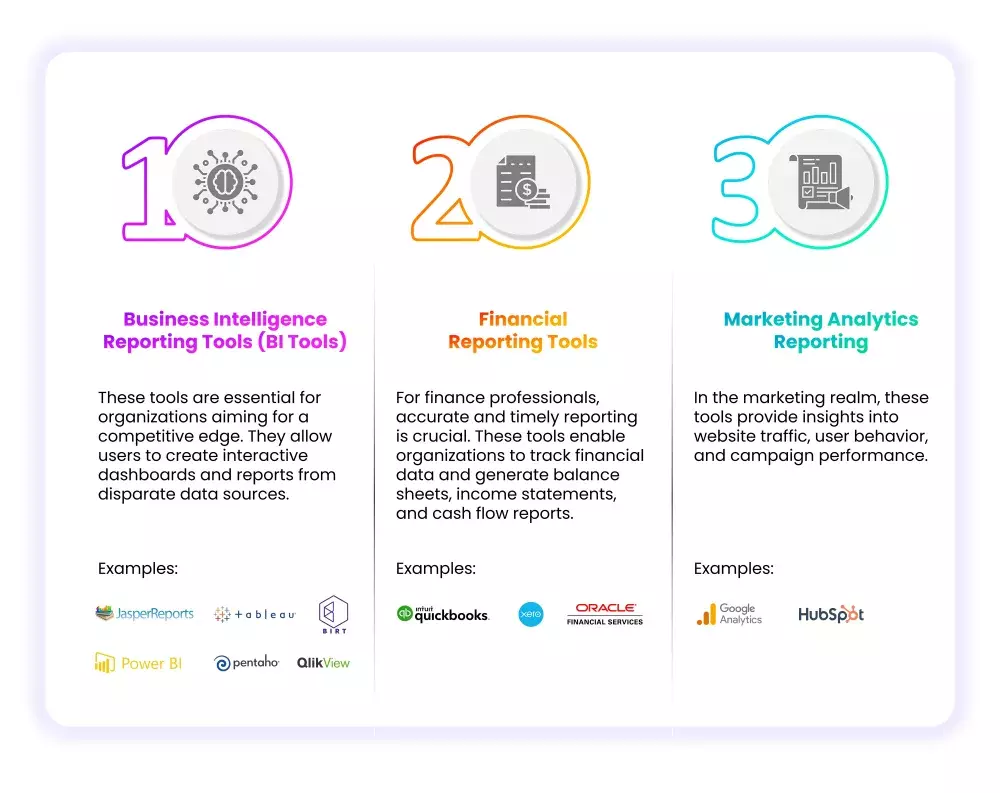
Let’s explore the different types of reporting tools used across various sectors.

Key Considerations for Designing a Reporting Framework

Choosing the right framework or a combination of frameworks is not a one-size-fits-all approach. It depends on various factors such as the information to be communicated and the key stakeholders involved. Here are some points to ponder:

  • Identify stakeholder needs: The best way to understand what your stakeholders need is to ask them. This could range from suppliers and customers to employees and investors.
  • Data collection: Once you understand what matters to your stakeholders, you can report what they need to know. But first, be clear about what data is required, and establish a mechanism to collect and analyze it. Doing so is not always easy, especially when the data is dispersed throughout the company, or not all of it is owned by the company.
  • Data presentation: Companies can only be confident in their reporting when it is subject to board oversight and has the right governance systems in place.
  • Strategic alignment: Your reporting data should align with the company’s focus or goals and should help in achieving future objectives.
  • Industry trends: In today’s world, organizations must also consider global challenges like climate change and unprecedented events like COVID-19.

Let’s take a closer look at some of the most popular reporting tools and their unique features.

1. Jasper Reports

Overview:

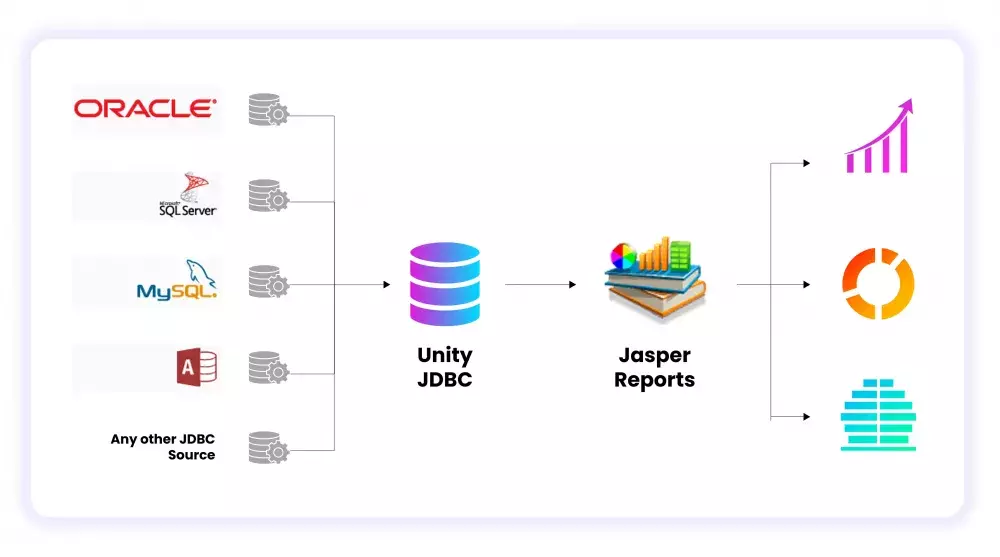
JasperReports is an open-source Java-based reporting tool that facilitates content creation for various outputs like PDF, XLS, RTF, and more. Designed to enhance Java applications, it’s pivotal in business intelligence and data analytics for generating dynamic content such as financial summaries, demographic reports, and inventory overviews. Its robust layout engine supports intricate report designs with elements like tables, charts, and images. With a diverse range of visualization options, from bar charts to maps, and advanced features like data grouping and filtering, JasperReports can pull data from multiple sources, including databases via JDBC, XML files, and JavaBeans, ensuring versatile and comprehensive report generation.

Key features:
  • Multiple export formats
  • Graphical/textual data representation
  • Watermarks
  • Data from multiple sources
  • Extensive control over layout
  • Variety of visualization options
  • Real-time dynamic reports
Use cases:
  • Financial reports
  • Customer demographics
  • Inventory reports

2. BIRT (Business Intelligence and Reporting Tools)

Overview:
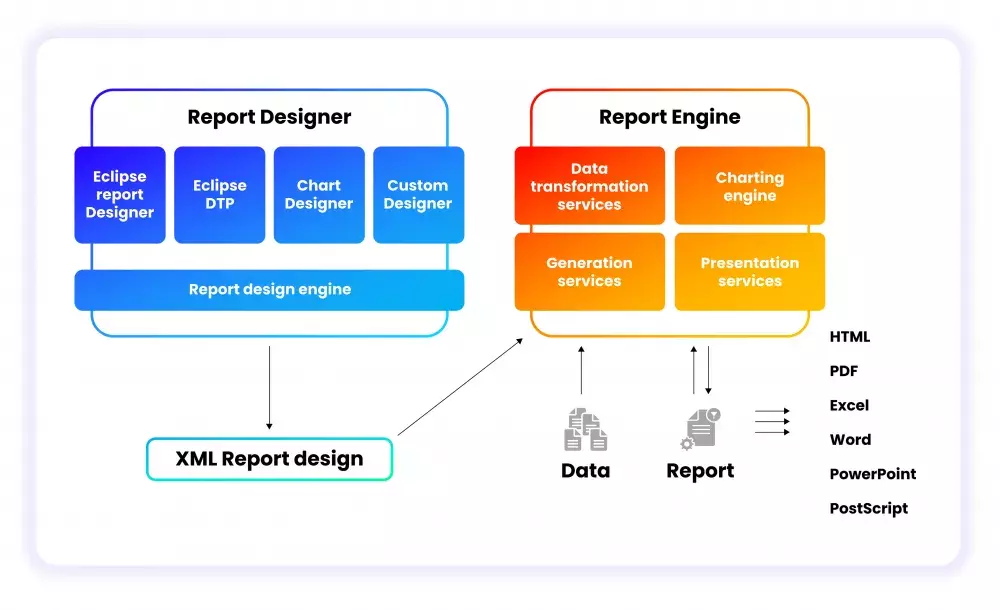
BIRT, an open-source initiative by the Eclipse Foundation, offers a comprehensive framework for designing, generating, and delivering reports in Java-based applications. Predominantly used in business intelligence, data analytics, and enterprise sectors, BIRT ensures flexible and tailored reporting. It simplifies business reporting with its robust features, including data visualization, scripting, and diverse data source compatibility. Central to BIRT are its two primary components: the Report Designer, which facilitates swift creation of visual charts and in-depth analytical reports, and the Report Server, both enhancing clarity and insight into data representation.

Key features:
  • Drag and drop interface for creating layouts
  • Support for various data sources like database, xml, web services and others
  • Rich data visualization features
  • Scripting support for calculations, business logic and data manipulation
  • Multi-language support
  • Data filtering and grouping
Use Cases:

3. Tableau

Overview:

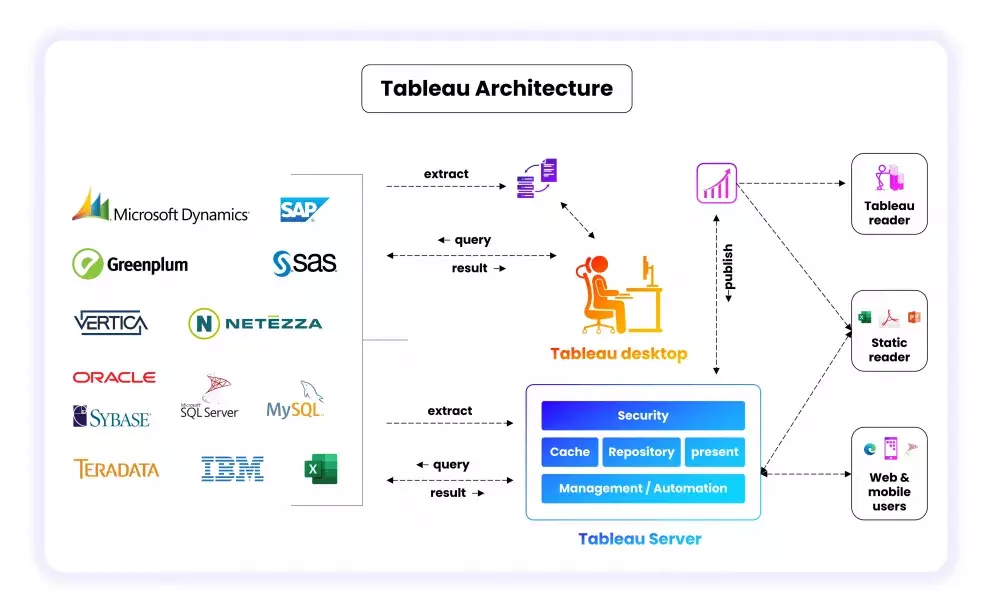
Tableau is a renowned data visualization and business intelligence tool that enables organizations to analyze, visualize, and share data seamlessly. Its strength lies in its user-friendly interface, making data organization, visualization, and comprehension straightforward. Users can craft graphs, maps, dashboards, and stories to support decision-making. Known for its simplicity, speed, and interactivity, Tableau has garnered significant popularity in both the public and enterprise sectors. A standout feature is its intuitive drag-and-drop functionality, allowing even non-technical users to master the tool and create dashboards without extensive coding knowledge.

Key Features:
  • Extensive connectivity options
  • Multiple data source blending
  • Interactive visualizations
  • Device-specific dashboard
  • Large data handling
  • Easy to learn
  • Multiple collaboration options
  • Integrated security
  • Time series and forecasting capabilities
Use Cases:
  • Data visualization
  • Business decision-making
  • Data analysis

4. Pentaho

Overview:

Pentaho is an open-source reporting project that offers a comprehensive set of BI features, including ETL, reporting, analytics, visualization, and data mining.  The suite consists of Report Designer, Reporting Engine and Reporting SDK.  Pentaho provides multiple, integrated options for report design, including the Pentaho Report Design Wizard, which walks a user through a series of steps to create a report. Pentaho’s JFreeReport project offers both scheduled and on-demand report publishing in popular formats such as XLS, PDF, TXT, and HTML. It offers a wide range of analysis a wide range of features that includes a pivot table view. The tool provides enhanced GUI features (using Flash or SVG), integrated dashboard widgets, portal, and workflow integration.

Key Features:
  • Business intelligence solutions
  • ETL capabilities
  • Important components including Report Designer, Design Studio, Aggregation Designer, Metadata Editor, and Pentaho Data Integration.
  • Multiple data source support including databases, spreadsheets, XML files, web services, and more
  • Various report formats
  • Interactive features
  • Advanced analytics capabilities
  • Cross-platform compatibility including Windows, Linux, and Mac operating systems
Use Cases:
  • Business performance improvement
  • Business efficiency

5. Power BI

Overview:

Power BI, developed by Microsoft, is a technology-driven business intelligence platform that transforms raw data into actionable insights using a suite of software services, apps, and connectors. It emphasizes data visualization, business analytics, and best practices, enabling businesses to make informed decisions through interactive dashboards and reports. As a component of Microsoft’s Power Platform, Power BI offers a user-friendly interface for organizations to manage and analyze vast data volumes. It automatically processes data, presenting insights in visual formats like charts and graphs, tailored to the data type. This versatility makes it indispensable across various departments, from marketing to finance. Users can seamlessly embed dashboards and reports into applications for a cohesive experience, ensure up-to-date data through automatic refreshes, and leverage its cloud capabilities for efficient data retrieval and analysis, making Power BI a leading choice in data analytics platforms globally.

Key Features:
  • Varied dashboard and report options
  • Wide variety of data source connections
  • Data transformation
  • Real-time insights
  • Cost-effective
  • Scalable
Use Cases:
  • Data-driven decision-making

6. Business analytics Google Analytics

Overview:

Google Analytics, a robust web analytics tool by Google, offers insights into website traffic sources, including organic search, paid search, social media, and more, highlighting the most effective channels for traffic and conversions. Especially valuable for e-commerce sites, it provides in-depth data on sales, revenue, and product performance. This tool empowers website owners and marketers to comprehend user behavior, monitor site performance, and make informed decisions. It offers real-time analytics on user interactions, aiding in optimizing marketing strategies and boosting ROI. Instead of relying on guesswork, users benefit from its data-driven approach and machine learning models to strategize successful ad campaigns. Google Analytics aggregates data from various ad platforms, presenting it cohesively. Embedded via JavaScript, it captures comprehensive user activity data, offering metrics like bounce rates, page views, session durations, and more. Its customizable features, supported by a broad third-party ecosystem, cater to diverse company needs, presenting tailored reports, dashboards, and alerts. Key report categories include Advertising, Audience, Behaviour, Real-Time, and Conversion Reports.

Features:
  • Audience insights
  • Real-time data
  • User behavior tracking
  • Traffic source tracking
  • E-commerce insights
  • Robust integration solutions
  • Use Cases
  • Website performance tracking
  • Marketing analytics Introducing Infovision’s Reporting Framework
Use case:
  • Web analytics
  • E-commerce sites

InfoVision reporting framework

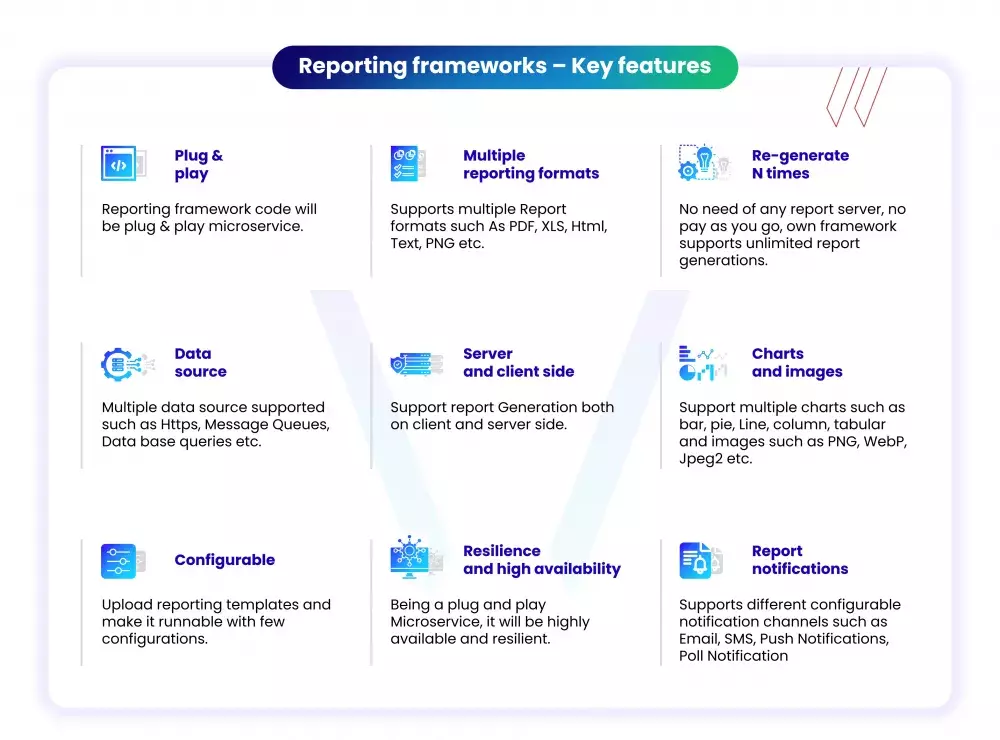
Infovision offers a plug-and-play reporting framework that seamlessly integrates with existing systems and supports multiple data sources. Built on a microservices architecture, it ensures high performance and scalability. The framework operates on both client and server sides, accelerating report generation and customization for optimal performance. Its API-centric design allows compatibility with any application, regardless of its foundational language. Designed with versatility in mind, the application is highly customizable to meet diverse needs.

Key features are outlined below.

Salient Features:
  • Operates on both client and server sides
  • Amplifies the report generation and customization process
  • Achieves a faster rate to enhance overall performance
  • API-based design
  • Can be consumed by any application
  • Compatible irrespective of the application’s underlying language

Conclusion

Reporting tools are indispensable in today’s business landscape. They not only assist in data visualization but also aid in making strategic decisions. Whether you are a small business or a large enterprise, choosing the right reporting framework is crucial. Infovision’s reporting framework offers a robust, scalable, and customizable solution that can cater to all your reporting needs.

The fascinating world of digital humans: from creation to real-world uses

The digital age continually surprises us with innovations that have been drawing significant attention due to their transformative potential.  The excitement never ceases. Quantum computing, neural interface technology, augmented and virtual reality, metaverse, digital twins are just a few examples that illustrate the point. However, none perhaps has been as intriguing as the concept of “digital humans”.  This technology represents a significant leap forward in human-computer interaction.  As the landscape evolves, there is every likelihood that digital humans will take over roles as virtual secretaries, healthcare advisors, sales assistants, and more, making business outreach more expansive, engaging, interesting, and automated.

Where do the digital humans fit in our future? We asked this question in a poll that we recently conducted on our social media handle.  The responses offer interesting insights:

  • Customer service agents: 60%
  • Health/Mental Coaches: 16%
  • Marketing agents: 18%
  • Others: 6%

    Understanding digital humans

    The terms “digital humans” and “digital avatars” are frequently used synonymously, but there are distinctions worth noting. Both refer to virtual representations of humans, often crafted with intricate design. Many digital humans exhibit lifelike characteristics in appearance, speech, motion, and personality. These are bolstered by artificial intelligence to replicate authentic human interactions, providing a depth of realism that transcends typical bots.

    Conversely, some applications of this technology lean towards simpler representations. A classic example would be customizable characters in video games or digital entities representing users on online platforms. Unlike their more sophisticated counterparts, these may lack lifelike human characteristics or nuanced personality traits.  With either extremes of the visual experience and rendition, the digital “person’s” characteristics and capabilities can be intricately developed to be as complex as to communicate naturally, grasp context, exhibit expressions, and emulate human behaviors, all to elevate and come closer to real-life interaction.

    When you enhance these digital humans with the capability to display micro-expressions and contextually relevant body language, their potential becomes vast. They can be customized for the specific tasks mentioned earlier and even beyond.

    Adoption challenges and roadmap

    Digital humans are not designed to replace real humans by any stretch, at least in the foreseeable future. They are meant to act as interfaces that come very close to the experience of a human interaction. They facilitate, complement, and enhance the engagement levels, making the ever-expanding digital universe more interactive and user-friendly. As AI and related technologies evolve at a breakneck pace, there’s a surge in innovation aimed at weaving digital humans seamlessly into our daily lives. Yet, whether society will fully embrace these virtual entities remains an open question.  

    Navigating our rapidly evolving cultural landscape is a complex task, with several factors creating an adoption gap. Central to this gap is the issue of TRUST. While many early adopters are keen to explore new technologies, widespread acceptance hinges on dispelling doubts. Interactions with humans provide a unique blend of intellect (IQ) and emotion (EQ) – offering empathy, assurance, and confidence. The challenge lies in determining whether AI can genuinely emulate this blend, and if so, to what extent can we trust its autonomous actions. Addressing and resolving these questions is crucial.

    While AI has repeatedly showcased its intellectual prowess, ‘trust’ stands as the primary obstacle. The rise of deepfakes and associated misuse has only exacerbated this distrust. Genuine AI adoption critically depends on confidence in its governance—ensuring the models’ validation, their precision, adherence to ethical standards during AI development, and data security. Despite the prevailing excitement about Gen AI and automation, proper oversight—especially concerning the tonality and emotional aspects of Gen AI models—is essential to earn this trust.

    Other contributing factors to potential adoption gaps include demographics, user interaction preferences, and an inherent cultural inclination for human interaction over machines. The journey to wholehearted acceptance therefore is a long one. Nonetheless, experimenting with these innovations in real-world settings, under robust governance, can be the initial step to foster trust and accelerate adoption.

    I, personally, am open to exploring these new technologies. I’d rather interact with a clearly computer-generated avatar than something mimicking a real human, as long as it’s smart, emotionally adept, and governed properly. Knowing I’m dealing with an AI, rather than being deceived into thinking it’s human, builds trust for me. However, opinions vary. Catering to such diverse preferences is a significant challenge.

    Technological challenge of digital humans

    As the domain of digital humans expands, a pressing question emerges: In which scenarios can we realistically see their immediate adoption? Let’s explore some potential avenues, such as customer service agents, health and mental coaches, and marketing campaigns.

    But before diving into these applications, it’s vital to highlight the technological challenges at hand. Creating a real-time interaction with a digital human involves multiple stages.

    • First, there’s the (automatic) generation of a text-based message, regardless of real time messaging or pre-processed messaging.
    • Next, this text must be transformed into speech with appropriate tonality. Here too, there is the additional complexity of robotic voice as opposed to human like voice.
    • Finally, and most intricately, this speech should synchronize flawlessly with the digital human’s facial movements, lip synchronization, and subtle micro-expressions.

    Generating text and converting it to speech can happen instantly. But, synchronizing this audio with facial expressions, gestures, and body language requires significant processing strength. This makes real-time interactions with digital humans challenging, especially because of the intensive third stage of processing (refer to the points mentioned above). To address this, we’d need to turn to more expensive and powerful robotic solutions, which utilize advanced onboard or edge processing.

    Scenarios for human-computer interaction

    Yet, this doesn’t mean digital humans aren’t ripe for adoption in specific scenarios. They’re incredibly suited for pre-processed messages, like tailored marketing pitches or customer service prompts. Here’s why:

    • Marketing automation: Digital humans excel in creating personalized, emotion-driven advertising. They can adapt ads to various languages and materials. With the right technology stack, businesses can harness them to craft bespoke marketing messages, opening up significant revenue and cost-saving avenues.
    • Customer service automation: Instead of real-time responses, digital humans can handle outgoing messages—think reminders, collection notifications, or follow-ups—with a personal touch.
    • Learning & development: Whether it’s in healthcare or corporate training, many educational interactions are unidirectional. Digital humans can offer a consistent, always-available mode of instruction.
    • Customer education: Digital humans can spearhead tutorials, product demonstrations, or informational sessions, ensuring clarity and engagement.

    In sum, while we may be a little away from real-time conversations with digital humans, there’s vast potential in pre-defined or pre-processed interactions, especially when ethical and procedural governance is woven into their deployment. The processing gap (Step 3) can be bridged not too far from now, and that poses very exciting technological advancements even beyond what we see today. The future beckons with exciting opportunities in this space!

    You may navigate the world of digital humans further by exploring our white paper Digital humans:  Revolutionizing human-computer interaction.

    Or, reach out at digital@infovision.com for a detailed discussion.

    The zero trust model: “trust no one” approach to cybersecurity

    ‘BeyondCorp’ was Google’s initiative of 2010 that paved the way for secure access to corporate resources from any location or device without a VPN. This was the first instance of an implementation of the zero trust approach that aimed at enhancing security with a focus on identity and context rather than relying solely on perimeter-based defenses.

    Zero trust model: a paradigm shift in cybersecurity

    The need for continuous authentication and authorization led to a ‘never trust, always verify’ principle that became the basis of a new model proposed by Forrester Research analyst John Kindervag in 2014. ” In a report titled “No more chewy centers: introducing cybersecurity zero trust,” John Kindervag mentioned that zero trust assumes no one, whether inside or outside the network, can be trusted without verification.

     In today’s world, cybersecurity threats are more complex and sophisticated than ever before. Traditional security models are no longer sufficient to protect sensitive data. Organizations need to adopt new approaches to ensure that their data is secure.

    Zero trust is one such approach that offers a more effective way to protect sensitive data. Let’s find out why zero trust is a good approach toward cybersecurity.

    The zero trust security model coils around the idea of every user, device, or application being a potential threat until proven otherwise. This approach has gained popularity in recent years due to the increase in cyberattacks and the need for more comprehensive security strategies.

    Do we really need a zero trust model to protect our organizations?

    A substantial number of organizations around 41%, participating in a global survey expressed their commitment to implementing a cybersecurity zero trust strategy, signifying a growing recognition of its benefits and an early phase of adoption.

    Implementing a zero trust approach is, undoubtedly, one of the most effective ways to protect our organizations against cyber threats, but whether it is necessary for your specific organization depends on a variety of factors.

    If your organization deals with sensitive data, such as financial or personal information, or if you have valuable intellectual property that needs to be protected, then implementing a zero trust model is highly recommended. Zero trust can help prevent data breaches, reduce the risk of insider threats, and provide better control over user access to sensitive resources.

    However, if your organization doesn’t handle sensitive information, and you have a small, well-defined network perimeter, you may not need to implement a cybersecurity zero trust model. In this case, traditional security measures such as firewalls, antivirus software, and intrusion detection systems may be sufficient.

    Ultimately, the decision to adopt zero trust security services should be based on a comprehensive risk assessment and an understanding of your organization’s specific security needs and resources.

    How does zero trust security work?

    Zero Trust involves implementing a set of security policies and controls to authenticate and authorize every access request to resources, regardless of the user’s location or the device they’re using. This includes implementing multifactor authentication, role-based access controls, and continuous network traffic monitoring. To achieve this, organizations need to adopt a holistic approach that includes people, processes, and technology.

    With the rise of remote work and cloud computing, the traditional perimeter-based security approach is no longer effective. Zero trust offers a more effective way to protect sensitive data by limiting access to only authorized users and devices. By adopting this approach, organizations can significantly reduce the risk of data breaches and protect their sensitive information from unauthorized access.

    Moreover, zero trust can comply with organizations’ help with data protection regulations such as the GDPR and the upcoming ‘Personal Data Protection Bill’ in India. By implementing zero trust, organizations can demonstrate their commitment to protecting the privacy of their customers and employees.

    How can the zero trust model be a game changer?

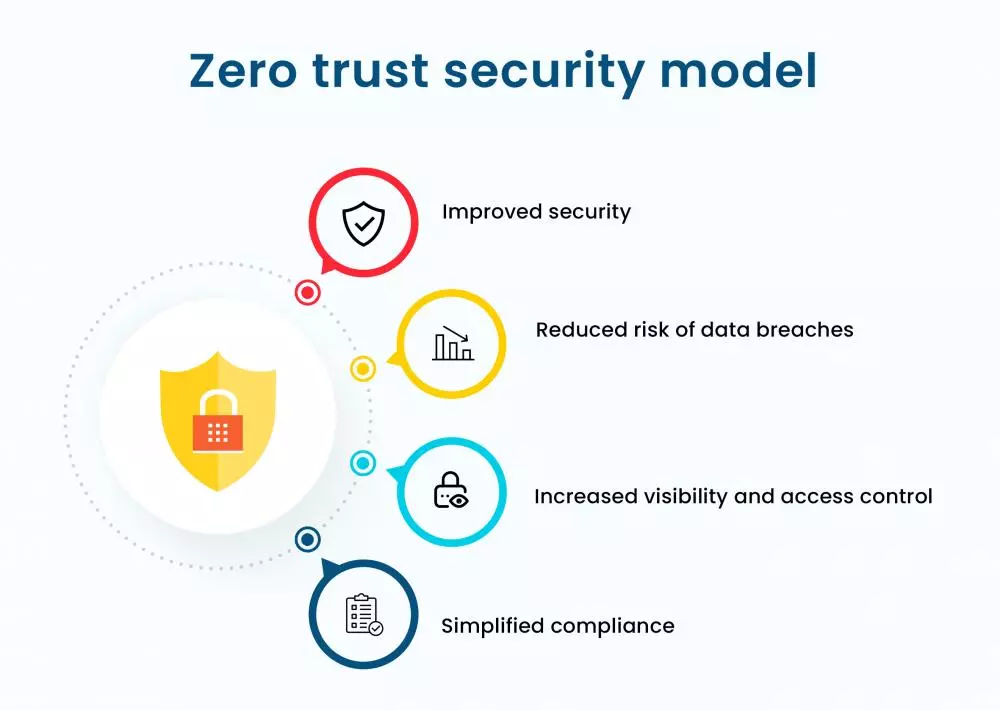
    Zero trust security model provides

    • Improved security
    • Reduced risk of data breaches
    • Increased visibility and control over network access
    • Simplified compliance with industry regulations

    As organizations rely on digital technologies, the need for robust cybersecurity measures has become more critical than ever before. The zero trust model provides a comprehensive and effective approach to cybersecurity, offering enhanced security, reduced risk, improved compliance, and increased visibility. Implementing this model may require significant effort, but it’s a worthwhile investment in protecting sensitive business-critical data and safeguarding against cyber threats.

    We at InfoVision help our clients to reduce risks (ransomware, supply chain attacks, insider threats) by providing consideration services like SOC (Security Operation Center), multifactor authentication (MFA), identity management, access management, identity governance, SSO & federation, and privileged access.

    Why incorporate the zero trust model in your business?

    If you go with the stats, between 2021 and 2022, there was a 2.6% increase in the average cost of a data breach, with the figure rising from $4.24 million to $4.35 million. And implementing the best Zero Trust solutions or approach can result in substantial cost savings, reducing the financial impact of a data breach by approximately $1 million.

    Zero Trust provides a more effective way to protect sensitive data in today’s digital world. By adopting a zero trust approach, organizations can limit access to only authorized users and devices, significantly reducing the risk of data breaches.

    This zero trust access management also helps organizations comply with data protection regulations, ensuring that they protect the privacy of their customers and employees. The need for zero trust is more critical than ever, and organizations should consider adopting this approach to ensure the security of their data.

    Endpoint security

    Organizations are increasingly embracing Zero Trust principles to enhance endpoint security. This involves continuous monitoring of device health and strict access control enforcement. The objective is to eradicate implicit trust, ensuring that all access to assets and users is rigorously verified, thereby elevating security measures.

    Cloud-first zero trust platforms

    Cloud-first Zero Trust platforms are rapidly gaining popularity due to their inherent benefits. They are known for being cost-effective and scalable, offering clientless capabilities as an alternative to traditional endpoint agents. This innovative approach is making waves in the security landscape.

    Increasing adoption of zero trust

    Currently, a substantial 83% of security professionals consider Zero Trust a vital part of their security strategies. Remarkably, 80% of them intend to implement Zero Trust in 2022. This widespread commitment reflects a growing recognition of its crucial role in enhancing overall security posture.

    Zero trust in different sectors

    Sectors like insurance, financial services, and manufacturing now recognize Zero Trust as paramount for enhancing visibility and control over their endpoints. They are actively integrating Zero Trust principles into their cybersecurity strategies to bolster their defenses, acknowledging the potential benefits.

    Zero trust as a cybersecurity concept

    Zero Trust stands as a foundational cybersecurity concept aiming to eradicate implicit trust within security frameworks. Its core tenets involve continuous access verification and the enforcement of the principle of least privilege. The National Institute of Standards and Technology (NIST) has provided comprehensive guidelines for the design and deployment of Zero Trust architectures.

    Now pick the right cybersecurity partner for your business with the help of our MDR-made simple whitepaper. Download here: MDR made simple: picking the right cybersecurity partner for your business (infovision.com)

    Integration with DevSecOps

    Incorporating security practices into the development pipeline has become a crucial strategy for organizations. This proactive approach ensures that security is an integral part of application and service development right from the start.

    Zero trust network access (ZTNA)

    The increasing prominence of Zero Trust Network Access (ZTNA), often referred to as “Software-Defined Perimeters,” is remarkable. ZTNA solutions empower organizations to finely manage user and device access to specific resources, regardless of their physical location. This capability plays a significant role in reducing potential vulnerabilities and boosting overall security.

    In the realm of cybersecurity innovation, our solution, Invisinet is making its mark. Built upon the intellectual property of Blackridge, Invisinet serves as the gateway to where Zero Trust truly begins.

    Invisinet’s network and cloud security solution called Transport Access Control (TAC) enables efficient cyber defense in IIoT, smart edge, and cloud settings. TAC stops unauthorized access to IT/OT resources.

    Invisinet First Packet Authentication is a crucial feature of TAC, which inserts a cryptographically generated, single-use identity token on each side of a TCP/IP session without affecting TCP compatibility. When TAC receives the connection request, it extracts and authenticates the identity token, and applies a security policy – forward, redirect, or discard – based on the TAC identity.

    So, TAC’s identity-based protection kicks in as soon as it can, making sure that any unauthorized or unknown traffic is barred from your network, enhancing security, and lowering risk.

    To learn more about First packet authentication by Invisinet and the zero trust cybersecurity model, contact InfoVision’s expert team at  info@infovision.com.

    Decoding data classification: A simplified yet comprehensive handbook

    The sixth edition of the ‘Data Never Sleeps’ report unveils the astonishing reality of data production in our world, with colossal amounts generated every single minute. Each day, a staggering volume of data, totaling over 2.5 quintillion bytes, is produced, and this upward trend shows no signs of slowing down.

    In this digital age, all organizations – big or small – are producing significant volumes of data (both structured and unstructured). While on one hand, the surge in data creation holds promise for businesses and consumers with regard to the discovery of valuable insights; on the other, attention has to be paid to the crucial aspect of data confidentiality – not only from a regulatory compliance standpoint but also from a business sustainability perspective.

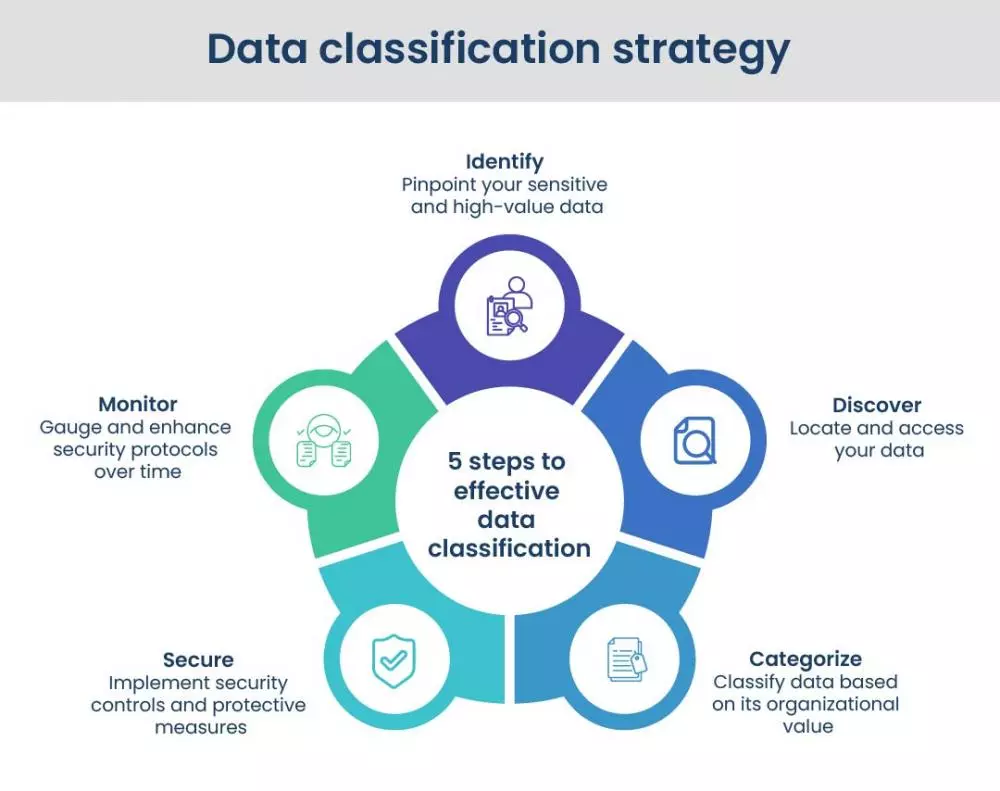
    The fundamental step to achieving data protection is the identification and classification of critical data. The other steps include,

    • Data labeling
    • Data loss prevention
    • Data masking
    • Data encryption

    This blog is intended to give you a clear understanding of data classification and its role in data management and security.  We also touch upon different approaches and tools that help do this effectively.

    An overview of data classification

    Data classification is a crucial process that enables organizations to effectively manage their data. It involves categorizing data into different levels, such as public, private, and confidential. Additional security controls are implemented based on data classifications to enhance data protection further. These measures also assist in making better policy decisions based on different data categories.

    The absence of data classification increases the risk of:

    • Data breaches
    • Non-compliance with regulations
    • Lack of transparency
    • Ineffective incident response
    • Poor data management

    Effective data classification strategy

    The classification mechanism simplifies data retrieval and location, which is essential for risk management, compliance, data security, and conforming to rules like GDPR, HIPAA, and PCI DSS compliance.

    Three main types of data classification

    Data classification involves the use of multiple tags and labels that indicate the data’s type, confidentiality, integrity, and availability. The sensitivity level of the data is determined based on its importance and confidentiality, which in turn influences security strategies. The industry typically recognizes three primary types of data classification as the standard:

    Content-based

    Analyzing the content of the data, such as the text in a document or the pixels in an image, to determine its classification. Content-based data classification is a powerful tool for data protection and management.

    Context-based

    This approach considers the location, purpose, and use of the data. Context-based data classification can be useful for organizations that deal with large volumes of data with varying levels of sensitivity. It allows organizations to categorize data based on its intended use, making it easier to manage and protect the data.

    User-based

    It is valuable in organizations where data sensitivity varies significantly across different departments or individuals. Users may have a better awareness of changes in data sensitivity than a centralized data classification system, enabling them to promptly adjust the classification level as needed. Allowing users to classify data based on their unique knowledge ensures proper protection and management of sensitive data. However, user-based classification also presents challenges, such as potential inconsistency in classification and the risk of user error.

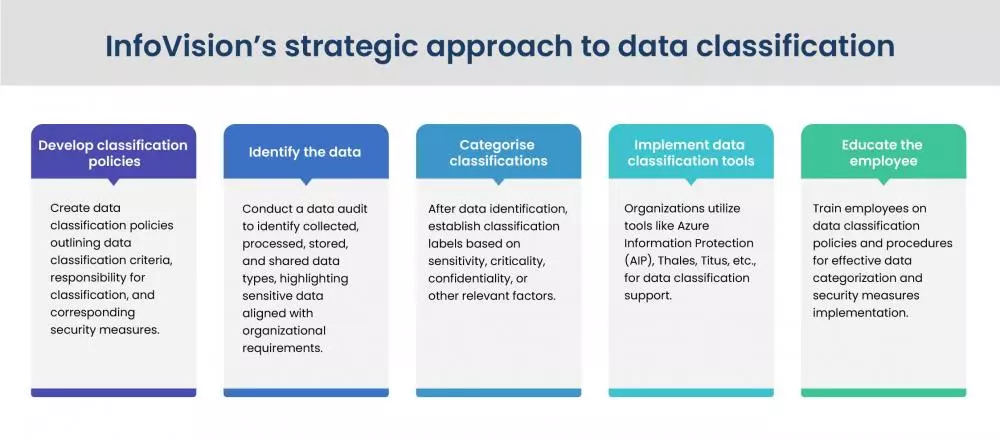
    InfoVision’s strategic approach to data classification

    Effective data classification is a key element of a comprehensive cybersecurity strategy because it helps organizations identify the most valuable and sensitive data and apply appropriate security measures to protect it.

    InfoVision presents an excellent plan of action.  It empowers businesses to identify and implement the most sensitive and valuable security measures, ensuring robust data protection.

    Typical tools used in data classification

    Data classification technologies save administrative expenses, enhance digital data file maintenance, and reduce redundant data. Data classification was solely a user-driven procedure for a long time. Today, automation has emerged as a viable alternative.

    In order to streamline data management, organizations can establish sophisticated systems that empower users to efficiently categorize the documents they produce, transmit, or modify, along with newly generated data. Additionally, users have the option to classify older materials, ensuring a systematic approach for comprehensive data organization; otherwise, they will be managed as uncategorized, potentially leading to inefficiencies in data handling.

    Here’s a quick overview of some of the software solutions focused on data protection and classification:

    AIP (Azure Information Protection)

    This technology component of the Microsoft Azure family of cloud-based services is used to secure data in both on-premise and cloud. The main advantage of the AIP tool is its easy interaction with other Microsoft applications, making it simple for users to categorize and protect their data within a familiar work environment.

    CipherTrust data discovery and classification tool

    It helps businesses locate and manage sensitive data on-premise, in the cloud, as also in hybrid settings. With the help of this technology, companies can build and implement specific data classification policies, recognize or address security concerns as they arise, and monitor data in real time.

    Titus

    Titus aids in the identification and classification of sensitive data, the implementation of access control measures, and the prevention of data loss. Its integration with various security and information management systems (SIEM) helps the security team easily identify and respond to potential security issues.

    InfoVision’s approach

    In the realm of modern businesses, a data classification policy stands as the cornerstone of robust security measures. Without a uniform framework to classify data, safeguarding sensitive information becomes an insurmountable task. After all, protecting data is contingent on acknowledging its existence, pinpointing its location, and determining the need for safeguarding.

    InfoVision provides a range of specialized services and solutions like data classification, data labeling, data loss prevention, data encryption, and data masking. By leveraging the latest technology and tools, InfoVision helps organizations stay ahead of the constantly evolving security threat landscape.

    For any further queries or suggestions, write to us at  info.ecrs@infovision.com.

    To ensure optimal security for your organization, learn more about an effective red-teaming strategy. Don’t miss our blog on red teaming, read here: Red teaming: The future of cybersecurity preparedness (infovision.com).

    Unmasking the RPA myths: A sneak peek into the truth about RPA

    Robotic Process Automation (RPA) has emerged as a transformative technology, revolutionizing, and reshaping the operational landscape of businesses across various industries. It has become a key driver of innovation and efficiency in today’s rapidly evolving business environment. In fact, according to the latest findings in a comprehensive report conducted by Grand View Research, the global market size for RPA was estimated to be a staggering $2.3 billion in 2022, demonstrating its significant market presence and immense potential for growth.

    The future of robotics process automation services appears exceptionally promising, as it is projected to expand at an impressive compound annual growth rate (CAGR) of 39.9% from 2023 to 2030, according to the same report. While it is true that large enterprises dominated the RPA market share in 2022, accounting for a substantial 66.0%, the adoption and integration of RPA technologies are not limited solely to these industry giants.

    On the contrary, small and medium-sized enterprises (SMEs) are anticipated to experience the highest compound annual growth rate during the forecast period.  This is primarily due to the increasing awareness and recognition of the immense benefits and transformative power that RPA can offer within this segment.

    The remarkable growth and vast potential of RPA solutions emphasize the importance for business and technology leaders to take proactive measures in future-proofing their RPA initiatives. However, it is equally crucial to address the challenges that arise during the implementation of this transformative technology.

    Many stakeholders demand clear and direct benefits before approving technology investments, which can pose a significant hurdle for organizations. To unlock the full potential of RPA, it is crucial to understand that it is not a one-and-done solution. Rather, it requires a comprehensive approach involving planning, strategizing, and cultivating the right mindset to derive the maximum value.

    In this context, Forrester has highlighted several critical steps, among which I firmly believe that the below three possess the potential to generate significant value and effectively futureproof RPA initiatives.

    Integrate RPA seamlessly into your organization’s automation fabric

    To effectively integrate RPA solutions into your company’s automation ecosystem, it is crucial to view RPA as an integral part of your overall automation strategy. RPA should no longer be seen as an isolated entity but rather as a steppingstone towards creating a comprehensive automation fabric. In fact, it should be considered a constituent of the broader automation roadmap.

    In order to effectively align RPA solutions within your organizational structure, establish a dedicated automation organizational framework that focuses on transformation. This structure should have clear leadership and a well-defined charter that emphasizes the strategic objectives, operational goals, and governance of RPA solutions within the broader context of automation. While RPA is well-suited for automating repetitive manual tasks, its potential extends beyond mere cost avoidance. Explore transformation-centric use cases where RPA can act as a vital link in enabling digital business initiatives. By leveraging RPA as an enabler of digital transformation, you can unlock new avenues for innovation and drive business growth.

    To ensure the success of your RPA program, it is essential to secure sponsorship from the C-suite. An executive sponsor plays a pivotal role in providing strategic direction, securing funding, aligning stakeholders, championing the program, and overcoming any obstacles that may hinder its progress.

    Establish a robust business value model for RPA solutions

    Calculating the return on investment (ROI) for complex processes becomes increasingly challenging due to various factors and dependencies. To ensure a realistic and comprehensive business case, it is essential to neither overstate the potential value nor underestimate the costs involved.

    While the price of RPA licenses can vary significantly, the success or failure of achieving sustained ROI is independent of the license cost. To demonstrate the financial viability of implemented RPA solutions, take a balanced scorecard approach to assess the value generated by large-scale RPA programs that includes operational efficiency, business performance, revenue, profitability, customer experience and risk.

    Understand the different cost structures involved, including infrastructure setup, licenses, automation development and testing, long-term running costs and the cost of change. Report automation value in ways that resonate with business leadership, focusing on functional, economic, experiential, and symbolic dimensions rather than solely tactical or productivity-focused metrics. Additionally, recognize the strategic and human impact of RPA within a broader automation initiative, acknowledging its ability to free up human labor for more innovative, consumer-centric, or socially impactful endeavors.

    Approach RPA like an enterprise platform

    When implementing RPA, it is crucial to treat it as an enterprise platform and adhere to the same standards and guidelines as other technologies. To ensure good automation governance, prioritize user experience, and involve business stakeholders and process experts in the design process.

    Design the automation process responsibly by considering how they interact and impact actual users within the workflow. Apply user-centered design principles and involve experts to achieve user goals effectively. Formalize approaches to data privacy and resilience, as RPA bots handle sensitive customer and personal data. Also, be aware of vulnerabilities that may affect data provisions, such as compliance with regulations like GDPR.

    To establish an effective automation architecture, focus on building platforms and supporting reusability. Develop a library of reusable components, business objects, or code that can be easily composed into various workflows, avoiding the need to rebuild from scratch. Maintain software development and testing best practices to ensure reliable and robust RPA solutions. While RPA simplifies automation creation for business users, it still relies on scripting across different workflows and applications. Complex tasks with extensive scripting can lead to bot failures due to infrastructure issues, software reliability and changes in application UI and data.

    By embracing RPA as a vital component of your automation strategy, establishing a robust business value model and approaching it with the mindset of an enterprise platform, you can unlock the full potential of RPA and drive transformational outcomes for your organization.

    RPA: myths vs reality

    As the demand for RPA continues to grow and organizations recognize its potential, it becomes very crucial to address the concerns and misconceptions that have hindered its widespread adoption.

    Despite the evident success stories and statistical evidence supporting the value of RPA solutions, it has faced resistance from some industries when it comes to its adoption. Concerns have been raised regarding potential issues like overreliance on automated bots, susceptibility to cyber-attacks and the critical aspect of data security. These concerns have contributed to the creation of several misconceptions and myths surrounding RPA solutions.

    Unfortunately, these misconceptions and myths act as barriers that hinder the widespread adoption and prevent businesses from fully harnessing the true potential of RPA solutions. Deloitte’s global robotics process automation survey report revealed a relatively small increase in organizations investigating or implementing RPA solutions and only 3% of leaders scaled their RPA capabilities to more than 50 robots.

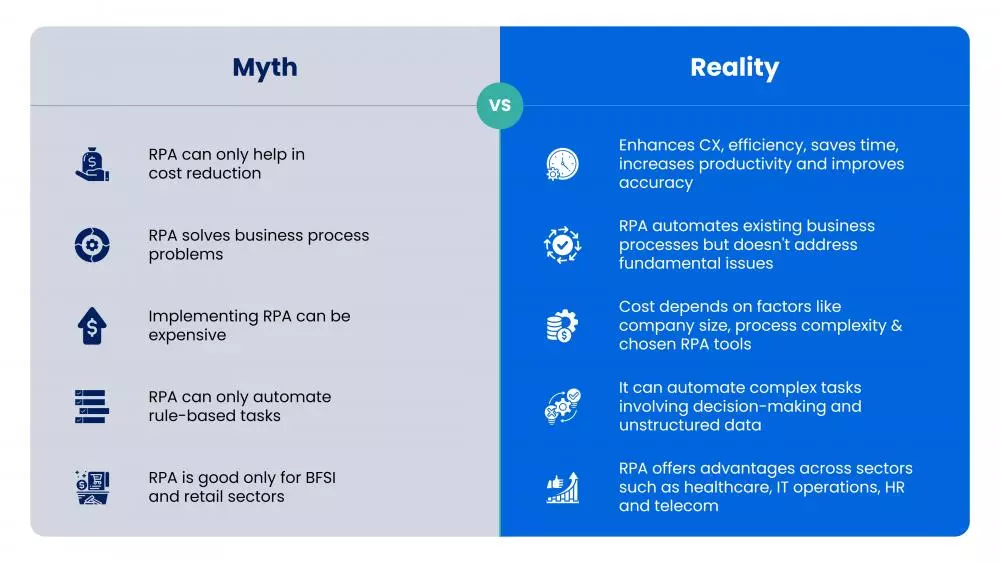
    In the below infographic, we debunk some of the most common myths associated with RPA.

    Conclusion:

    Robotic process automation is a powerful technology that can drive business transformation by automating repetitive tasks, improving efficiency, reducing costs, and enhancing the overall customer experience. By dispelling common myths surrounding RPA, organizations can gain a better understanding of its capabilities and make informed decisions about its implementation. Embracing RPA and leveraging its potential can accelerate digital transformation and help businesses stay competitive in the ever-evolving landscape of automation. RPA is not a one-size-fits-all solution and organizations must carefully assess their processes and objectives to determine how RPA can best be utilized to drive value and achieve their strategic goals.

    We understand that RPA solution implementation is a specialized expertise and if not done accurately, it can cost a lot to any business. You may keep adding bots to your processes but not get desired results if you don’t know what to automate and how to improve existing processes while automating them. To help you navigate the intricacies of RPA implementation and maximize its potential, we have prepared a comprehensive whitepaper.

    Whitepaper Thumbnail

    Our whitepaper offers a comprehensive perspective that highlights the lesser-known aspects of this technology. It also provides in-depth insights, practical tips and real-world examples to equip business and technology leaders with the knowledge needed to make informed decisions and execute successful RPA initiatives. Click here to access our whitepaper.

    6 key benefits of cloud computing in retail

    In today’s rapidly evolving retail landscape, embracing cloud retail solutions has become imperative. The surge in online retail and intensifying competition necessitates that retail businesses leverage cutting-edge technologies to stay ahead in the game. Among these technologies, cloud computing stands out as a game-changer – streamlining workflows, curbing IT expenses and enhancing the overall customer experience. By embracing cloud computing in retail, businesses can unlock a myriad of benefits that contribute to their success in the digital era.

    Redefining retail operation with cloud computing

    Cloud computing in retail refers to the use of cloud-based services and cutting-edge technologies to manage and securely store data, applications and infrastructure vital to retail operations. This transformative approach empowers retailers with the freedom to access their critical data and applications from any location, at any time, enabling them to streamline operations, boost efficiency and effectively curtail costs. Impressive statistics from a report by Globe News Wire reveal that the retail cloud market is expected to grow to $58.67 billion in 2027 at a CAGR of 16.7%. As the numbers ascend, it becomes evident that cloud computing in retail is set to redefine the landscape, revolutionizing how businesses operate and serve their customers.

    Download the whitepaper: Red Teaming for Cybersecurity – Retail Industry Applications.

    Gaining an edge with cloud computing in retail

    Cloud computing empowers retailers with a competitive advantage over their e-commerce competitors by offering enhanced flexibility. In traditional systems used by offline retailers, they struggle to integrate with modern technologies and can be expensive to maintain. Cloud computing in retail, on the other hand, offers a streamlined and cost-effective alternative. By adopting cloud solutions, retailers can bid farewell to their legacy systems, freeing up resources to focus on growth and innovation. This newfound agility enables them to thrive in the digital market, gaining a distinct edge over their rivals.

    The retail landscape is expanding far beyond the realms of traditional ERP, CRM and supply chain management (SCM). In the cut-throat competition of today, the importance of managed IT infrastructure has never been more acutely felt. It stands as the driving force capable of reshaping the age-old retail industry and helping them adapt to an ever-changing market. Even brick-and-mortar retailers can leverage a plethora of tools available to enhance communication among employees across various departments and locations. This effective collaboration paves the way for streamlined business management, reducing the chances of miscommunication and ensuring a brighter future for the retail sector.

    Where does cloud computing in retail fit?

    Retail is one of the top industry sectors with the highest cloud use, at 96.9%, with only 3.1% of retail businesses saying cloud technologies are not applicable to their business. And the reason for such high cloud adoption among retail is apparent – the e-commerce sites see high traffic during sales and the holiday season.

    By leveraging cloud computing in retail analytics and social media, retailers can gain valuable insights into customer preferences and behaviors, enabling them to deliver personalized shopping experiences. The power of big data lies in its ability to process vast amounts of structured and unstructured data, which demands substantial computing power and storage. Cloud-based solutions step in to meet these requirements by offering on-demand storage and robust computational and analytical capabilities. This allows retailers to efficiently manage and harness the potential of big data, propelling them toward success in the dynamic retail landscape.

    In this blog, we further delve into the 6 key advantages of cloud computing in retail to unlock a world of possibilities for your business.

    Advantages of cloud computing in retail

    Streamlined operations

    Many traditional offline retailers find themselves operating in a disjointed manner, constrained by outdated legacy systems. This hinders their ability to efficiently integrate various business operations, from inventory management to shipping, development and point of sale (POS) activities. However, by embracing cloud computing, retailers can unlock the power to deliver seamless customer experiences tailored to consumer demands.

    The impact of cloud computing on retail business means all departments and locations have real-time updates on the inventory, shipment and other aspects of the business at their disposal. Since POS systems are moving from cash and cards to smartphones and tablets, retailers can implement cloud technology for a smooth transaction process and better customer experience.

    Customized shopping experience

    Customers today have more options within their reach, and switching has never been easier. As little as two unsatisfactory experiences could prompt 86% of consumers to abandon a particular brand. However, utilizing cloud computing presents a remarkable opportunity to enhance customer loyalty like never seen before.

    A pivotal question arises in the minds of retailers: can cloud computing effectively handle inventory and shipping? The answer is a resounding yes! Cloud computing brings a host of benefits, enabling stores to instantly access a customer’s buying history and effortlessly track order statuses, regardless of when or where the purchase was made. This real-time access to comprehensive customer and order data empowers retailers to offer personalized recommendations, exclusive membership offers, coupon codes and other enticing promotions that foster customer loyalty. With cloud technology in place, retailers can even welcome customers with personalized messages or share enticing deals of the day as soon as they step into the store.

    Cost-effective existence

    The retail industry is one of the most rapidly evolving sectors. To cater to the fast-changing business demands, retailers need technology that must eliminate time spent on planning, procurement, budget approval for capital expenditure, development and other operational aspects.  This is where cloud computing in retail comes in with a massive advantage over on-premises computing. A blog post from Google Cloud describes how Macy’s, an American retailer, leveraged cloud databases to enhance the customer experience and optimize the pricing services. By adopting cloud services, Macy’s successfully streamlined its infrastructure, reducing complexity and maintenance and ultimately leading to significant cost savings. Walmart too used a multi-cloud strategy to optimize workload placement and was able to save millions in IT costs.

    With cloud technology, retailers only pay for the resources they actually use. This brings considerable savings to their operational expenditure budget as they no longer need to worry about investing in hardware, software and connectivity. Additionally, the burden of system updates is shifted to the managed cloud services provider, relieving retailers of such responsibilities. This streamlined approach also reduces the need to hire dedicated IT personnel, further adding to the cost savings offered by cloud computing in the retail sector.

    Scalability advantage

    All retailers experience peaks and troughs in business. Most often, businesses depend on promotions, the time of the year, and even the weather. Hence, IT systems must be equipped to handle these ever-changing scenarios seamlessly. This is where the scalability advantage of cloud computing in retail becomes a game-changer. Target, an American retail corporation, uses cloud computing to power its website and mobile app, ensuring that it can handle high traffic volumes during peak shopping seasons.

    With a cloud-based model, retailers can easily adjust the level of resources to match their actual usage, swiftly scaling up or down as needed, all in a cost-effective manner. Cloud computing in retail empowers businesses to seamlessly handle peak demand periods, ensuring that they can meet customer expectations without any hiccups. The cost flexibility of cloud solutions is bolstered by varied pricing options that depend on the increase or decrease of computing usage as per specific requirements. The scalability aspect of cloud computing opens up new avenues for retailers to grow and thrive in the dynamic marketplace.

    Better supply chain visibility

    SCM is one of the most critical business processes in the retail industry. A slip in any one of the processes can lead to irreparable damage. To fortify their SCM capabilities, retailers can turn to cloud-based models that offer seamless integration across every aspect of their business, providing enhanced supply chain visibility and robust enterprise application support. According to an Accenture study, executives on average attributed their cloud use to a 16% reduction in supply chain operating costs. 41% of all executives also said the desire to increase supply chain efficiency was a top-three reason for migrating their supply chains to the cloud.

    Cloud computing retail can result in fewer stock-outs and optimized inventory levels and can also enable retailers to capture real-time location data on inventory and compare their stock with that of other locations. Using cloud computing, retailers can assess each individual element of the supply chain, from order status to product marketing. Cloud technology can automatically record relevant data that retailers can then use to make changes to their business processes.

    Catalyst to create new products

    Data analytics capabilities delivered by cloud computing in retail serve as a powerful tool for retailers to create innovative new products driven by customer feedback. Leveraging this technology, retailers can compile valuable information from various online sources, including competitor retailers and social media platforms, to gain insights into customer preferences and desires.

    With all the relevant inputs, retailers get better equipped to judge what the current fashion trends are and which ones are set to become popular. By analyzing this information, retailers can make informed decisions about introducing new products in the market.

    Read success story: Leading a Retail Major Through a Successful Quality Engineering Transformation

    Conclusion

    Cloud computing in retail has emerged as a game-changing technology in the industry, revolutionizing the way businesses operate and interact with customers. The six key advantages we explored collectively unlock a world of possibilities for retailers.

    As the retail industry constantly evolves, predicting its exact trajectory in the coming years remains a challenge due to the ever-changing landscape of customer buying habits. However, amidst this uncertainty, one thing remains clear: cloud migration presents a robust solution that enables retailers to adapt swiftly to changing trends and consumer behavior. It empowers retailers to stay nimble and responsive, ensuring they can quickly align with emerging market demands. By harnessing the transformative power of cloud computing, retailers can confidently navigate the dynamic retail landscape and remain at the forefront of the industry, even with the risk of unpredictable changes.

    Ready to unlock the full potential of cloud computing for your retail business? Contact us at digital@infovision.com today and let’s take your operations to the next level!

    Choosing the right MDR partner: key questions to ask

    In today’s interconnected world, the importance of cybersecurity cannot be overstated. Cybercriminals are constantly evolving their attack techniques, posing significant risks to governments, businesses and individuals alike. Cybercrime is estimated to become an $8 trillion ‘industry’ in 2023, going up to $10.5 trillion by 2025. To effectively mitigate these rising risks, it is important to enhance your security strategy and proactively prepare for the ever-changing landscape of cyber threats.

    One powerful solution that organizations can rely on is managed detection and response (MDR). This approach offers a comprehensive suite of proactive threat hunting, detection and response capabilities, providing a robust defense against emerging cyber threats. Managed detection and response services go beyond traditional security measures by leveraging advanced tools, technologies and expert analysis to detect and mitigate threats in real-time.

    However, not all managed detection and response service providers are created equal as there’s a huge disparity in the MDR offerings. While some MDR services stop at reactively investigating automated alerts, others provide a full range of AI-based predictive tools. Some MDR services only alert their customers to detected threats while others respond to them without the need for customer intervention.

    Given the disparity in the offerings, choosing the right MDR solution provide is of utmost importance. Decision-makers must embark on thorough research to find managed detection and response services that precisely align with their unique needs and delivers end-to-end protection.

    This blog post will delve into the essential aspects every organization should ask before hiring an MDR partner. By asking these questions and carefully evaluating the responses, businesses can ensure they make an informed decision and forge a partnership that effectively safeguards their profitability, assets and reputation in the face of ever-evolving cyber threats.

    In the following sections, we will present a series of crucial questions that organizations should consider when selecting an MDR solution provider. These questions will help you assess the capabilities, expertise and suitability of potential partners, ensuring that you make an informed decision in protecting your business from cyber threats.

    So, here’s how to crack the MDR code!

    How well does it understand your needs?

    To begin with, it is important to first understand that a template-based solution isn’t always the best and not one size fits all. A template can be a good framework, to begin with, but not necessarily the appropriate solution for every problem. A crucial benchmark for a managed detection and response services partner is their ability to comprehend your organization’s unique requirements. Look for a vendor that can offer a customized approach. Additionally, ensure they have a deep understanding of your industry and offer enhancements and modules that cater to your specific needs. This is a huge issue since many MDR services do not understand that small and medium business require a tailored solution as much as an industry behemoth.

    What tools does it employ?

    Evaluate the tools employed by the managed detection and response services. A capable provider should go beyond endpoint security and possess a set of best practices that extend to threat hunting and detection. Look for the presence of tools that it can mix and match to make it a perfect fit for customers’ needs. The tools may include extended detection and response (XDR), security information and event management (SIEM) and security orchestration, automation and response (SOAR). The quality and number of OEM partners of the MDR service collaborate with and its partnership ecosystem can indicate their ability to respond effectively to emerging threats.

    How much does it research?

    Managed detection and response is an ever-evolving ecosystem that requires continuous research and staying abreast of the latest developments. A reliable MDR service should have a strong research team with access to global cyber threat intelligence networks. Their commitment to assessing adversaries’ techniques, conducting breach investigations and understanding malware functionalities will keep both the service provider and their clients one step ahead of potential threats.

    How proactive are its detection capabilities?

    Threat hunting is the aspect of MDR services and the approaches taken by service providers can be significantly different from one another. While automated processes are common, true threat detection requires human intervention and a hypothesis-based approach. An effective MDR solution provider should combine artificial intelligence (AI) and machine learning (ML) tools with round-the-clock monitoring, analysis and investigations to ensure comprehensive security for your organization’s assets.

    Is it a turnkey service?

    The scope of managed detection and response services deliverables differs widely. While some services limit themselves to alerting customers and recommending actions, a true MDR solution provider goes beyond that. Look for a service that assumes the entire burden of your cybersecurity needs, managing detection, response and analysis remotely without requiring constant authorization. They should have the capability to access your technology ecosystem, isolate threatened systems and prevent the spread of attacks in real-time, all without significant capital investment from your end.

    Does it field-test its incident responses?

    An impulsive response to cyber threats can lead organizations to shut down business processes, which will cost them hours of downtime and also cut into the company’s profits. The experience of an MDR service plays a critical role in its ability to respond effectively to threats. The MDR service provider should have a set of incident responses ready that have been previously tested in real-life situations. This type of testing guarantees the appropriate deployment of responses and is required especially in cloud-based ecosystems, where false positives are common. The incident responses can therefore help conserve valuable resources as well.

    How easy is it to work with?

    The compatibility between your organization and the managed detection and response services is vital for a successful partnership. A cultural fit is essential since the service will be a virtual adjunct to your business. Look for an MDR partner that dedicates adequate human resources to your organization. This is particularly necessary as it is an important consideration, given that trained security specialists are scarce and high in demand. The partner should offer easy collaboration, proactive support and a simple escalation mechanism. Additionally, long-term stability is crucial to ensure continuity in the partnership.

    Traversing through the cybersecurity journey with MDR

    As the threat landscape continues to evolve and cyber crimes become increasingly sophisticated, organizations must prioritize their cybersecurity strategies. MDR offers a powerful solution that goes beyond traditional security measures by providing proactive threat-hunting, detection and response capabilities. However, not all MDR solution providers will be suitable for you and before choosing an MDR partner, it should be recognized that MDR is often used as a catch phrase. Organizations should conduct thorough research and ask essential questions to assess the capabilities, expertise and compatibility of potential MDR solution providers.

    Organizations can then make an informed decision and forge a partnership that effectively safeguards their company data, assets and reputation. Also important to remember is that cybersecurity is not a one-size-fits-all approach and finding an MDR partner that aligns with your organization’s unique needs is crucial. So, crack the MDR code by asking the right questions and selecting a partner who will guide you through the cybersecurity journey.

    With the wide range of managed detection and response offerings available, selecting the right partner becomes of utmost importance. Decision-makers must do due diligence and undertake research to identify an MDR service that precisely caters to their unique requirements. For a more comprehensive understanding and in-depth coverage of MDR, we invite decision-makers to explore our white paper. Our white paper goes beyond the surface and offers a bank of knowledge on MDR, expert analysis and actionable recommendations. You can also contact our security expert, Sai Surapaneni, to get answers to your questions on strengthening your cybersecurity measures and gain valuable insights.

    Download our whitepaper to unlock the necessary knowledge to make informed decisions and navigate the MDR landscape.

    5G- Enabling the New Era of Digital Payments and Banking

    The banking industry is on the cusp of digitalized revolution spearheaded by 5G technology,  the fifth generation of mobile communication. As per Grand View Research, the global digital payment market size was valued at $81.03 billion in 2022 and is expected to expand at a compound annual growth rate (CAGR) of 20.8% from 2023 to 2030. This surge in growth can be largely attributed to the widespread adoption of the 5G network across the globe, which is predicted to encompass approximately one-third of the global population by 2025.

    As the 5G technology promises much faster internet speeds, lower latency, greater bandwidth, and the capacity to connect billions of devices, a world of possibilities for the financial sector is yet to be unveiled. From ATMs to online and mobile banking, the financial services industry has been an early adopter of digital technology.

    With the integration of 5G in banking, an unparalleled customer experience awaits, particularly in the realms of digital banking and payments. This transformative technology has the potential to enhance fraud prevention measures, thus making transactions more secure and reliable.

    5G in banking industry

    5G in banking holds the potential not only to revolutionize the digital payment sector but also to enhance the overall banking experience for customers. By leveraging high-speed connectivity, 5G in financial services can streamline digital communications and payments, leading to improved quality in digital banking services. Here are a few ways in which 5G technology is set to transform digital banking:

    Transforming payment sector

    The financial sector can leverage 5G technology’s high-speed connectivity to perform more complex processes quickly, significantly reducing the waiting period for things such as ID verification for new customer onboarding and loan tracking. The quality of contactless payment services can be improved, with the potential for expansion into more sophisticated channels, including wearable devices, IoT devices, and even virtual reality (VR) and augmented reality (AR) technologies.

    Improve service offerings

    The 5G in banking will allow the processing of more complex transactions, such as auto loans and mortgages, with reduced costs. The enhanced connectivity provided by 5G will result in improved performance of existing banking applications and websites, offering customers a seamless and efficient digital banking experience. Furthermore, upgrading ATMs and kiosks to 5G technology will enable faster service by giving customers quick access to their money.

    Improving Customer Experience

    The adoption of 5G in banking will significantly improve customer experiences, as it provides access to a wide range of personalized services. 5G technology combined with edge computing will reduce network latency, therefore delivering better services for banking customers.

    Fraud prevention

    5G technology can help prevent fraud in the BFSI sector by facilitating faster data sharing and simplifying mobile and digital payment solutions. 5G in digital payments will eliminate any related performance issues related to wearables and IoT-connected devices. Furthermore, 5G technology enhances the security of online payments by facilitating the real-time transmission of a larger volume of data across networks.

    Banking for everyone

    The robust connectivity provided by 5G in banking allows customers to easily access their bank accounts and utilize a wide range of banking services. However, despite the significant benefits, the BFSI sector faces several challenges during the implementation of digital transformation. These challenges include:

    • Evolving away from legacy applications:The existence of certain legacy systems within the banking sector isn’t conducive to the digitalization of banking services. Many major banking systems, for example, are built using the COBOL programming language, which has been around for over 60 years.
    • Solving security issues at scale:In addition to ensuring the protection of social communication channels, banks currently encounter a significant challenge in safeguarding their IT infrastructure and all other associated data.
    • Securing social media communications:Social media is expected to be one of the primary sources of communication for customers. Accelerating client communications on social media presents an array of digital banking challenges, including security and compliance.
    • Breaking down silos and mitigating risks:The siloed nature of banks has resulted in stunted growth, limited scalability and has also reduced the level of customer satisfaction.
    • Choosing between bricks-and-mortar and digital:Banking service providers must realize that customers’ persistent need to visit physical branches is one of the challenges in implementing digital banking.

    To enable digital transformation in banking, the industry needs to embrace mobility, stay up to date with digital innovations, enable automation, implement smart digital solutions and allow multichannel services and human interactions.

    5G in digital payments

    According to projections, the global revenue from digital payments is expected to reach $14.79 trillion by 2027. This significant growth can be attributed to several factors, including the widespread adoption of smartphones, the increase in e-commerce sales, and the surge in internet activities worldwide. Looking ahead, the landscape of digital payments is poised for continued expansion, fundamentally transforming the way individuals and businesses conduct financial transactions on a global scale.

    With the advent of 5G technology, digital payments are poised to become increasingly appealing to both consumers and merchants. The faster and more seamless payment options offered by 5G technology will contribute to the greater adoption of digital payment methods. As 5G technology becomes more prevalent, it has become crucial to transition towards digital payments due to the numerous advantages they offer.

    Advantages of digital payments

    • Convenience:One of the most significant advantages of digital payment is the seamless experience they provide to customers. With reduced dependency on cash, quicker transfer, and effortless transactions, digital payments have become the preferred choice.
    • Security:The process of handling and managing cash payments can be burdensome and tiresome. Most digital payment platforms offer customers regular updates, notifications, and statements to easily track their funds.
    • Faster Transactions:Digital payments enable you to expedite the checkout process and receive payment almost instantly. Whether in-store or online, digital payment methods only involve a simple tap or swipe, which simplifies the transaction.
    • Less manual work:Digital payments technology reduces manual work by unifying the entire process into a single automated workflow.

    Conclusion

    As financial institutions increasingly collaborate with fintech companies to offer customers seamless and interconnected banking experiences, the advent of 5G technology is expected to create a favorable environment for such advancements. With the integration of 5G technology into digital payment applications, the future of banking is just starting to take shape.

    In today’s uncertain landscape, banking and financial services organizations need a strategic approach that prioritizes customer experience, operational excellence, and unique competitive advantages driven by digital solutions. InfoVision offers a comprehensive range of emerging technologies, cloud expertise and an innovation ecosystem to assist these organizations in transforming their operations.

    We engage in extensive partnerships to implement, secure and scale continuous KYC and risk segmentation practices, which contribute to a comprehensive analysis of customer behavior. Our customers have successfully utilized these approaches and our capabilities to execute them, resulting in enhanced security and improved customer satisfaction simultaneously.

    By exploring InfoVision’s wide array of offerings, one can harness the disruptive opportunities presented by the digital economy, which include:

    • Faster cross-border payments
    • Open banking
    • Digitalized payments
    • Mobile banking platform
    • Digital wallet
    • Shared loyalty reward program
    • Commercial banking
    • Core banking upgrades
    • Intelligent operations
    • AI-driven fraud analytics
    • Cloud readiness

    Together, let’s tap into the potential of digital transformations and maximize our success in the ever-evolving digital landscape.